Ultrasound Machine Brands Compared: A Complete Buyer's Guide for 2026
Choosing the right ultrasound machine starts with choosing the right brand. With dozens of manufacturers competing for your budget, the differences in image qua
Disclosure: This article contains affiliate links. If you purchase through our links, we may earn a commission at no extra cost to you.
Ultrasound Machine Brands Compared: A Complete Buyer's Guide for 2026
Choosing the right ultrasound machine starts with choosing the right brand. With dozens of manufacturers competing for your budget, the differences in image quality, reliability, service support, and total cost of ownership can be dramatic. Whether you're outfitting a hospital radiology department, a private OB/GYN clinic, or a mobile veterinary practice, understanding what each brand brings to the table is the single most important step before writing a purchase order.
This guide breaks down the major ultrasound machine brands side by side so you can make a confident, informed decision.
Top Ultrasound Machine Brands at a Glance
The ultrasound market is dominated by a handful of established manufacturers, each with distinct strengths. Here's how they stack up:
| Brand | Headquarters | Best Known For | Typical Price Range (New) | Typical Price Range (Used/Refurbished) | Service Network |
|---|---|---|---|---|---|
| GE Healthcare | USA | Broad portfolio, cardiac imaging | $25,000 – $250,000+ | $5,000 – $80,000 | Excellent (global) |
| Philips Healthcare | Netherlands | OB/GYN, premium image quality | $30,000 – $200,000+ | $6,000 – $75,000 | Excellent (global) |
| Siemens Healthineers | Germany | MSK and vascular imaging | $28,000 – $220,000+ | $5,500 – $70,000 | Excellent (global) |
| Canon Medical (Toshiba) | Japan | Ergonomics, reliability | $20,000 – $180,000 | $4,000 – $55,000 | Good (growing) |
| Samsung Medison | South Korea | Value, emerging AI features | $18,000 – $150,000 | $3,500 – $45,000 | Good (expanding) |
| Mindray | China | Budget-friendly, portable | $8,000 – $90,000 | $2,000 – $30,000 | Moderate |
| Fujifilm (SonoSite) | Japan/USA | Point-of-care, rugged portables | $12,000 – $70,000 | $3,000 – $25,000 | Good |
The gap between brands narrows every year, especially in the mid-range segment. But when you factor in transducer availability, software upgrades, and long-term service costs, the differences become significant over a five- to ten-year ownership period.
Brand-by-Brand Breakdown: Strengths and Weaknesses
GE Healthcare remains the market share leader for good reason. Their LOGIQ and Voluson lines cover virtually every clinical application, from general imaging to advanced 4D obstetrics. GE's service network is unmatched—you can get a technician on-site within 24–48 hours almost anywhere in North America or Europe. The downside is price. GE's premium systems command premium pricing, and their proprietary transducers are among the most expensive to replace. For facilities that need top-tier cardiac or vascular capabilities, GE is hard to beat.
Philips Healthcare competes directly with GE at the high end. Their EPIQ and Affiniti lines are widely regarded as producing the best OB/GYN image quality on the market. Philips has also invested heavily in AI-assisted measurements and workflow automation. Their systems tend to be slightly more intuitive than GE's, though the learning curve is minimal for experienced sonographers on either platform. Service contracts run comparable to GE.
Siemens Healthineers brings German engineering precision to the ACUSON line. Siemens systems excel in musculoskeletal and vascular applications, and their elastography capabilities are considered best-in-class by many practitioners. Siemens has a smaller installed base in the U.S. than GE or Philips, which can mean slightly longer wait times for parts in some regions.
Canon Medical (formerly Toshiba Medical) offers an underrated combination of image quality and ergonomic design. The Aplio series consistently earns praise for operator comfort during long scanning sessions. Canon's pricing sits 10–20% below comparable GE and Philips systems, making them an attractive option for cost-conscious buyers who don't want to sacrifice clinical performance.
Samsung Medison has emerged as the most aggressive innovator in the mid-range space. Their HERA and RS85 platforms incorporate AI-powered features that rival systems costing twice as much. Samsung's weakness is brand perception—some facilities still hesitate to place a consumer electronics brand in a clinical setting, though that stigma is fading fast as Samsung's clinical evidence base grows.
Mindray dominates the budget segment globally. Their Resona and DC series deliver surprisingly capable imaging at price points that undercut established brands by 40–60%. For smaller clinics, urgent care centers, and international markets, Mindray offers the best dollar-per-feature ratio in the industry. Trade-offs include a thinner service network in rural areas and fewer advanced software options.
Fujifilm SonoSite owns the point-of-care portable market. Their machines are built to survive being dropped, rolled over rough floors, and used in field conditions. If you need a rugged, reliable portable for emergency medicine, anesthesiology, or remote clinical work, SonoSite is the default choice.
You can browse current ultrasound machine listings on eBay to compare real-time pricing across all these brands and find competitive deals on both new and refurbished units.
How to Choose the Right Brand for Your Practice
Selecting a brand isn't just about image quality—it's about fit. Ask yourself these questions before narrowing your shortlist:
What are your primary clinical applications? A high-volume OB/GYN practice will benefit most from Philips or GE's obstetric platforms. A sports medicine clinic should look closely at Siemens or Samsung for MSK imaging. An emergency department needs SonoSite's durability.
What's your realistic budget—including five-year costs? The purchase price is only the beginning. Factor in annual service contracts (typically 8–12% of system price per year), transducer replacements ($2,000–$15,000 each), and software upgrade fees. A $50,000 Mindray system with a $3,000 annual service contract may cost less over five years than a $35,000 used GE with a $6,000 annual contract.
How important is resale value? GE and Philips systems hold their value better than any other brands on the secondary market. If you plan to upgrade in three to five years, buying a premium brand can actually reduce your net cost through stronger resale. You can check current resale values by searching ultrasound machines on Amazon or eBay to see what comparable used models are selling for.
What does your existing fleet look like? Standardizing on one brand reduces training time, simplifies service contracts, and allows transducer sharing between systems. Mixing brands is fine for different departments with different needs, but within a single department, consistency pays off.
New vs. Used: Brand Reputation Matters Even More on the Secondary Market
Buying refurbished or pre-owned is one of the smartest ways to access premium imaging technology at 50–70% off retail. But brand choice matters even more when buying used, for three reasons:
First, parts availability. GE, Philips, and Siemens have the deepest parts inventories, meaning you can find replacement transducers and boards for systems that are 8–10 years old. Canon and Samsung parts become harder to source after 6–7 years. Mindray parts can be particularly difficult to find outside their direct service channel.
Second, third-party service support. Independent service organizations (ISOs) train primarily on GE, Philips, and Siemens equipment. If you buy a used Canon or Samsung system, your service options may be limited to the manufacturer's own network—which can mean higher costs and longer downtime.
Third, software compatibility. Older GE and Philips systems can often be upgraded with newer software packages, extending their clinical usefulness. Budget brands rarely offer backward-compatible software upgrades.
For the best selection of refurbished ultrasound machines across all major brands, check current eBay listings where certified resellers frequently offer units with warranty coverage and verified testing.
Emerging Trends: What's Changing the Brand Landscape
The ultrasound industry is shifting rapidly. AI-assisted imaging is no longer a luxury feature—Samsung, GE, and Philips all offer automated measurement tools that reduce scan times by 20–30%. Handheld ultrasound devices from Butterfly Network and GE's Vscan are creating an entirely new product category, priced between $2,000 and $8,000, that supplements rather than replaces traditional cart-based systems.
Cloud-based image storage and remote reading are also leveling the playing field. Brands that once lagged in software ecosystems are partnering with third-party platforms to close the gap. This means your brand decision should weigh hardware quality and service support more heavily than proprietary software features, since the software landscape is converging.
Frequently Asked Questions
Which ultrasound machine brand has the best image quality? At the premium tier, GE, Philips, and Siemens produce nearly indistinguishable image quality for most clinical applications. Philips has a slight edge in OB/GYN, while Siemens leads in elastography. In the mid-range, Samsung Medison has closed the gap significantly and offers image quality that rivals premium systems from five years ago at a fraction of the cost.
What is the most reliable ultrasound machine brand? GE and Canon Medical (formerly Toshiba) consistently rank highest in reliability surveys. GE's massive installed base means their hardware is battle-tested across millions of clinical hours. Canon systems are known for exceptional uptime and fewer transducer failures. Both brands offer robust service networks that minimize downtime when issues do arise.
Are budget ultrasound brands like Mindray worth considering? Absolutely, depending on your use case. Mindray systems are well-suited for general imaging, point-of-care applications, and facilities where cost is a primary concern. They are widely used in clinics, urgent care centers, and international healthcare settings. The trade-off is a thinner service network and fewer advanced specialty features compared to premium brands. For basic diagnostic needs, Mindray delivers excellent value.
How much should I budget for a quality ultrasound machine? Budget between $15,000 and $50,000 for a capable refurbished system from a major brand, or $30,000 to $150,000 for a new mid-range to premium system. Don't forget to add 8–12% of the purchase price annually for service contracts, plus $2,000–$15,000 per replacement transducer. A realistic five-year total cost of ownership for a mid-range system runs $50,000 to $100,000 including all maintenance and consumables. Shopping for quality ultrasound machines on Amazon can help you benchmark current market pricing before negotiating with dealers.
Shop This Category
6 products eBayNew
Prof. Home Use 3MHz Ultrasound Therapy Machine For Physiotherapy Ultrasound Unit
 eBayNew
New Ultrasound Therapy Machine With 4 Channel TN Combination Unit Machine
 eBayNew
Home Use 1MHz & 3MHz Ultrasound Therapy Machine Professional Use Ultrasound Unit
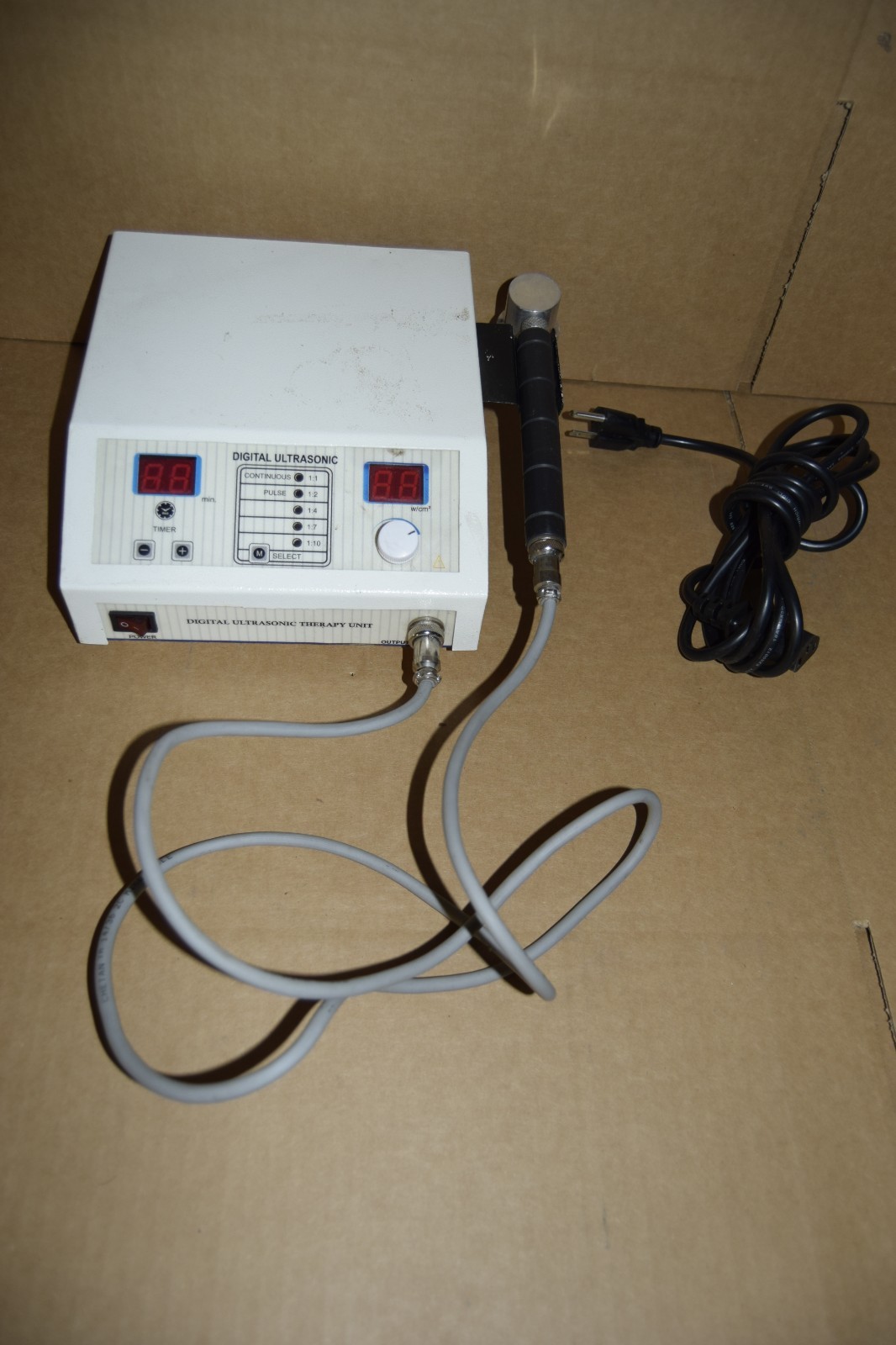 eBayUsed
Digital Ultrasound Therapy Machine
 eBayNew
Ultrasound Therapy 1MHz & 3MHz Unit Professional Use Ultrasound Therapy Machine
 eBayNew