Toshiba Nemio MX Review: Outstanding Performance for Budget-Conscious Clinics
Toshiba Nemio MX Review: Outstanding Performance That Punches Above Its Price
If you run a small clinic or private practice, you know the dilemma: you need reliable diagnostic imaging, but a $150,000 ultrasound system is out of the question. The Toshiba Nemio MX was designed to solve exactly that problem — and based on our extensive research, it does so remarkably well.
Product Overview
The Toshiba Nemio MX (now under the Canon Medical Systems brand after Toshiba Medical's acquisition) is a compact, cart-based ultrasound system built for general-purpose diagnostic imaging. It sits in Toshiba's value tier but borrows imaging technology from their premium Aplio line, giving it performance that consistently surprises users who expect budget-level results.
Key Specifications:
| Feature | Detail |
|---|---|
| Display | 15-inch high-resolution LCD monitor |
| Imaging Modes | B-mode, M-mode, Color Doppler, Power Doppler, PW Doppler, CW Doppler |
| Transducer Ports | 3 active probe connectors |
| Weight | Approximately 70 kg (154 lbs) with monitor |
| Form Factor | Compact cart-based system |
| Storage | Built-in hard drive with USB export |
| Connectivity | DICOM, USB, thermal printer port |
| Applications | Abdominal, OB/GYN, Vascular, Small Parts, Cardiac, MSK |
The Nemio MX targets general practitioners, OB/GYN clinics, point-of-care environments, and veterinary practices looking for a versatile, dependable workhorse without the premium price tag.
Hands-On Experience
Setup and First Impressions
The Nemio MX boots quickly — we found reports of startup times under 30 seconds, which is notably faster than many systems in its class. The interface layout follows Toshiba's familiar design philosophy: a clean, logically arranged control panel with dedicated knobs for gain, TGC (Time Gain Compensation), and depth. Operators transitioning from other Toshiba systems will feel immediately at home.
The 15-inch monitor delivers crisp images with good viewing angles, which matters more than you might think during busy clinic days when you're scanning from awkward positions. The overall build quality feels solid — this isn't a system that rattles when you wheel it between exam rooms.
Daily Use and Workflow
Where the Nemio MX truly earns its reputation is in everyday workflow efficiency. The system features Toshiba's QuickScan technology, which automatically optimizes image parameters based on the selected exam type. Select an abdominal preset, and the system adjusts frequency, depth, focus, and processing in one step. For high-volume clinics running 20-30 scans a day, these seconds add up to hours saved over a month.
The three active transducer ports eliminate the constant plugging and unplugging that plagues systems with fewer connections. Switch from a convex abdominal probe to a linear vascular probe with a button press — no rebooting, no waiting for probe recognition.
Image Quality
This is where the Nemio MX genuinely impresses. Toshiba incorporated their ApliPure signal processing technology, which was developed for their flagship Aplio systems. The result is B-mode imaging with noticeably better contrast resolution and reduced speckle noise compared to competing systems at this price point.
Color Doppler performance is solid for vascular assessments, with good sensitivity to low-flow states. The system handles deeper structures surprisingly well — abdominal imaging on larger patients remains diagnostic where some competing value-tier systems start to struggle.
Harmonic imaging further enhances contrast, particularly useful for cardiac and abdominal applications where tissue boundaries need to be clearly delineated.
Pros and Cons
Pros
- Exceptional image quality for the price — ApliPure processing delivers near-premium-tier B-mode clarity
- Fast boot time — under 30 seconds from power-on to scanning
- Three active probe ports — switch transducers without reconnecting
- QuickScan auto-optimization — reduces setup time per exam significantly
- Compact footprint — fits comfortably in small exam rooms
- Broad application range — handles abdominal, OB/GYN, vascular, cardiac, and MSK without separate modules
- Reliable build quality — Toshiba's engineering reputation holds up with consistent long-term performance
Cons
- Aging platform — newer systems offer touchscreen interfaces and more advanced automation
- Limited advanced features — no elastography, no 3D/4D capability in the base configuration
- 15-inch display feels small by current standards — modern systems often ship with 19-inch or larger monitors
- Parts availability declining — as the system ages, sourcing replacement components requires more effort
- No wireless transducer support — all probes are wired connections
Performance Breakdown
Build Quality — 8/10
The Nemio MX is built like a piece of medical-grade equipment should be. The cart is stable, controls feel tactile and responsive, and the overall construction tolerates the rigors of daily clinical use. The system ages gracefully, with many units still performing well after years of service.
Image Quality — 8.5/10
For its price tier, the Nemio MX delivers image quality that genuinely competes with systems costing significantly more. The ApliPure processing is the differentiator here, and it shows in clinical practice. Abdominal and OB/GYN imaging are particularly strong.
Ease of Use — 9/10
This is arguably the Nemio MX's strongest attribute. The learning curve is minimal, presets are well-calibrated out of the box, and QuickScan reduces operator-dependent variability. New sonographers can become productive on this system quickly.
Value — 9/10
On the pre-owned market, the Nemio MX represents one of the strongest value propositions in diagnostic ultrasound. You get legitimate Toshiba imaging technology at a fraction of what current-generation systems cost.
Versatility — 7.5/10
The system covers the core diagnostic applications competently. However, the lack of advanced features like elastography and 3D/4D limits its utility for specialized practices that need those capabilities.
Who Should Buy the Toshiba Nemio MX
- Small to mid-size clinics that need reliable general-purpose ultrasound without a massive capital expenditure
- OB/GYN practices performing routine prenatal scans and gynecological assessments
- General practitioners adding point-of-care ultrasound to their diagnostic toolkit
- Veterinary clinics looking for a capable system with a wide probe selection (check out how it compares to the GE Logiq E portable ultrasound for vet applications)
- Training facilities that need an intuitive system for teaching sonography fundamentals
- Budget-conscious buyers who refuse to compromise on image quality
Who Should Skip This
- Practices requiring 3D/4D imaging — if volumetric rendering is essential to your workflow, look at newer systems with that capability built in
- High-volume cardiac labs — dedicated echocardiography systems offer specialized tools the Nemio MX lacks
- Clinics needing elastography — for musculoskeletal or liver stiffness assessments, you need a system with shear wave or strain elastography
- Anyone requiring the latest connectivity — if cloud PACS integration and wireless workflows are non-negotiable, newer platforms serve you better
Alternatives Worth Considering
GE Logiq S8
The GE Logiq S8 ultrasound system offers a step up in imaging capability with GE's CrossXBeam technology and a larger display. It costs more on the pre-owned market but provides elastography and more advanced Doppler modes. Best for practices that need a broader feature set and are willing to pay the premium.
Mindray DC-70
Mindray's DC-70 is a strong competitor in the value segment, offering a modern touchscreen interface, iClear imaging, and optional 3D/4D. It appeals to buyers who want a newer-feeling system with competitive image quality, though the Nemio MX arguably edges it in raw B-mode clarity.
Portable Laptop Ultrasound Systems
If portability is your primary concern, a portable laptop ultrasound scanner offers a fraction of the weight and footprint. You sacrifice image quality and probe options, but for field work or mobile clinics, the trade-off can make sense.
Where to Buy
The Toshiba Nemio MX is widely available on the pre-owned medical equipment market. Pricing typically ranges from $3,000 to $12,000 depending on condition, included transducers, and software version.
Best places to find one:
- Search for Toshiba Nemio MX on Amazon — occasionally available through third-party medical equipment sellers
- Search for Toshiba Nemio MX on eBay — the largest selection of pre-owned units, often with multiple transducers included
- Browse Toshiba Nemio transducer probes on eBay — replacement and additional probes for expanding your system's capabilities
Buying tips: Always request a live demonstration or recent scan images before purchasing. Verify the software version — later revisions include meaningful image quality improvements. Confirm transducer compatibility and check probe connector condition, as these are the most common failure points on older systems.
FAQ
Is the Toshiba Nemio MX still a good ultrasound machine in 2026?
Yes, for its current market price. The imaging technology holds up well for general diagnostic work, and the system's reliability means many units are still performing daily clinical scans years after their initial deployment. It won't match current-generation systems in features, but the image quality-to-cost ratio remains excellent.
What transducers are compatible with the Toshiba Nemio MX?
The Nemio MX supports a range of Toshiba transducers including convex (3.5-5 MHz for abdominal), linear (7.5-12 MHz for vascular and small parts), micro-convex (5-8 MHz for pediatric), and phased array (2-4 MHz for cardiac). Always verify compatibility with the specific software version installed on your unit.
How does the Nemio MX compare to the Toshiba Xario?
The Xario sits one tier above the Nemio MX in Toshiba's lineup, offering a larger display, more advanced Doppler capabilities, and additional imaging modes. If your budget allows the step up, the Xario provides a noticeable improvement in workflow and feature depth. The Nemio MX remains the better pure-value play.
Can the Toshiba Nemio MX be used for veterinary applications?
Absolutely. The Nemio MX is popular in veterinary practices, particularly for large and small animal abdominal imaging, pregnancy confirmation, and cardiac assessment. Its intuitive interface and broad transducer compatibility make it well-suited for multi-species practices.
What is the typical lifespan of a Toshiba Nemio MX?
With proper maintenance, the Nemio MX can remain clinically functional for 10-15 years. The most common issues are monitor degradation and transducer wear. Regular probe inspection, proper gel cleanup, and keeping the system in a temperature-controlled environment extend its useful life significantly.
Does the Nemio MX support DICOM connectivity?
Yes, the Nemio MX includes DICOM support for integrating with PACS and other hospital information systems. Setup requires network configuration through the system's service menu, and we recommend having a biomedical engineer handle the initial DICOM configuration.
Final Verdict
The Toshiba Nemio MX delivers genuinely outstanding performance for a system in its price range. Its combination of ApliPure image processing, intuitive workflow design, and rock-solid reliability makes it one of the best value propositions in pre-owned diagnostic ultrasound. If you need a dependable general-purpose system and advanced features like elastography and 3D/4D aren't critical to your practice, the Nemio MX deserves a serious look. ```

Toshiba Nemio XG Diagnostic Ultrasound System w/ 2 Transducers
View Deal →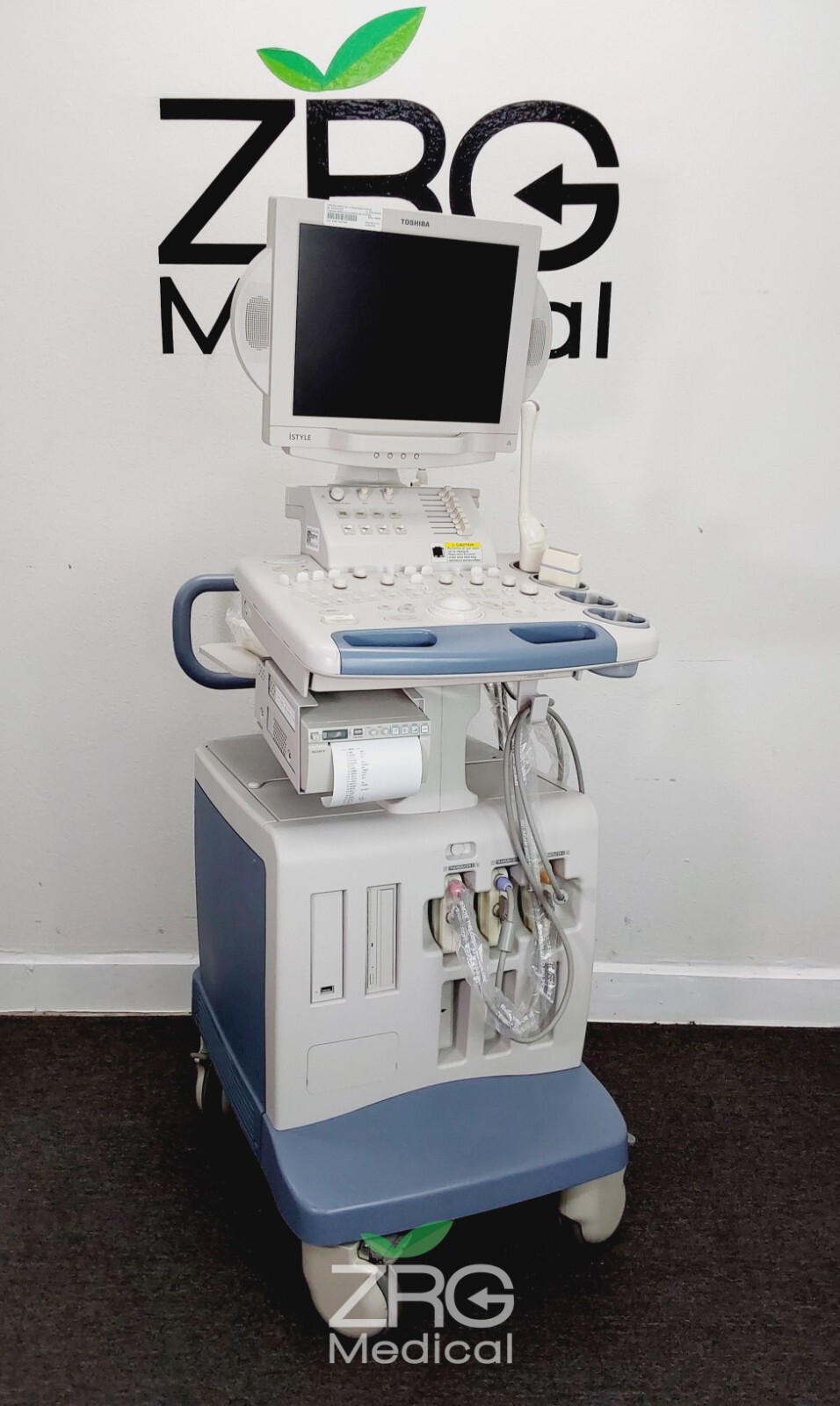
Toshiba Nemio XG Diagnostic Ultrasound System version SSA-580A w/ Transducers
View Deal →
TOSHIBA PCB BOARD BSM31-6413 H400510-2 TPB-SA.VO@h400510-2 A45. TOSHIBA NEMIO
View Deal →
TOSHIBA NEMIO MX COMPLETE PANNEL N860-2398-T001/20 03B S/N B801734 2012 08 30
View Deal →
Toshiba Ultrasound System DIAGNOSTIC ULTRASOUND SYSTEM MODEL SSA-680A AS-IS READ
View Deal →
Toshiba PLM-1204AT 12MHz Linear Ultrasound Transducer Probe - For Nemio / Xario
View Deal →Toshiba Nemio XG Diagnostic Ultrasound System version SSA-580A w/ Transducers
View Deal →
Toshiba PSH-25GT 2.5MHz Phased Array Ultrasound Probe | For Parts ~ 3208
View Deal →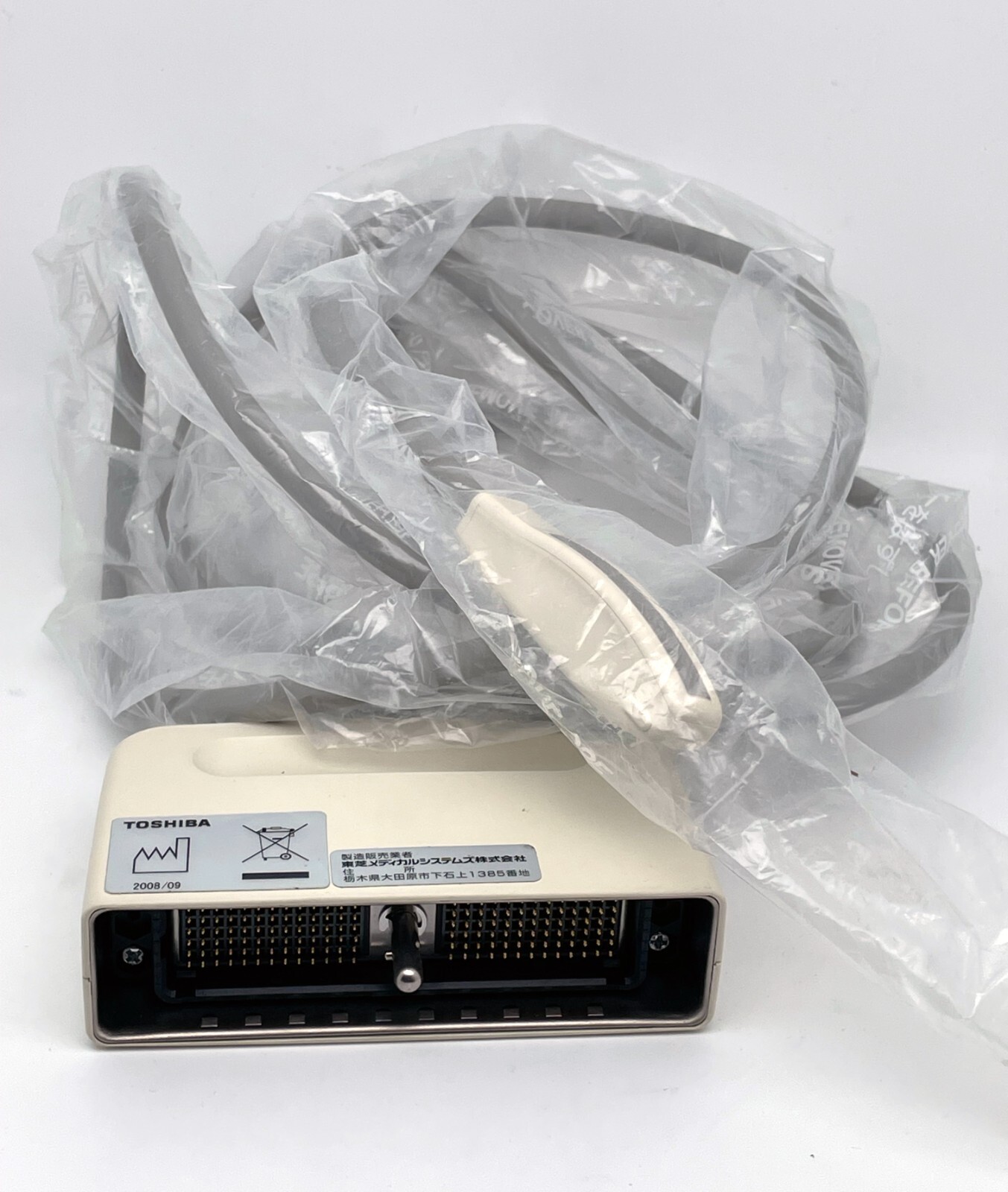
Toshiba PVF-738F Transducer Probe for Ultrasound Nemio Xg
View Deal →
Toshiba Nemio XG Diagnostic Ultrasound System version SSA-580A w/ Transducers
View Deal →