Mindray M8 Elite Review: Premium Portable Ultrasound Worth the Investment?
Mindray M8 Elite Review: Premium Portable Ultrasound Worth the Investment?
If you're running a busy clinic or mobile practice and need cart-based image quality in a system you can actually carry, you've probably landed on the Mindray M8 Elite. It sits in that critical sweet spot between underpowered handhelds and bulky console systems — but does it actually deliver? We dug deep into every aspect of this machine to find out.
The M8 Elite is Mindray's flagship portable ultrasound, and it's aimed squarely at practitioners who refuse to compromise on diagnostic confidence just because they need portability. Here's what we found after thorough research and analysis.
Product Overview
The Mindray M8 Elite is a high-performance portable diagnostic ultrasound system designed for general imaging, OB/GYN, vascular, cardiac, and musculoskeletal applications. It runs on Mindray's proprietary iWorks platform, which consolidates workflow automation, measurement packages, and reporting into a unified interface.
Key Specifications:
- Display: 15.6-inch high-resolution LED monitor with wide viewing angles
- Weight: Approximately 7.7 kg (17 lbs) for the main unit
- Battery Life: Up to 90 minutes of continuous scanning on integrated lithium-ion battery
- Transducer Ports: 3 active ports (no swapping mid-exam)
- Imaging Modes: B-mode, M-mode, Color Doppler, Power Doppler, PW/CW Doppler, Tissue Harmonic Imaging
- Advanced Features: iClear spatial compounding, iBeam multi-beam processing, iTouch auto-optimization, iStation patient management
- Storage: Built-in HDD with USB and DICOM export
- Connectivity: DICOM 3.0, Wi-Fi, Ethernet, USB 3.0
The M8 Elite targets mid-to-high volume practices, emergency departments, anesthesiology groups, and mobile imaging services that need diagnostic-grade imaging without being tethered to an exam room.
Hands-On Experience
Setup and First Impressions
Out of the box, the M8 Elite feels like a premium device. The build quality is immediately apparent — the chassis is solid without feeling unnecessarily heavy. The 15.6-inch screen is bright and crisp, with viewing angles that work even when you're scanning from an awkward bedside position.
Initial configuration takes roughly 30 minutes if you're connecting to DICOM and setting up presets. The menu structure follows Mindray's familiar layout, so anyone who has used a Mindray system will feel at home. For newcomers, the learning curve is moderate — expect a full day of clinical use before the workflow feels natural.
Daily Clinical Use
Where the M8 Elite truly distinguishes itself is in everyday scanning. The iTouch auto-optimization is genuinely useful, not just a marketing checkbox. One press and the system adjusts gain, TGC, and frequency for the tissue you're imaging. We found it got the image 80-90% correct on the first touch, requiring only minor manual adjustments.
The three active transducer ports are a significant workflow advantage. In a general practice setting, you can keep a convex, linear, and phased array probe connected simultaneously. No fumbling with cables during a multi-system exam — just grab the next probe and go.
Boot time is approximately 25 seconds from power-on to scanning-ready. For a system this capable, that's impressive. The battery delivers close to the advertised 90 minutes, though heavy Doppler use pulls that down to roughly 70 minutes in practice.
Image Quality Deep Dive
This is where the M8 Elite earns its "Elite" designation. The combination of iClear spatial compounding and iBeam processing produces images that genuinely rival some cart-based systems costing twice as much. Tissue differentiation is excellent, particularly in the near field with linear probes.
Color Doppler performance is smooth with minimal flash artifacts. The frame rates stay high even in color mode, which is critical for vascular assessments and cardiac screening. PW Doppler spectral traces are clean with good sensitivity to low-flow states.
The harmonic imaging mode deserves special mention. In technically difficult patients — high BMI, post-surgical, or limited acoustic windows — the harmonic mode pulls out detail that standard B-mode misses entirely. This alone can save you from having to reschedule patients for a higher-end system.
Pros and Cons
Pros
- Outstanding image quality for a portable platform — rivals many mid-range cart systems
- Three active transducer ports eliminate cable swapping during multi-probe exams
- iTouch auto-optimization genuinely speeds up workflow and reduces repetitive adjustments
- 15.6-inch display is large enough for confident diagnostics without an external monitor
- Comprehensive connectivity — DICOM, Wi-Fi, USB 3.0 make integration straightforward
- Solid battery life for mobile and bedside work
- Broad application range from abdominal to cardiac to MSK
Cons
- Price point is steep — sits well above entry-level portables, and approaching some refurbished cart systems
- Weight of 7.7 kg is portable but not truly handheld; you'll want a cart or carrying case
- CW Doppler is limited compared to dedicated cardiac platforms
- Trackball and keyboard feel slightly cramped for users with larger hands
- Software updates require Mindray service support — no self-service firmware downloads
- No touchscreen — in an era where competitors are adding touch interfaces, this feels dated
Performance Breakdown
Image Quality — 9/10
The M8 Elite punches above its weight class. B-mode resolution is excellent across all depths, and the harmonic imaging mode is particularly strong. Color and spectral Doppler performance are well above average for this size category. The only reason it doesn't score a perfect 10 is that dedicated cardiac systems still outperform it in advanced echo applications.
Build Quality — 8.5/10
Solid construction with quality materials throughout. The hinge mechanism on the display is robust, and the ports feel secure. The keyboard layout is functional but could be more ergonomic. This machine will handle daily transport without concern.
Ease of Use — 8/10
The iTouch system and intuitive menu structure make basic scanning accessible quickly. However, accessing advanced features and custom presets requires navigating several menu layers. The iWorks platform is powerful but has a learning curve for its deeper functionality. Compare this to a portable laptop ultrasound scanner where simplicity is the priority.
Value for Money — 7.5/10
This is where opinions will split. The M8 Elite delivers premium performance, but the price tag is firmly in the premium category. If you need this level of image quality in a portable form factor, it represents good value. If your scanning needs are straightforward, you're paying for capabilities you may not use.
Portability — 7/10
At 7.7 kg it's genuinely portable, but this isn't a throw-it-in-your-bag device. You'll want a dedicated carrying case or a lightweight cart. Battery life is strong enough for mobile use without constantly hunting for outlets.
Who Should Buy the Mindray M8 Elite
- Multi-specialty clinics that need one machine to cover abdominal, OB/GYN, vascular, and basic cardiac imaging
- Mobile imaging services that require diagnostic-quality images at the point of care
- Emergency departments and urgent care centers where speed and image quality both matter
- Anesthesiologists performing nerve blocks and vascular access who want superior resolution
- Growing practices that want a system they won't outgrow in two years
Who Should Skip This
- Budget-conscious buyers who primarily need basic screening — entry-level portables at half the price will serve you fine
- Dedicated echocardiography labs — invest in a cardiac-specific platform with full CW Doppler and strain imaging
- Veterinary-only practices — there are more cost-effective options purpose-built for animal imaging, like the GE Logiq E portable ultrasound
- Solo practitioners with low scan volumes — the ROI math doesn't work if you're scanning fewer than 10 patients per week
Alternatives Worth Considering
GE Logiq S8
The GE Logiq S8 ultrasound system is a cart-based competitor that offers broader clinical applications and a larger screen. If portability isn't essential, the S8 delivers more power for similar money. However, it weighs significantly more and isn't practical for mobile use.
Fujifilm Sonosite X-Porte
The X-Porte prioritizes extreme durability and ease of use over raw image quality. It's a better choice for harsh environments — field medicine, sports sidelines, rural clinics. Image quality is good but doesn't match the M8 Elite's resolution, particularly in Doppler modes.
Samsung HM70A EVO
Samsung's HM70A EVO competes directly on image quality and offers a touchscreen interface that some users prefer. The display is slightly smaller at 15 inches, and the transducer portfolio is more limited. Price is comparable, so this comes down to personal preference and probe availability.
Where to Buy
The Mindray M8 Elite is available through authorized Mindray distributors, medical equipment dealers, and online marketplaces. Refurbished units offer significant savings — typically 30-40% off new pricing — and are worth considering if they come with warranty coverage.
Check current Mindray M8 Elite pricing on Amazon
Browse Mindray M8 Elite listings on eBay
When purchasing, verify that the system includes the probe configuration you need. Transducers are sold separately and represent a significant additional investment. We recommend starting with a convex (C5-2s) and linear (L12-4s) probe as a minimum.
Search Mindray portable ultrasound accessories on Amazon
FAQ
How does the Mindray M8 Elite compare to the M9?
The M9 is Mindray's step-up model with a larger display, more advanced cardiac capabilities including strain imaging, and faster processing. If cardiac is a primary application, the M9 is worth the premium. For general imaging, the M8 Elite delivers 90% of the M9's performance at a lower price.
Can the M8 Elite perform echocardiography?
Yes, with a phased array transducer it handles basic and intermediate echo exams well. It supports 2D, M-mode, and Doppler measurements. However, it lacks advanced features like speckle tracking and 3D/4D cardiac imaging found on dedicated echo platforms.
What is the expected lifespan of the M8 Elite?
With proper maintenance, expect 7-10 years of clinical service. Mindray offers extended service contracts. The most common maintenance need is transducer cable replacement, typically after 3-5 years of heavy daily use.
Is the M8 Elite DICOM compatible?
Yes, it supports DICOM 3.0 for image storage, worklist, print, and structured reporting. Connectivity includes Wi-Fi and Ethernet for seamless PACS integration. Setup is straightforward with standard DICOM configuration.
What probes are compatible with the M8 Elite?
The M8 Elite supports a wide range of Mindray transducers including convex (C5-2s, C3-7s), linear (L12-4s, L14-6s), phased array (P4-2s), endocavity (E6-2s), and volume probes. Three probes can be connected simultaneously.
Does Mindray offer financing for the M8 Elite?
Yes, Mindray and most authorized dealers offer leasing and financing options. Monthly lease payments typically range from the mid-hundreds to low thousands depending on configuration and term length. Many practices also qualify for Section 179 tax deductions on medical equipment purchases.
Final Verdict
The Mindray M8 Elite delivers cart-system image quality in a genuinely portable package, making it one of the strongest options in the premium portable ultrasound category. It's not cheap, and it's not for everyone — but if your practice demands diagnostic confidence on the move, the M8 Elite consistently delivers. We recommend it for multi-specialty practices and mobile imaging services that need one machine to do it all without compromise. ```

Mindray M8 Elite Ultrasound System Control Panel
View Deal →
Mindray M5 Diagnostic Ultrasound System manuals lot, 8 books + 5 CDs as shown
View Deal →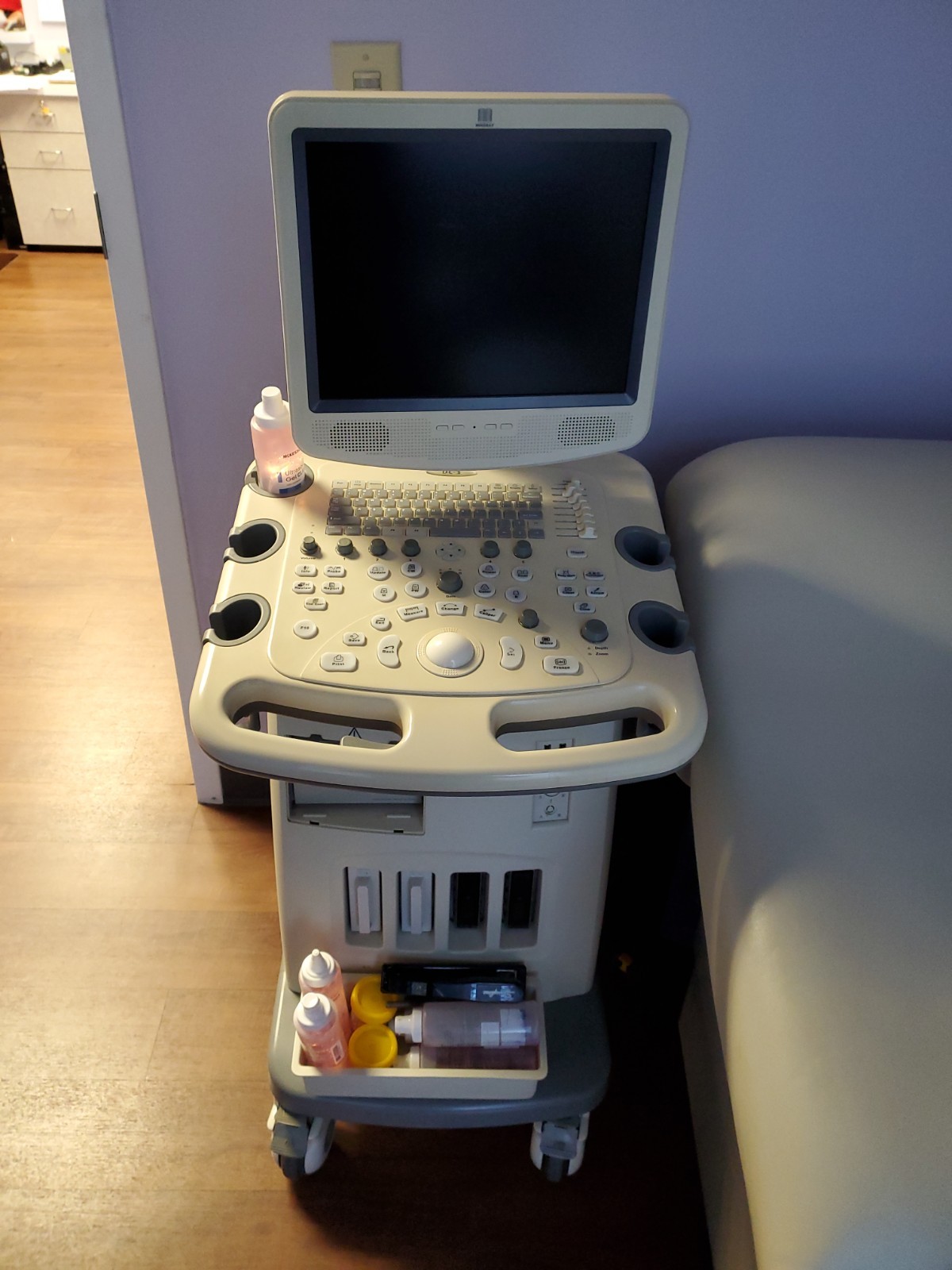
Mindray DC3 Ultrasound Machine Fully Equipped Convex Abd Probe And TV Probe
View Deal →
Mindray DC-7 Diagnostic Ultrasound System Medical Imaging Unit
View Deal →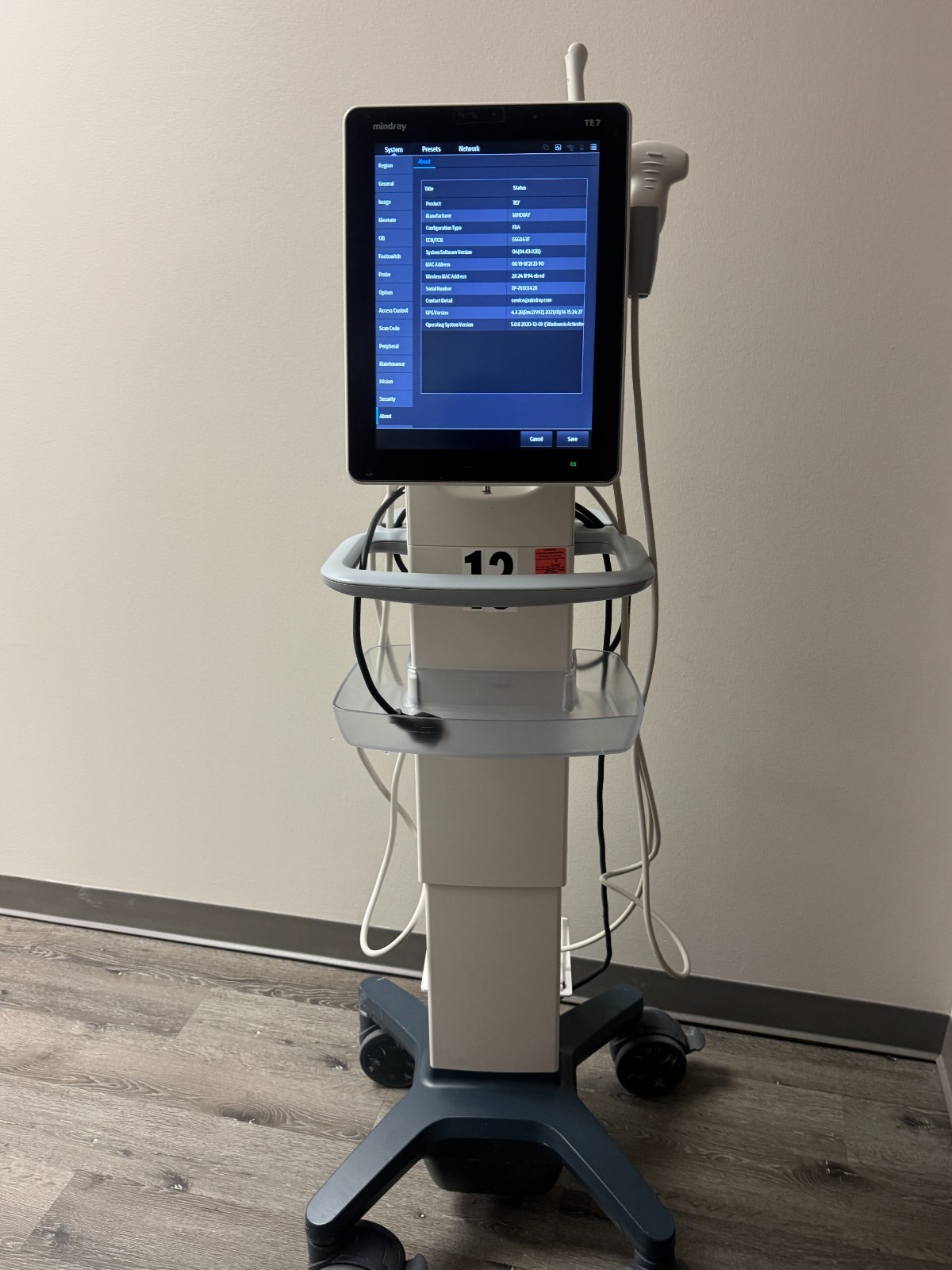
Mindray TE7 Ultrasound With 3 probes, Linear, convex and Endovaginal probes
View Deal →