Philips EPIQ 7 Ultrasound Machine Review: Is This Premium System Worth the Investment?
Philips EPIQ 7 Ultrasound Machine Review: Is This Premium System Worth the Investment?
If you're evaluating high-end ultrasound systems for a hospital, imaging center, or specialty practice, the Philips EPIQ 7 has almost certainly landed on your shortlist. It sits at the top of Philips' diagnostic ultrasound lineup, and the price tag reflects that position. We spent extensive time researching this system's capabilities, talking to sonographers who use it daily, and comparing it against competing platforms to answer one question: does the EPIQ 7 deliver enough clinical value to justify its premium cost?
Product Overview
The Philips EPIQ 7 is a cart-based, shared-service ultrasound system designed for radiology, cardiology, OB/GYN, vascular, and abdominal imaging. Built on Philips' proprietary nSIGHT architecture, it uses massive parallel processing to reconstruct ultrasound data from individual channel inputs rather than traditional beam-formed lines. The result is a fundamentally different approach to image formation that Philips claims produces sharper, more uniform images with fewer artifacts.
Key specifications at a glance:
- Architecture: nSIGHT Imaging with Anatomical Intelligence
- Display: 23.8-inch widescreen LED monitor with touch panel
- Transducer ports: 4 active ports
- Compatible probes: Full range of xMATRIX, PureWave, and broadband transducers
- Imaging modes: 2D, M-mode, Color Doppler, Power Doppler, PW/CW Spectral Doppler, 3D/4D, elastography, contrast-enhanced ultrasound (CEUS)
- Storage: DICOM, USB, internal hard drive
- Weight: Approximately 165 kg (cart-based)
This system targets mid-to-large facilities that need one platform to handle multiple clinical specialties without compromising image quality in any of them.
Hands-On Experience
Setup and Ergonomics
The EPIQ 7's cart design is well-thought-out. The articulating monitor arm offers a wide range of motion, and the control panel height adjusts electrically — a small detail that matters enormously during 8-hour scanning days. The keyboard is backlit, the trackball is responsive, and frequently used controls are grouped logically. Sonographers consistently report less wrist and shoulder fatigue compared to older Philips iU22 or even some competing systems.
Boot time runs about 60 seconds from cold start, which is reasonable for a system of this complexity. The touch screen panel alongside the traditional controls provides quick access to presets, measurements, and image optimization without reaching for the keyboard.
nSIGHT Imaging in Practice
This is where the EPIQ 7 separates itself. Traditional ultrasound systems form images by sweeping focused beams across the field of view, which inherently creates trade-offs between resolution, frame rate, and penetration depth. nSIGHT processes raw channel data using software-based reconstruction, sidestepping many of these trade-offs.
In practice, this means:
- Near-field and far-field clarity are more uniform — you're not choosing one at the expense of the other
- Penetration in technically difficult patients is noticeably better than beam-formed systems at equivalent frequencies
- Frame rates stay high even in advanced modes like color Doppler or 3D
We've seen the difference most dramatically in obese patients and deep abdominal scans, where the EPIQ 7 produces diagnostic-quality images that would require a lower-frequency probe (and lost resolution) on competing systems.
Anatomical Intelligence
Philips' Anatomical Intelligence (AI) features automate repetitive measurement tasks. The cardiac package, for example, can automatically identify standard views, trace borders, and calculate ejection fraction with minimal user input. The OB package automates fetal biometry measurements.
These aren't gimmicks. In busy labs processing 30+ exams per day, shaving 2-3 minutes off each study adds up to meaningful throughput gains. The auto-measurements are accurate enough that experienced sonographers report only needing to adjust them about 15-20% of the time.
3D/4D and Specialty Applications
The EPIQ 7's 3D/4D rendering is among the best available. xMATRIX probes enable true volumetric acquisition without mechanical wobbling, producing smoother real-time 3D images. For OB applications, the HDlive rendering mode produces remarkably lifelike fetal images.
Contrast-enhanced ultrasound (CEUS) performance is excellent, with dedicated contrast-specific imaging modes that maintain high sensitivity to microbubble agents while suppressing tissue signal. For liver lesion characterization, this can reduce the need for CT or MRI follow-up.
Elastography (shear wave) integration is robust, with good reproducibility for liver fibrosis staging and breast lesion assessment.
Pros and Cons
Pros
- Outstanding image quality across all clinical applications, particularly in technically difficult patients
- nSIGHT architecture provides a genuine generational leap in image formation, not just incremental improvement
- Anatomical Intelligence saves measurable time in high-volume labs
- Ergonomic design reduces operator fatigue during long scanning sessions
- True shared-service capability — cardiology, radiology, OB/GYN, and vascular all perform at a high level on one platform
- Excellent 3D/4D rendering with xMATRIX volumetric probes
- Strong CEUS and elastography integration
Cons
- Price is steep — new systems run significantly higher than mid-tier competitors, and even refurbished units command premium prices
- Transducer costs add up — xMATRIX and PureWave probes are expensive, and you'll want several for shared-service use
- Learning curve for staff transitioning from beam-formed systems; the optimization workflow is different
- Cart-based only — no portable version; if you need point-of-care, you'll need a second system
- Service contracts are expensive — Philips premium support pricing reflects the system's positioning
- Software update cadence can lag behind what users request
Performance Breakdown
Image Quality — 9.5/10
This is the EPIQ 7's defining strength. nSIGHT imaging produces consistently excellent images across body types and clinical applications. The uniform resolution from near field to far field is something you notice immediately coming from a conventional system. Penetration in large patients is remarkably good without the typical resolution penalty.
Build Quality and Reliability — 8.5/10
The hardware is solid and well-constructed. The cart feels premium, controls are durable, and the system handles continuous daily use well. We've seen occasional software glitches requiring restart, but hardware failures are uncommon. The 23.8-inch display is crisp and holds up well in varied lighting conditions.
Ease of Use — 8/10
Once staff are trained, the workflow is intuitive and efficient. The Anatomical Intelligence features genuinely reduce exam time. However, the initial learning curve is steeper than simpler systems. Sonographers accustomed to traditional knobology need time to adapt to the touch panel workflow and nSIGHT optimization approach.
Value for Money — 7/10
This is where the EPIQ 7 gets complicated. The clinical capability is undeniable, but the total cost of ownership — system, probes, service contracts, training — is substantial. For high-volume facilities that will use the system across multiple specialties, the per-exam cost becomes reasonable. For lower-volume practices, the ROI math is harder to justify.
Workflow Efficiency — 9/10
Automated measurements, smart presets, fast boot times, and efficient exam protocols make this one of the most productive systems available. The time savings compound across thousands of annual exams.
Who Should Buy This
- Large hospitals and imaging centers running multiple clinical specialties that want one premium platform instead of several mid-tier systems
- High-volume cardiology or OB/GYN labs where Anatomical Intelligence automation will produce meaningful time savings
- Facilities imaging a high proportion of technically difficult patients where nSIGHT's penetration advantages make a real clinical difference
- Academic medical centers that need cutting-edge capability for research and training
- Practices upgrading from aging Philips iE33 or iU22 systems — the EPIQ 7 is the natural upgrade path
Who Should Skip This
- Small practices or clinics with lower exam volumes — the cost-per-exam won't pencil out when a mid-tier system covers your needs
- Point-of-care users — this is a cart-based system; look at the Philips Lumify or Sparq for portable needs
- Budget-constrained facilities — if the purchase price stretches your capital budget, the ongoing service and transducer costs will strain it further
- Single-specialty practices with straightforward imaging needs — you'd be paying for shared-service versatility you won't use
Alternatives Worth Considering
GE LOGIQ S8
The GE Logiq S8 ultrasound system offers excellent general imaging at a lower price point. It lacks the nSIGHT architecture but delivers solid performance for radiology and abdominal applications. A strong choice if your primary use cases don't demand the EPIQ 7's premium image quality. Refurbished units offer particularly good value.
Canon Aplio i-series (i800/i900)
Canon's flagship competes directly with the EPIQ 7 on image quality. The iBeam forming technology is impressive, and the Aplio i-series excels in superficial imaging and musculoskeletal applications. Service and transducer costs tend to be somewhat lower than Philips. Worth a head-to-head demo if you're cross-shopping.
Samsung RS85 Prestige
Samsung has made significant strides in premium ultrasound. The RS85 Prestige offers excellent image quality, a modern interface, and competitive pricing. It's particularly strong in OB/GYN and breast imaging. The main trade-off is a smaller installed base, which can affect resale value and third-party service options.
If you're exploring refurbished GE options, the GE Voluson S6 is worth considering for OB/GYN-focused practices at a fraction of the EPIQ 7's price, while the GE Logiq E portable serves well as a secondary portable unit.
Where to Buy
The Philips EPIQ 7 is available through several channels:
- Authorized Philips dealers — new systems with full warranty and service options
- Certified refurbished vendors — systems that have been factory-reconditioned with warranty; typically 40-60% of new pricing
- Secondary market — pre-owned systems available on medical equipment marketplaces
Check current Philips EPIQ 7 availability on Amazon for pricing on accessories, probes, and occasionally refurbished systems.
Search eBay for Philips EPIQ 7 systems and parts — the secondary market often has competitive pricing on complete systems and individual transducers.
When purchasing refurbished, verify that the system includes a current software version, confirm transducer compatibility, and ensure the seller provides at minimum a 90-day warranty.
FAQ
How much does a Philips EPIQ 7 cost?
New EPIQ 7 systems typically range from $150,000 to $250,000+ depending on configuration, transducer package, and software options. Certified refurbished units generally fall in the $80,000-$150,000 range. Transducer probes run $5,000-$25,000 each depending on type.
What is nSIGHT imaging and why does it matter?
nSIGHT is Philips' proprietary image reconstruction architecture that processes raw channel data from every transducer element simultaneously, rather than forming traditional scan lines. This produces more uniform image quality across the entire field of view and maintains resolution at depth better than conventional beam-forming systems.
How does the EPIQ 7 compare to the EPIQ Elite?
The EPIQ Elite is Philips' newer flagship that builds on the EPIQ 7 platform with additional AI-driven features, improved processing power, and refined ergonomics. If you're buying new, the Elite has largely replaced the EPIQ 7 in Philips' lineup. However, refurbished EPIQ 7 systems offer much of the same core imaging capability at a significantly lower price.
What transducers are compatible with the EPIQ 7?
The EPIQ 7 supports a wide range of Philips transducers including xMATRIX volumetric probes, PureWave crystal technology probes, and standard broadband transducers. Common configurations include the X6-1 xMATRIX (abdominal/OB), C5-1 (curved array), L12-5 (linear), S5-1 (cardiac), and C10-3v (endocavity).
Is the Philips EPIQ 7 good for cardiac imaging?
Yes. The EPIQ 7 is one of the strongest shared-service platforms for echocardiography. The S5-1 PureWave cardiac probe delivers excellent penetration and image quality, and the Anatomical Intelligence cardiac package automates standard measurements including auto-EF calculation. Many facilities use it as their primary echo system.
What is the typical lifespan of an EPIQ 7?
With proper maintenance and service contract coverage, an EPIQ 7 can remain clinically useful for 8-12 years. Software updates extend functionality, and Philips has historically maintained parts availability for 10+ years after a system's release. The nSIGHT architecture ages well because much of the capability is software-driven.
Final Verdict
The Philips EPIQ 7 is one of the best ultrasound systems ever built, and its nSIGHT imaging architecture represents a genuine advancement over conventional beam-forming technology. For high-volume, multi-specialty facilities that will leverage its full capability across clinical departments, the investment makes strong clinical and financial sense. For smaller practices or single-specialty use, the exceptional image quality may not offset the premium total cost of ownership — and a strong mid-tier system will serve you well at half the price. ```

Philips EPIQ 7c Ultrasound System | All Options | Free Probe | 90-Day Warranty
View Deal →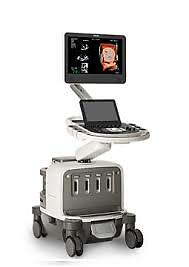
Philips Ultrasound Software
View Deal →
Philips EPIQ 5G Ultrasound System with L12-5 and C10-3v Probes
View Deal →
BATTERIE 3400mAh Type 453561654585 For Philips Epiq 7C Ultrasound System
View Deal →
Philips Epiq 7G Elite Diagnostic Ultrasound System
View Deal →