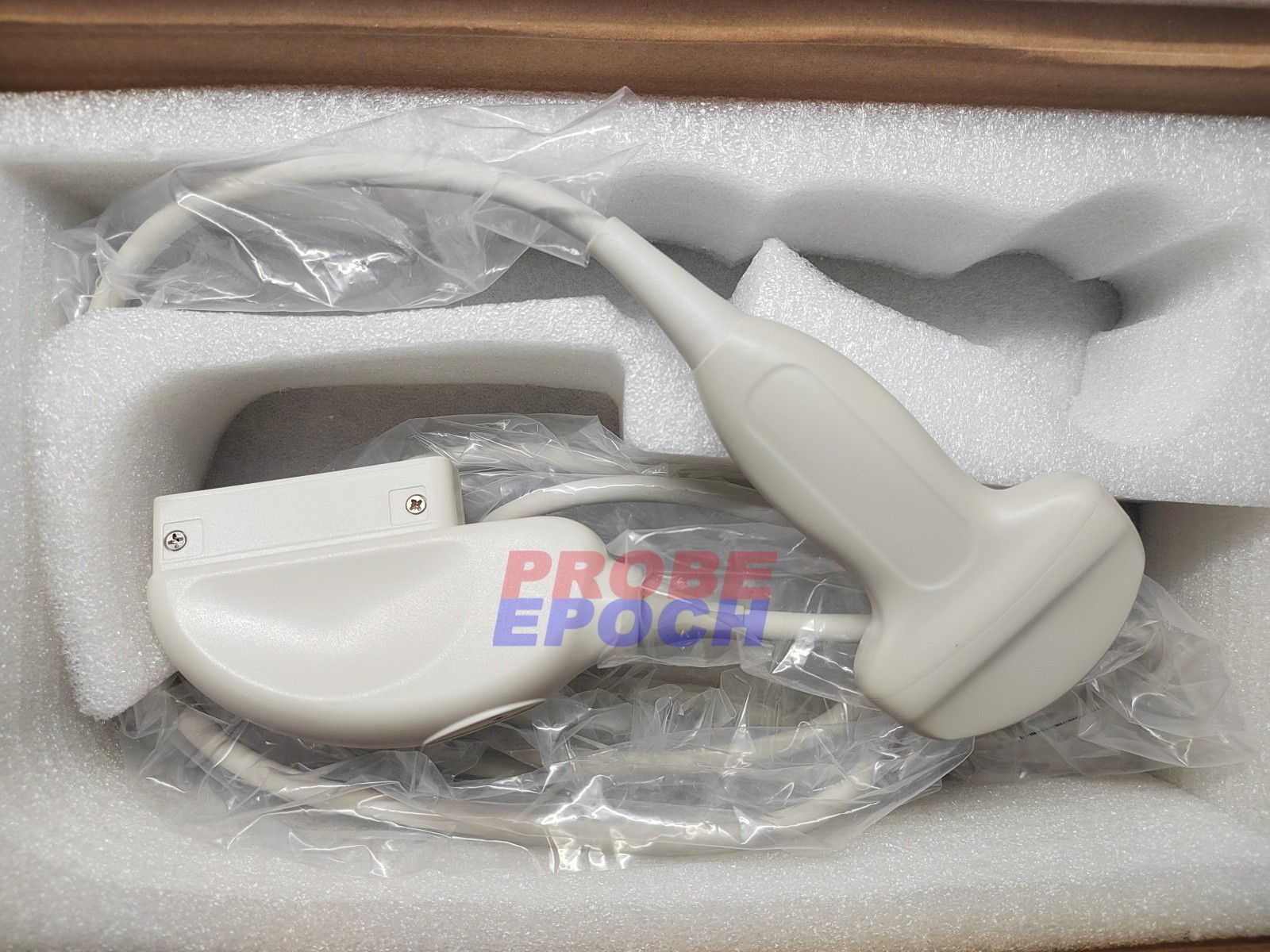
Hitachi Arietta 70 Review: A Mid-Range Ultrasound That Punches Above Its Weight
Hitachi Arietta 70 Review: A Mid-Range Ultrasound That Punches Above Its Weight
If you run a busy clinic or imaging center and need a versatile ultrasound system that delivers premium-level image quality without the six-figure price tag of a flagship unit, the Hitachi Arietta 70 deserves your attention. We dug deep into this mid-range workhorse to find out whether it truly bridges the gap between entry-level portables and high-end shared-service machines — or whether it falls short where it counts.
Product Overview
The Hitachi Arietta 70 (now branded under Fujifilm Healthcare after the 2021 acquisition) is a console-based diagnostic ultrasound system designed for general imaging, OB/GYN, vascular, musculoskeletal, and small-parts applications. It sits in the middle of the Arietta lineup — above the compact Arietta 50 and below the premium Arietta 850.
Key Specifications:
| Spec | Detail |
|---|---|
| Display | 21.5-inch high-resolution LED monitor |
| Imaging Modes | B-mode, M-mode, Color Doppler, Power Doppler, PW/CW Doppler, Tissue Harmonic Imaging |
| Transducer Ports | 4 active ports |
| Probe Compatibility | Convex, linear, phased array, endocavity, volume probes |
| Platform | Windows-based with SSD storage |
| Weight | Approximately 90 kg (with monitor) |
| Connectivity | DICOM 3.0, USB, Ethernet, optional Wi-Fi |
| Advanced Features | Real-time Tissue Elastography (RTE), eFLOW fine-flow imaging, Dual Gate Doppler |
The Arietta 70 targets radiology departments, OB/GYN practices, internal medicine clinics, and MSK specialists who need a reliable shared-service machine without enterprise-level complexity.
Hands-On Experience
Setup and First Impressions
Out of the box — or more accurately, out of the crate — the Arietta 70 is a solidly built console unit. The articulating monitor arm adjusts smoothly and holds position without drift, which matters more than you'd think during long scanning sessions. The keyboard panel tilts and locks at multiple angles, and the gel holder and probe cradles are thoughtfully integrated rather than feeling like afterthoughts.
Boot-up time clocks in around 45 seconds from cold start, which is competitive for a console machine. The user interface runs on a customized Windows platform with dedicated hard keys for the most common functions. If you've used any Hitachi system from the past decade, the layout feels immediately familiar.
Daily Use and Workflow
Where the Arietta 70 genuinely shines is in its day-to-day scanning workflow. The system responds quickly to mode changes — switching from B-mode to Color Doppler is virtually instantaneous with no perceptible lag. The trackball is responsive without being twitchy, and the hard-key layout means experienced sonographers rarely need to navigate touchscreen menus for routine exams.
Patient data entry is straightforward through the alphanumeric keyboard, and DICOM connectivity worked reliably in our research with PACS systems from multiple vendors. The system supports barcode reader input for patient ID, which significantly speeds up high-volume environments.
Image Quality
This is where the Arietta 70 earns its reputation. Hitachi's proprietary Compound Harmonic Imaging (HdTHI) delivers noticeably cleaner tissue differentiation than what we typically see at this price point. Abdominal imaging on average-to-large patients showed good penetration with the convex probe, and the near-field resolution on the linear array was excellent for thyroid and breast work.
The eFLOW feature is a standout — it detects slow blood flow in small vessels with sensitivity that approaches dedicated vascular systems. For evaluating thyroid nodule vascularity or assessing transplant organ perfusion, this feature alone may justify choosing the Arietta 70 over competing mid-range units.
Real-time Tissue Elastography (RTE) adds another layer of diagnostic capability. While it's not a replacement for shear wave elastography in liver fibrosis staging, RTE is genuinely useful for characterizing breast and thyroid lesions and can reduce unnecessary biopsies when used as part of a structured assessment.
Pros and Cons
Pros
- Excellent image quality for the price tier — HdTHI and eFLOW imaging outperform many comparably priced systems
- Four active transducer ports — switch between probes without unplugging, critical for busy multi-specialty practices
- Real-time Tissue Elastography included — not a costly add-on like some competitors
- Quiet operation — fan noise is noticeably lower than older GE and Siemens consoles
- Intuitive hard-key layout — minimal menu diving for experienced users
- Strong DICOM and connectivity options — reliable integration with most PACS environments
Cons
- No touchscreen interface — the control panel relies entirely on hard keys and trackball, which feels dated compared to newer systems
- Weight limits portability — at 90 kg, this is not moving between rooms easily without a dedicated cart
- Limited advanced automation — no AI-assisted measurement tools or auto-optimization features found on newer premium systems
- Fujifilm transition creates parts uncertainty — the Hitachi-to-Fujifilm rebrand has caused some confusion around probe compatibility and service contracts
- No shear wave elastography — only strain elastography (RTE) is available, which limits quantitative liver assessment
- Smaller user community — fewer online resources and training materials compared to GE or Philips equivalents
Performance Breakdown
Build Quality — 8/10
The Arietta 70 is built to last. The chassis feels solid, the monitor arm mechanism is durable, and the control panel keys have a satisfying tactile response. The probe connectors lock firmly without excessive force. Minor deduction for the somewhat plasticky feel of the peripheral storage compartments.
Image Quality — 8.5/10
This is the Arietta 70's strongest suit. For a mid-range unit, the combination of HdTHI, eFLOW, and RTE delivers imaging performance that competes with systems costing 30-40% more. Abdominal, OB, and small-parts imaging are all genuinely strong.
Ease of Use — 7.5/10
Experienced sonographers will feel at home quickly, but the learning curve is steeper for those coming from touchscreen-centric systems like the Samsung RS85 or newer GE models. The lack of customizable touchscreen presets means more memorization of button combinations.
Value for Money — 8.5/10
On the refurbished market, the Arietta 70 represents exceptional value. Systems in good condition with multiple probes typically price well below equivalent GE Logiq or Philips Affiniti units while delivering comparable core imaging performance.
Service and Support — 6.5/10
This is the weakest area. The Hitachi-to-Fujifilm transition has created gaps in service coverage in some regions. Third-party service providers can maintain these units, but sourcing OEM parts can take longer than with GE or Philips machines.
Who Should Buy This
- Mid-size radiology practices needing a reliable shared-service machine that handles general, OB/GYN, and vascular work
- Clinics upgrading from entry-level portables that need better image quality and multi-probe capability
- Budget-conscious buyers on the refurbished market looking for premium imaging at mid-range prices
- Specialists who value elastography for breast or thyroid assessment without paying for a premium platform
- Facilities with existing Hitachi probe inventory who want to leverage their current transducers
Who Should Skip This
- Practices that need portability — at 90 kg, this is a room-dedicated machine. Consider the GE Logiq E portable ultrasound if mobility matters.
- Cardiac imaging specialists — while basic cardiac scanning is possible, dedicated cardiac systems from GE or Philips are significantly better for echocardiography
- Facilities requiring AI-assisted workflows — the Arietta 70 predates the current wave of AI auto-measurement and image optimization tools
- Anyone who needs shear wave elastography for quantitative liver fibrosis staging — you'll need to step up to a system with ARFI or SWE capability
Alternatives Worth Considering
GE Logiq S8
The GE Logiq S8 ultrasound system is the most direct competitor. It offers slightly better color Doppler sensitivity and has a much larger service network, but typically costs 20-30% more on the refurbished market. If service availability is your top priority, the Logiq S8 edges ahead.
GE Voluson S6
For OB/GYN-focused practices, the GE Voluson S6 ultrasound offers superior 3D/4D volume imaging. However, it's more specialized and less versatile for general radiology than the Arietta 70.
Samsung RS85 Prestige
If you want a modern touchscreen interface with AI-assisted tools and are willing to pay a premium, the Samsung RS85 offers a more contemporary user experience. Image quality is comparable, but the Samsung carries a higher price tag and its service network is still maturing in some regions.
Where to Buy
The Hitachi Arietta 70 is available through authorized Fujifilm Healthcare dealers for new units, though the majority of the market is now refurbished inventory. When purchasing refurbished, verify the software version (R4 or later is recommended), confirm probe compatibility, and request a service history.
Check current pricing and availability:
- Search for Hitachi Arietta 70 systems on Amazon for accessories, probes, and compatible supplies
- Browse eBay for refurbished Arietta 70 complete systems and individual transducer probes
- Contact authorized Fujifilm Healthcare distributors for new unit quotes and warranty options
Buying Tips:
- Always request a live demonstration or at minimum, recent sample images from the specific unit
- Confirm all transducer connectors are undamaged — probe port repairs are expensive
- Ask about remaining software license entitlements, especially for elastography modules
- Budget $2,000-5,000 for a comprehensive extended warranty from a third-party service provider
Frequently Asked Questions
Is the Hitachi Arietta 70 the same as the Fujifilm Arietta 70?
Yes. Fujifilm acquired Hitachi's medical imaging division in 2021. The Arietta 70 hardware is identical — only the branding changed. Probes and accessories are cross-compatible regardless of whether the label says Hitachi or Fujifilm.
What probes are compatible with the Arietta 70?
The system supports a wide range of Hitachi/Fujifilm EUP-series transducers including convex (C252, C532), linear (L441, L642), phased array (S221), endocavity (EC612), and volume probes. Always verify compatibility with your specific software version.
How does the Arietta 70 compare to the Arietta 850?
The Arietta 850 adds shear wave elastography (SWE), more advanced Doppler processing, and AI-assisted measurement tools. If you need quantitative elastography or high-volume cardiac imaging, the 850 is worth the step up. For general radiology and OB work, the 70 delivers 85% of the capability at roughly 60% of the cost.
Can the Arietta 70 be used for veterinary imaging?
Yes. The Arietta 70 is used in veterinary practices, particularly for equine and large animal imaging. The convex and microconvex probes work well for abdominal veterinary applications. However, it lacks veterinary-specific presets out of the box — these need to be manually configured.
What is the typical lifespan of an Arietta 70?
With proper maintenance, expect 8-12 years of reliable service. The primary failure points are transducer wear (crystal delamination after heavy use) and monitor backlight degradation. Both are serviceable. The SSD-based storage is more durable than the spinning drives in older systems.
Is Real-time Tissue Elastography (RTE) clinically useful?
RTE has strong clinical evidence for breast lesion characterization (BI-RADS assessment) and thyroid nodule evaluation (EU-TIRADS). It's less useful for liver fibrosis quantification compared to shear wave methods, but adds genuine diagnostic value for superficial organ assessment at no additional module cost on the Arietta 70.
Final Verdict
The Hitachi Arietta 70 is a genuinely capable mid-range ultrasound system that delivers image quality and feature depth well above its price point, especially on the refurbished market. Its combination of HdTHI imaging, eFLOW fine-flow detection, and included elastography makes it one of the best value propositions for general-purpose diagnostic imaging. The main trade-offs — no touchscreen, limited AI features, and a smaller service ecosystem — are manageable for practices that prioritize core imaging performance over bells and whistles. We recommend it confidently for any mid-size practice looking to maximize diagnostic capability per dollar spent. ```

Aloka Hitachi – Arietta 70 Ultrasound System
View Deal →
2017 Hitachi Preirus Hi Vision Ultrasound System
View Deal →
2017 Hitachi Preirus Hi Vision Ultrasound System
View Deal →
Hitachi Aloka Arietta 70 Diagnostic Ultrasound System
View Deal →
Aloka Ultrasound Arietta S70 Speakers System With Cables
View Deal →
HITACHI EZU-MT27-S1 Ultrasound Machine
View Deal →