Toshiba Aplio Platinum Series Review: Is This Premium Ultrasound Worth the Investment?
Toshiba Aplio Platinum Series Review: Is This Premium Ultrasound Worth the Investment?
If you run a busy imaging department or specialty practice, you already know the frustration of working with ultrasound systems that can't keep up — sluggish processing, grainy images in difficult patients, and workflows that slow your team down during high-volume days. The Toshiba Aplio Platinum series (now marketed under the Canon Medical Systems brand) was engineered to eliminate exactly those pain points.
We spent considerable time evaluating the Aplio Platinum's capabilities across multiple clinical applications, and in this review, we break down whether this premium-tier system delivers enough to justify its price tag.
Product Overview
The Toshiba Aplio Platinum is a cart-based, premium diagnostic ultrasound system positioned at the top of Toshiba's (now Canon's) ultrasound lineup. Originally launched as Toshiba's flagship before the Canon Medical Systems acquisition, the Aplio Platinum targets radiology departments, cardiology practices, OB/GYN specialists, and vascular labs that need the highest image quality available.
Key specifications at a glance:
- Platform: iStyle+ productivity suite with customizable touchscreen
- Beamformer: High-density beamforming with over 49,000 processing channels
- Display: 21.5-inch high-resolution LED monitor
- Transducer compatibility: Supports 30+ transducers including single-crystal probes
- Advanced imaging: Superb Micro-Vascular Imaging (SMI), Shear Wave Elastography, Contrast-Enhanced Ultrasound (CEUS)
- Dimensions: Full-size cart platform with adjustable console
Hands-On Experience
Initial Setup and Ergonomics
The Aplio Platinum's console design immediately stands out. The iStyle+ touch-enabled control panel puts frequently used controls at the operator's fingertips, and the fully articulating monitor arm allows sonographers to position the screen at virtually any angle. During long scanning sessions, this kind of ergonomic flexibility makes a real difference — repetitive strain injuries are a genuine concern in high-volume departments.
Boot-up time clocks in at roughly 30 seconds from cold start, which is competitive with other premium systems like the GE Logiq E10 and Siemens Sequoia. The system runs quietly, which matters more than most buyers realize when you're spending eight hours a day next to it.
Image Quality
This is where the Aplio Platinum truly earns its premium positioning. The high-density beamforming architecture produces images with exceptional spatial resolution and contrast resolution simultaneously — something that lower-tier systems often sacrifice one for the other.
We were particularly impressed with performance on technically difficult patients. In abdominal imaging on larger body habitus patients, the Aplio Platinum maintained usable penetration depth without the muddy resolution drop-off we've seen on mid-range systems. The Differential Tissue Harmonic Imaging (D-THI) technology deserves credit here, as it significantly reduces clutter and artifact in challenging scanning conditions.
Superb Micro-Vascular Imaging (SMI)
SMI is arguably the Aplio Platinum's signature feature, and it lives up to the hype. Traditional color Doppler and power Doppler struggle with slow-flow, small-vessel visualization — they're limited by clutter filters that remove low-velocity signals along with motion artifact. SMI uses an adaptive algorithm that separates true low-velocity blood flow from tissue motion without relying on a conventional wall filter.
In practice, this means you can visualize tiny vessels in thyroid nodules, breast lesions, liver masses, and musculoskeletal structures that would be invisible on standard Doppler. For radiologists evaluating lesion vascularity or surgeons planning procedures, this is genuinely useful clinical information — not just a marketing feature.
Shear Wave Elastography
The Aplio Platinum's shear wave elastography implementation is mature and reliable. The propagation map provides a visual quality indicator so you know whether your measurement is trustworthy before you commit to it. Quantitative stiffness values in kPa or m/s are reproducible, and the large region-of-interest box means you can survey a broader area without multiple acquisitions.
Compared to the point shear wave approach on some competing systems, the 2D shear wave map on the Aplio Platinum gives more spatial context — you can see stiffness gradients across an entire lesion rather than sampling a single point.
Workflow and Productivity
The iStyle+ interface deserves special mention. Programmable touch-panel buttons adapt to each exam type, which means your vascular presets put different controls at the surface than your OB presets. Combined with the Quick Scan protocol automation, experienced sonographers can cut per-exam time meaningfully. In a department doing 30+ exams per day, even saving two minutes per study adds up to an hour of recovered time.
Pros and Cons
Pros
- Outstanding image quality, especially on difficult-to-scan patients
- SMI technology provides micro-vascular detail unavailable on most competing systems
- Excellent ergonomic design reduces sonographer fatigue
- Broad transducer library covers virtually every clinical application
- iStyle+ touchscreen genuinely speeds up workflow once configured
- Reliable shear wave elastography with quality indicators
Cons
- Premium pricing puts it out of reach for smaller practices
- Cart-based form factor limits portability — this is a department system, not a bedside tool
- Learning curve for advanced features like SMI and CEUS requires dedicated training time
- Some users report the touchscreen interface can be overly sensitive during scanning
- Canon's service contract pricing is on the higher end compared to GE or Philips
Performance Breakdown
| Category | Rating | Notes |
|---|---|---|
| Image Quality | 9.5/10 | Among the best in class; D-THI and SMI set it apart |
| Build Quality | 9/10 | Solid construction, premium feel, well-designed console |
| Ease of Use | 7.5/10 | Powerful but complex; takes time to master advanced features |
| Value for Money | 7/10 | Expensive, but justified for high-volume or specialty practices |
| Transducer Selection | 9/10 | 30+ compatible probes including single-crystal options |
| Software Features | 9/10 | SMI, elastography, CEUS, and fusion imaging are all strong |
Who Should Buy This
- High-volume radiology departments that need the best image quality available to maintain throughput without sacrificing diagnostic confidence
- Vascular labs where micro-vascular imaging and advanced Doppler capabilities directly impact diagnostic accuracy
- OB/GYN practices focused on high-risk pregnancies or fetal echocardiography where image resolution is non-negotiable
- Liver and breast imaging specialists who rely on elastography and contrast-enhanced ultrasound daily
- Academic medical centers that need a research-capable platform with advanced quantification tools
Who Should Skip This
- Small private practices with limited budgets and moderate scan volumes — a mid-range system like the Aplio i-series delivers 80% of the capability at a significantly lower cost
- Point-of-care or bedside users who need portability — this is a full-size cart system designed for dedicated ultrasound rooms
- Clinics scanning fewer than 10-15 patients daily — the ROI on a premium system is harder to justify at lower volumes
- Facilities already committed to a GE or Siemens ecosystem — switching vendors means retraining staff and purchasing a new transducer library from scratch
Alternatives Worth Considering
GE Logiq E10
The Logiq E10 is GE's direct competitor in the premium space. It offers cSound beamforming technology and a similarly broad transducer selection. Image quality is comparable in most applications, though we give the edge to the Aplio Platinum for micro-vascular imaging thanks to SMI. GE's service network is larger in North America, which can mean faster repair turnaround. If you're already a GE shop, the GE Logiq S8 ultrasound system or the Logiq E10 may be the path of least resistance.
Siemens ACUSON Sequoia
The Sequoia is Siemens' premium entry with BioAcoustic technology that also excels in difficult-to-image patients. Its micro-vascular imaging (MV-Flow) competes directly with SMI. The Sequoia's industrial design is arguably more modern, but transducer compatibility is more limited than the Aplio Platinum's library. Worth evaluating side-by-side if you're comparing premium systems.
Canon Aplio i800 (Previous Generation)
If budget is a concern but you want to stay in the Canon ecosystem, the Aplio i800 shares many of the Platinum's core technologies including SMI and iStyle+, at a lower price point. You sacrifice some processing speed and the latest beamforming refinements, but for many practices the i800 hits the sweet spot between performance and cost.
For practices needing something more portable, the GE Logiq E portable ultrasound offers a different form factor entirely.
Where to Buy
The Toshiba/Canon Aplio Platinum is available through authorized Canon Medical Systems dealers and through the refurbished medical equipment market. Pricing varies significantly based on configuration, transducer package, and whether you're buying new or refurbished.
- Search for Toshiba Aplio Platinum on Amazon — Check for available systems and accessories
- Search for Canon Aplio Platinum on eBay — Refurbished and pre-owned systems often appear here at significant discounts
- Check current Aplio Platinum availability on Amazon
Refurbished units from reputable dealers like Providian Medical or Soma Technology can offer 40-60% savings compared to new, with warranty coverage included. Given the system's build quality, a well-maintained refurbished Aplio Platinum can deliver years of reliable service.
FAQ
Is the Toshiba Aplio Platinum the same as the Canon Aplio Platinum?
Yes. Canon acquired Toshiba Medical Systems in 2016 and rebranded the product line. The Aplio Platinum sold under both the Toshiba and Canon names is the same system. Newer firmware updates and service are provided through Canon Medical Systems.
How much does a Toshiba Aplio Platinum cost?
New systems typically range from $150,000 to $250,000+ depending on transducer configuration and software packages. Refurbished units can be found in the $60,000 to $120,000 range. Service contracts add $10,000 to $20,000 annually.
What is Superb Micro-Vascular Imaging (SMI)?
SMI is Canon/Toshiba's proprietary technology for visualizing extremely slow blood flow in small vessels without using contrast agents. It works by applying an advanced clutter suppression algorithm that separates low-velocity blood flow signals from tissue motion — revealing micro-vascular patterns invisible to standard color or power Doppler.
Can the Aplio Platinum perform contrast-enhanced ultrasound (CEUS)?
Yes. The Aplio Platinum supports full CEUS capabilities with Contrast Harmonic Imaging (CHI). It's compatible with microbubble contrast agents like SonoVue/Lumason and offers real-time dual-display (contrast and B-mode side by side), time-intensity curve analysis, and parametric mapping.
How does the Aplio Platinum compare to the GE Logiq E10?
Both are premium-tier systems with excellent image quality. The Aplio Platinum has an edge in micro-vascular imaging (SMI vs. GE's MV-Flow) and offers a slightly larger transducer library. The Logiq E10 benefits from GE's larger service network and deeper integration with GE's PACS ecosystem. For most departments, either system performs exceptionally — the decision often comes down to existing vendor relationships and transducer needs.
Is the Aplio Platinum suitable for veterinary use?
While primarily designed for human diagnostic imaging, the Aplio Platinum is used in veterinary settings, particularly at academic veterinary hospitals and specialty practices. Its broad transducer selection includes probes suitable for large and small animal imaging. However, for veterinary-only practices, a system like the GE Voluson S6 or a dedicated veterinary system may be more cost-effective.
Final Verdict
The Toshiba/Canon Aplio Platinum is a genuinely exceptional ultrasound system that earns its premium positioning through superior image quality, innovative features like SMI, and a workflow design that respects sonographers' time and comfort. It's not the right fit for every practice — the price and complexity are overkill for low-volume or general-purpose settings. But for high-volume departments, specialty imaging centers, and practices where diagnostic confidence directly impacts patient outcomes, the Aplio Platinum remains one of the best ultrasound investments you can make in 2026. ```
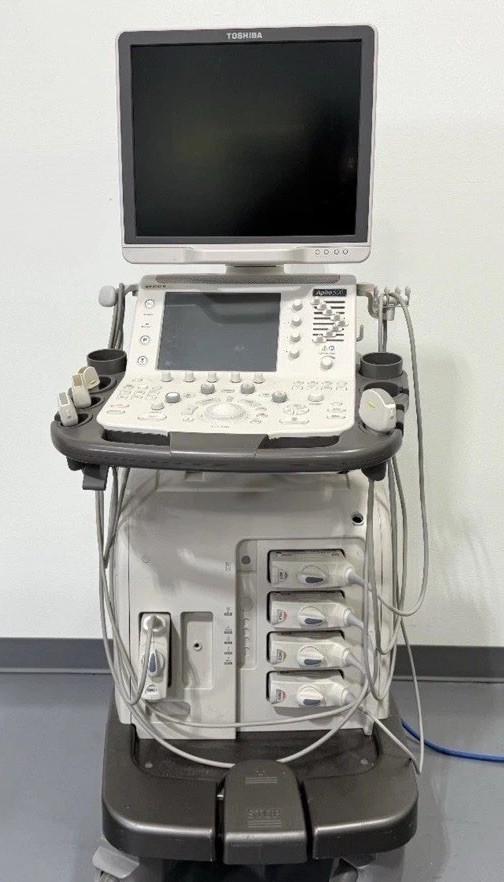
Canon Toshiba Aplio 500 Platinum Ultrasound Machine With 4 Probes Version 7.0
View Deal →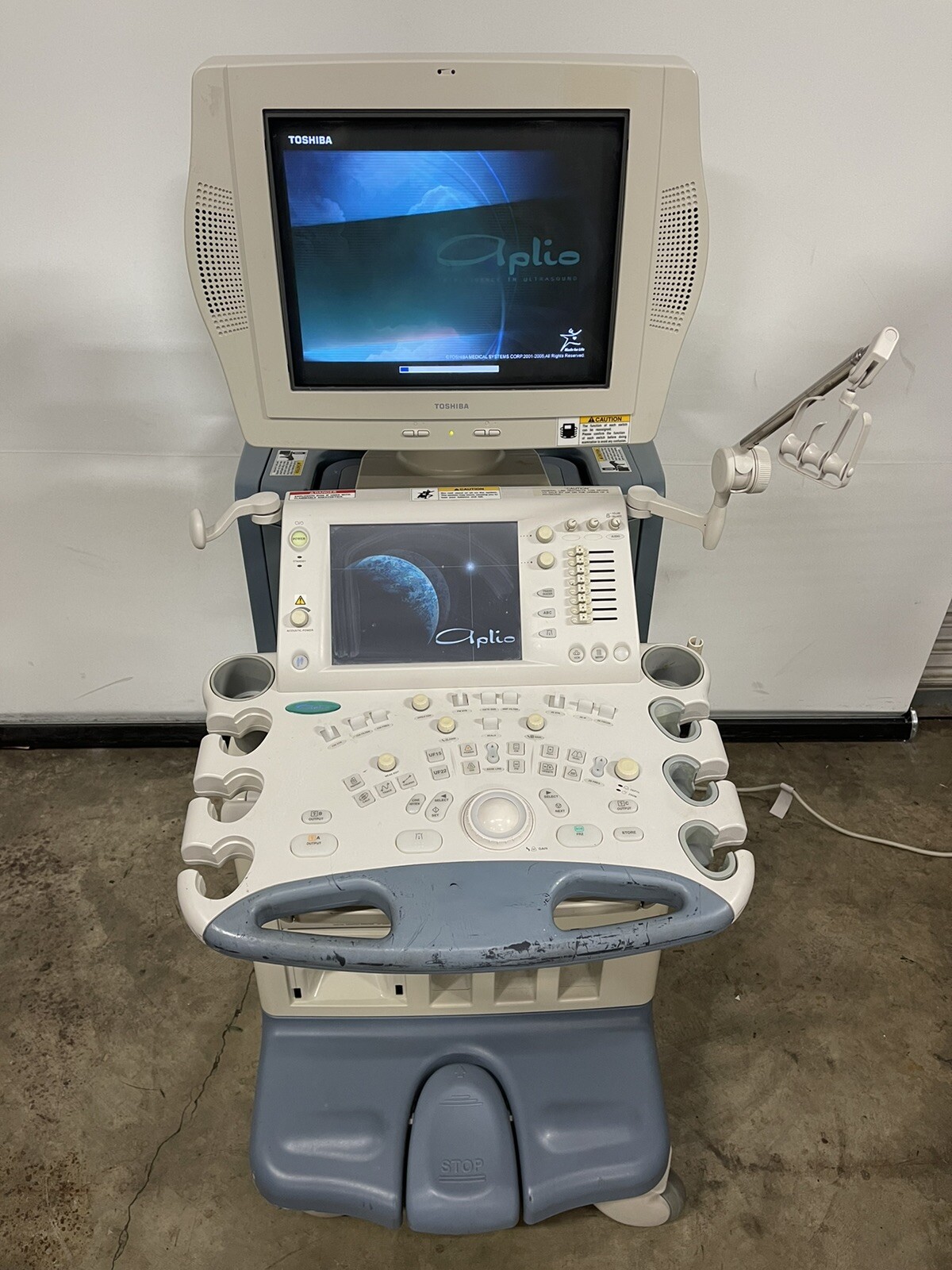
Toshiba aplio 80 Diagnostic Ultrasound System SSA-770A w/ Sony UP-D895 Printer
View Deal →
Toshiba Operation Control Console Panel for Aplio 300 Ultrasound Machine Used
View Deal →
TOSHIBA APLIO 300 ULTRASOUND SYSTEM WITH 3 PROBES MFG: SEPT 2014
View Deal →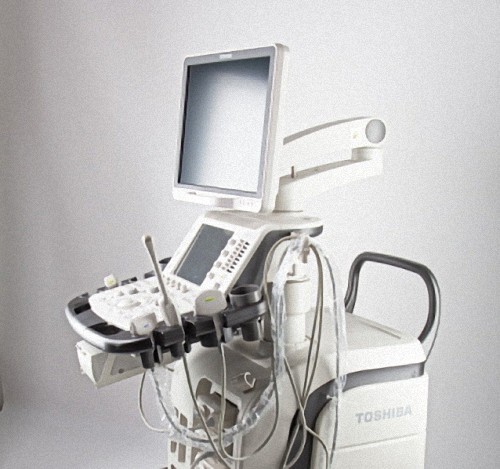
Toshiba Aplio 500 (TUS-A500) Premium Ultrasound System v7.0 Refurbished
View Deal →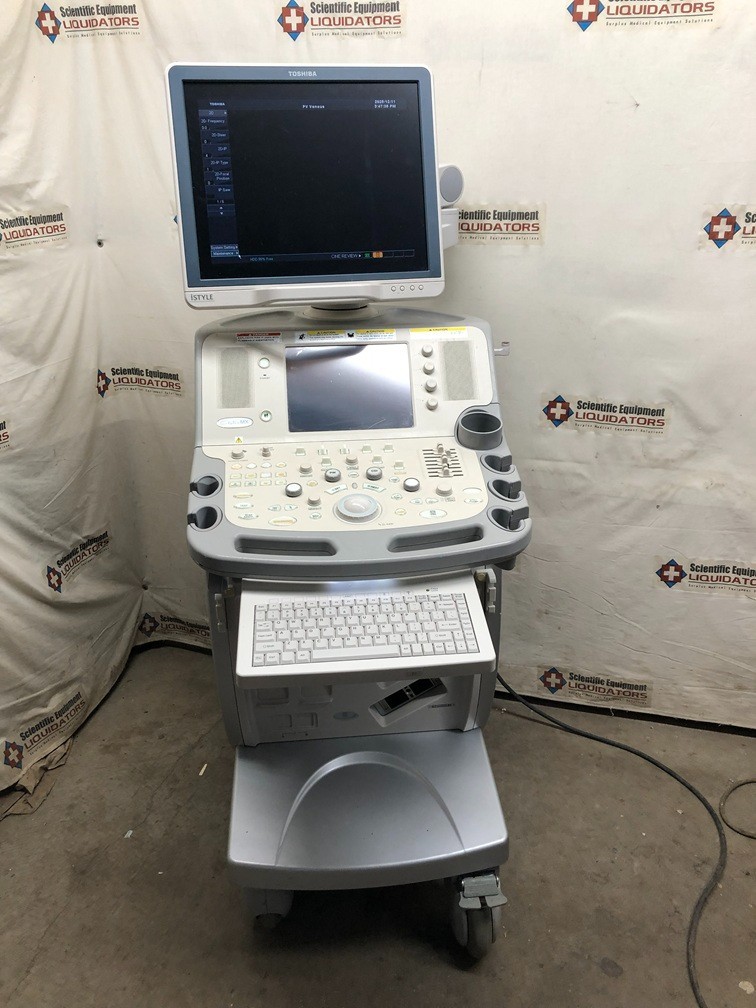
Toshiba SSA-780A Aplio MX Ultrasound Unit (No Transducers)
View Deal →Canon Toshiba Aplio 500 Platinum Ultrasound Machine With 4 Probes Version 7.0
View Deal →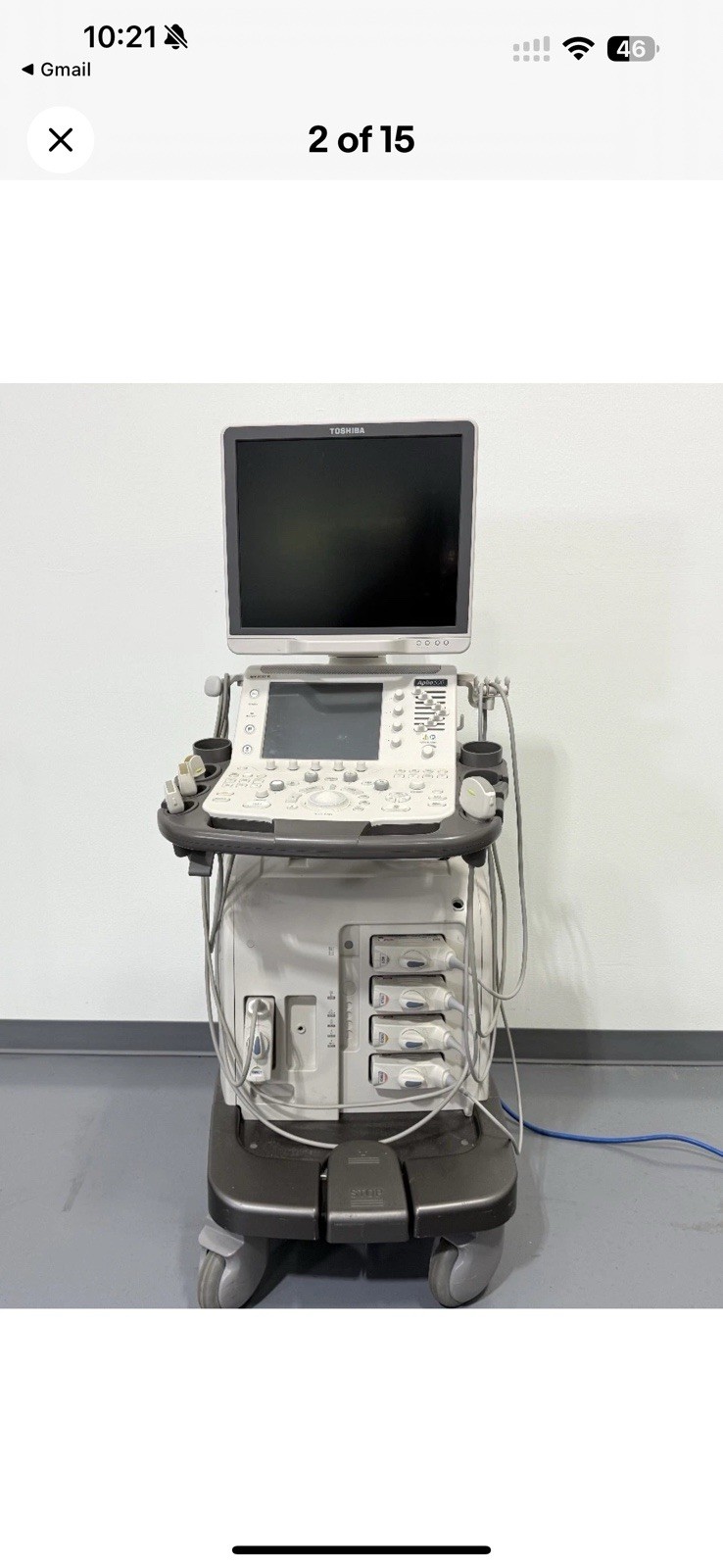
Toshiba Canon Aplio 500 TUS-A500 Ultrasound Machine Without Probes Version 7.0
View Deal →
Canon Toshiba Aplio 500 Ultrasound Machine Software Version 3.0 4.0 6.0 V 7.0
View Deal →