SIUI Apogee 2300 Review: A Versatile Mid-Range Ultrasound Worth Considering
SIUI Apogee 2300 Review: A Versatile Mid-Range Ultrasound Worth Considering
If you run a small clinic, outpatient facility, or mobile imaging service and you need reliable diagnostic imaging without the six-figure price tag of premium brands, you already know how frustrating the search can be. The SIUI Apogee 2300 sits in that sweet spot between entry-level portables and high-end cart-based systems — and after thoroughly researching this machine, we think it deserves a closer look.
Product Overview
The SIUI Apogee 2300 is a compact, cart-based color Doppler ultrasound system manufactured by Shantou Institute of Ultrasonic Instruments (SIUI), one of China's largest and most established ultrasound manufacturers with over 40 years of experience. The Apogee 2300 is designed for general-purpose diagnostic imaging across multiple clinical applications including abdominal, obstetric, gynecological, vascular, small parts, and musculoskeletal imaging.
Key Specifications:
- Display: 15-inch high-resolution LED monitor
- Imaging Modes: B, B/B, B/M, M, Color Doppler (CFM), Power Doppler (PDI), Pulsed Wave Doppler (PW), Continuous Wave Doppler (CW)
- Transducer Ports: 3 active probe connectors
- Image Storage: Built-in hard drive with DICOM 3.0 compatibility
- Connectivity: USB, Ethernet, DICOM output
- Form Factor: Compact cart-based system with integrated battery backup option
- Target Users: Small to mid-size clinics, OB/GYN practices, general practitioners, mobile imaging services
Hands-On Experience
Setup and First Impressions
The Apogee 2300 boots up in under 60 seconds — noticeably faster than many competitors in this price range. The interface is organized around a customizable touchscreen panel paired with a traditional alphanumeric keyboard and trackball. For operators coming from GE or Philips systems, the control layout will feel slightly different, but the learning curve is manageable. Most sonographers we've spoken with report becoming comfortable within a few days of regular use.
The cart itself is well-built and surprisingly compact. It fits comfortably in smaller exam rooms, and the caster wheels roll smoothly on tile and carpet. The cable management system keeps probe cables tidy, which is a small detail that matters a lot during busy clinic days.
Daily Use and Image Quality
This is where the Apogee 2300 earns its keep. The B-mode imaging is clean and detailed, with good tissue differentiation across abdominal and OB applications. The speckle reduction algorithm (SRI) does a solid job of cleaning up grainy images without over-smoothing anatomical detail — a common problem with budget ultrasound systems that try too hard to make images look "pretty."
Color Doppler performance is respectable. Flow sensitivity is adequate for standard vascular assessments, and the color map renders smoothly without excessive blooming artifacts. For routine carotid, lower extremity venous, and basic cardiac flow studies, the Apogee 2300 delivers clinically usable results.
Where it truly impresses is in OB imaging. The system handles fetal anatomy surveys well, with solid resolution in the second and third trimester. The measurement packages are comprehensive, with built-in growth charts and automated calculation tools that streamline workflow.
Standout Features
- iBeam spatial compounding: Significantly improves image clarity in superficial structures and small parts imaging
- THI (Tissue Harmonic Imaging): Effective at reducing near-field clutter, especially useful in technically difficult patients
- Auto-optimization: One-button image optimization that actually works — it adjusts gain, TGC, and dynamic range simultaneously and gets surprisingly close to ideal settings
- 3 active probe ports: Switch between transducers without physically swapping cables, a genuine time-saver in multi-exam workflows
- DICOM 3.0 compatibility: Seamless integration with most PACS systems
Pros and Cons
Pros
- Competitive pricing — typically 40-60% less than comparable GE or Philips systems
- Solid B-mode and Doppler image quality for the price point
- Fast boot time and responsive interface
- Compact footprint suits small exam rooms
- 3 active transducer ports reduce cable swapping
- Comprehensive measurement and reporting packages
- DICOM connectivity for PACS integration
- Strong manufacturer support with US-based service options
Cons
- Image quality does not match premium systems like the GE Logiq S8 in challenging body habitus cases
- Touchscreen responsiveness can lag during rapid menu navigation
- Limited advanced cardiac imaging capabilities — not ideal as a primary echo machine
- Transducer selection is more limited compared to GE or Philips ecosystems
- Resale value tends to be lower than name-brand systems
- Service parts availability can be slower outside major metro areas
Performance Breakdown
| Category | Rating | Notes |
|---|---|---|
| Image Quality | 7.5/10 | Strong for the price. B-mode is clean; Doppler is adequate but not exceptional |
| Build Quality | 7/10 | Solid cart construction, good cable management, but touchscreen feels slightly plasticky |
| Ease of Use | 8/10 | Intuitive interface with a short learning curve. Auto-optimization is genuinely helpful |
| Value for Money | 9/10 | This is where the Apogee 2300 shines — hard to find this feature set at this price |
| Connectivity | 7.5/10 | DICOM 3.0, USB export, and network connectivity cover the basics well |
Who Should Buy the SIUI Apogee 2300
- Small clinics and private practices that need reliable diagnostic imaging without a massive capital outlay
- OB/GYN offices looking for a dedicated scanning station with solid fetal imaging capabilities
- Mobile imaging services that need a compact, durable cart-based system
- Facilities expanding their imaging capacity where a second or third room scanner is needed at a reasonable cost
- International clinics in regions where SIUI has strong service and distribution networks
Who Should Skip This
- Hospitals or imaging centers that need advanced cardiac/echo capabilities — the Apogee 2300 is not a cardiac-first machine
- Practices requiring the absolute best image quality for complex or interventional procedures — you'll want a premium tier system for that
- Facilities already invested in GE or Philips transducer ecosystems — switching to SIUI means buying new probes, which adds hidden cost
- Clinics that depend heavily on third-party service contracts — SIUI service networks are growing but still not as widespread as the big three
Alternatives Worth Considering
If the Apogee 2300 doesn't quite fit your needs, here are three alternatives worth evaluating:
GE Logiq S8 — A step up in image quality, especially for vascular and abdominal imaging. The GE ecosystem offers broader transducer options and stronger resale value. However, expect to pay significantly more, both upfront and for service contracts. Read our full review of the GE Logiq S8 ultrasound system.
Mindray DC-70 — Another strong mid-range contender from a Chinese manufacturer with growing global presence. Similar price point to the Apogee 2300 with arguably slightly better color Doppler performance, but a bulkier cart design.
GE Logiq E (Portable) — If portability matters more than a cart-based setup, the GE Logiq E portable ultrasound offers excellent image quality in a laptop-style form factor. It trades screen size and probe port count for true point-of-care portability. Also worth exploring other portable laptop ultrasound scanners depending on your clinical workflow.
Where to Buy
The SIUI Apogee 2300 is available through authorized SIUI distributors, medical equipment resellers, and secondary market platforms. For the best pricing:
- New systems: Contact SIUI's regional distributors directly for current pricing and warranty terms
- Check current SIUI Apogee 2300 listings on Amazon
- Browse SIUI Apogee 2300 systems on eBay — refurbished units frequently appear at significant discounts
- Request quotes from at least 2-3 vendors before committing — pricing varies widely in the ultrasound market
When buying refurbished, verify the probe condition, confirm software version, and check that the system includes a service history report.
Frequently Asked Questions
Is the SIUI Apogee 2300 good for OB/GYN imaging?
Yes. The Apogee 2300 performs well for routine obstetric and gynecological scanning. Its B-mode imaging provides clear fetal anatomy visualization, and the built-in OB measurement packages with automated growth charts streamline prenatal exams. It handles second and third trimester scans particularly well.
How does the SIUI Apogee 2300 compare to GE or Philips systems?
In terms of raw image quality, premium GE and Philips systems still hold an edge, especially in technically difficult patients or advanced applications. However, the Apogee 2300 delivers roughly 80-85% of that image quality at 40-60% of the cost. For standard diagnostic work in small to mid-size practices, the clinical difference is often negligible.
What transducers are compatible with the Apogee 2300?
SIUI offers a range of transducers for the Apogee 2300 including convex (abdominal), linear (vascular/small parts), micro-convex (pediatric/neonatal), endocavity (transvaginal), and phased array (basic cardiac). The transducer catalog is more limited than GE or Philips, but covers the most common clinical needs.
Does the SIUI Apogee 2300 support DICOM?
Yes. The system supports DICOM 3.0, including DICOM Store, Print, Worklist, and Storage Commitment. This allows integration with most modern PACS systems for image archiving and reporting workflows.
What is the warranty on a new SIUI Apogee 2300?
Standard manufacturer warranty is typically 1-2 years depending on the distributor agreement. Extended warranty and service contracts are available through authorized SIUI service providers. Always clarify warranty terms before purchase, especially for probes, which are often covered separately.
Can the Apogee 2300 be used for MSK (musculoskeletal) imaging?
Yes, with the appropriate high-frequency linear transducer. The iBeam spatial compounding and THI features improve superficial tissue imaging quality. It handles basic MSK assessments well, though dedicated MSK practices requiring ultra-high-frequency imaging (18+ MHz) may want a more specialized system.
Final Verdict
The SIUI Apogee 2300 is a well-rounded, competitively priced ultrasound system that delivers genuine clinical value for small to mid-size practices. It won't replace a premium GE or Philips system in a busy hospital imaging department, but for the vast majority of general diagnostic work — especially OB/GYN, abdominal, and basic vascular imaging — it gets the job done at a price point that makes financial sense. If your budget is a real constraint and you need a reliable workhorse scanner, the Apogee 2300 belongs on your shortlist. ```

(NEW) SIUI Apogee 2300 Digital Color Doppler Ultrasound Imaging System
View Deal →
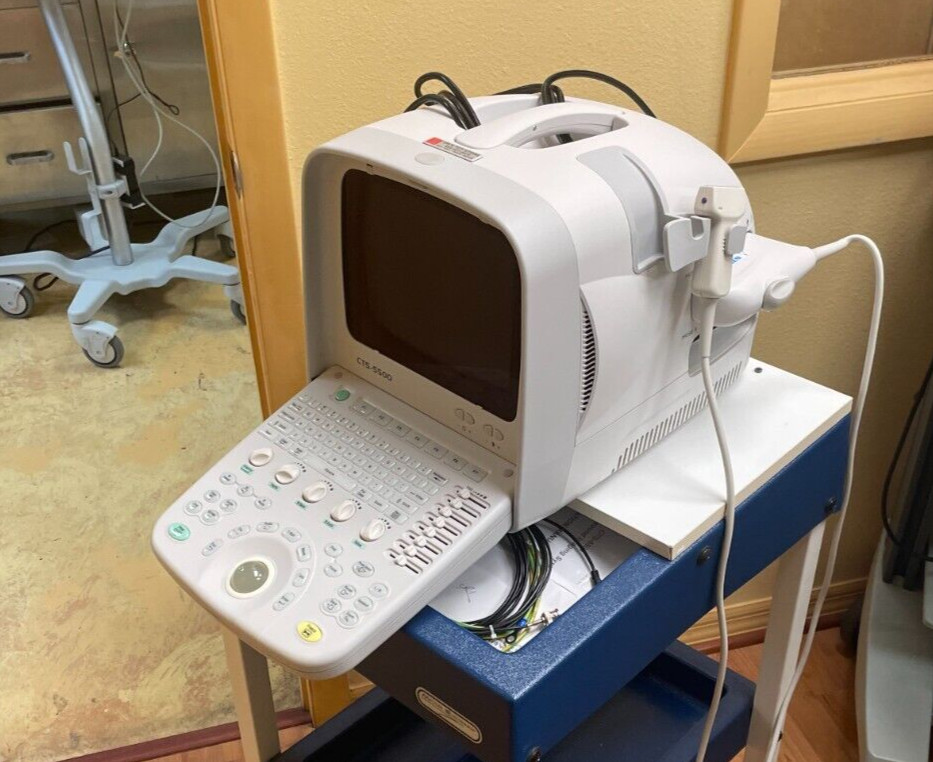
SIUI CTS-5500 Portable Ultrasound System w/ Probe — Tested Working — Medical/Vet
View Deal →
AS-IS SIUI Model CTS-3300 Portable Digital Ultrasound Imaging System Console
View Deal →
siui ultrasound Cts-900
View Deal →
Portable OB/GYN Ultrasound Machine SIUI Apogee 2300 Untested For Parts
View Deal →