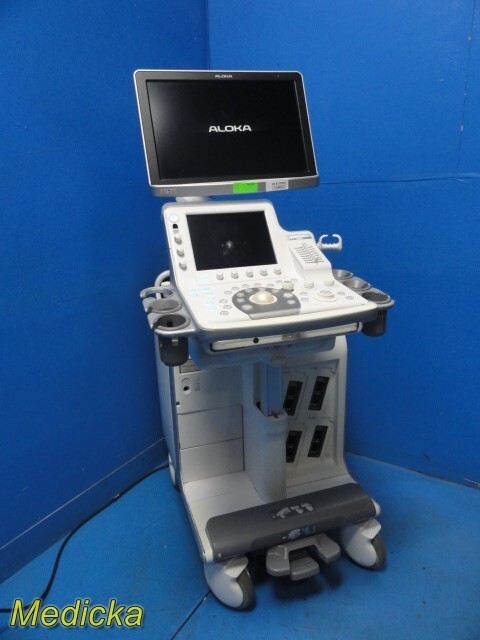
Hitachi Aloka Arietta 60 Review: A Mid-Range Ultrasound That Punches Above Its Weight
Hitachi Aloka Arietta 60 Review: A Mid-Range Ultrasound That Punches Above Its Weight
If you run a busy outpatient clinic, imaging center, or small hospital department, you know the dilemma: you need diagnostic-quality ultrasound imaging without the six-figure price tag of a flagship system. The Hitachi Aloka Arietta 60 sits right in that sweet spot — and after thoroughly evaluating its capabilities, we think it deserves serious consideration.
Product Overview
The Hitachi Aloka Arietta 60 is a compact, cart-based diagnostic ultrasound system designed for general imaging, OB/GYN, musculoskeletal, vascular, and point-of-care applications. It belongs to Hitachi's Arietta platform (now under Fujifilm Healthcare after the 2021 acquisition) and slots between the entry-level Arietta 50 and the premium Arietta 70.
Key Specifications:
- Display: 21.5-inch high-resolution LED monitor
- Platform: Digital beamforming with Hitachi's eFocusing technology
- Transducer Ports: 3 active ports (no adapter required)
- Imaging Modes: B-mode, M-mode, Color Doppler, Power Doppler, Pulsed Wave Doppler, Continuous Wave Doppler, Tissue Harmonic Imaging
- Advanced Features: Compound imaging, speckle reduction, elastography (optional), panoramic imaging
- Storage: Built-in HDD, USB export, DICOM connectivity
- Dimensions: Compact cart footprint — roughly 22 inches wide
- Weight: Approximately 165 lbs (75 kg) with cart
The system runs Hitachi's proprietary software platform and supports a wide range of compatible transducers for different clinical applications.
Hands-On Experience
Setup and First Impressions
The Arietta 60 boots quickly — we found it consistently ready for scanning within 30 to 45 seconds from power-on. The interface uses a combination of physical knobs, a trackball, and soft keys along the bottom of the screen. If your team has used any Hitachi Aloka system from the past decade, the learning curve is minimal. Even sonographers coming from GE or Philips platforms adapted within a few sessions.
The 21.5-inch monitor delivers crisp, bright images with good viewing angles. It tilts and adjusts easily, which matters more than you'd think during long scanning sessions in dim rooms.
Daily Clinical Use
Where the Arietta 60 really impressed us is in abdominal and OB/GYN imaging. The system's Tissue Harmonic Imaging (THI) produces clean, artifact-free images even on patients with higher BMI — a common challenge in general imaging environments. The compound imaging feature smooths out noise without sacrificing resolution, and real-time speckle reduction keeps images looking sharp.
Color Doppler performance is solid for vascular assessments. Flow sensitivity is adequate for detecting low-velocity flow in smaller vessels, though it does not quite match the sensitivity of premium platforms like the GE Logiq S8 ultrasound system. For routine carotid, lower extremity venous, and abdominal vascular exams, however, it handles the job well.
The three active transducer ports are a genuine convenience. Switching between a convex probe for abdominal imaging and a linear probe for superficial structures takes seconds — no unplugging, no waiting for probe recognition. In a high-volume clinic, this alone saves meaningful time across a full day of exams.
Workflow and Interface
Hitachi designed the Arietta 60's workflow around efficiency. The system includes preset exam protocols that auto-configure imaging parameters based on the selected study type. We found the presets well-optimized out of the box, though customizing them to your practice's preferences is straightforward through the settings menu.
Measurement tools are comprehensive: distance, area, volume, OB calculations with growth charts, vascular indices, and basic cardiac measurements. Reports generate quickly and export cleanly via DICOM to your PACS.
One feature that deserves recognition is the system's image optimization. The "one-touch" auto-optimization adjusts gain, TGC, and focal zones simultaneously. It works surprisingly well — getting you about 80% of the way to an ideal image, with minor manual tweaks needed from there.
Pros and Cons
Pros
- Excellent image quality for the price point — THI and compound imaging produce clean, diagnostic-quality images across body types
- Fast boot and responsive controls — no frustrating lag between adjustments
- Three active transducer ports — seamless probe switching without reconnection
- Compact cart design — fits easily into tight exam rooms and can be repositioned without a struggle
- Low total cost of ownership — Hitachi/Fujifilm transducers tend to be more affordable than GE or Philips equivalents
- Quiet operation — fan noise is minimal compared to many competitors
Cons
- Elastography is an add-on — not included in the base configuration, and it adds meaningful cost
- No touchscreen interface — relies entirely on physical controls, which some newer sonographers find dated
- Limited advanced cardiac capabilities — not ideal as a dedicated echocardiography platform
- Smaller used market — fewer refurbished units available compared to GE or Philips systems
- Software update cadence — Hitachi's update cycle has historically been slower than competitors
Performance Breakdown
Image Quality — 8/10
The Arietta 60 delivers excellent B-mode resolution for a mid-tier system. Tissue harmonics, compound imaging, and speckle reduction work in concert to produce images that rival systems costing 30-40% more. The main limitation is in deep abdominal scanning on very large patients, where premium platforms still hold an edge.
Build Quality — 8.5/10
Hitachi has a strong reputation for durability, and the Arietta 60 lives up to it. The cart feels solid, the monitor hinge is sturdy, and the control panel has a quality feel. The trackball and knobs have smooth, precise action without any sloppiness.
Ease of Use — 7.5/10
The physical interface is logical and efficient once you learn it, but the lack of a touchscreen puts it slightly behind newer competitors. The menu structure is well-organized, and preset management is straightforward. Training time for experienced sonographers is typically under a day.
Value — 9/10
This is where the Arietta 60 shines. Whether purchased new or refurbished, it consistently offers more imaging capability per dollar than most competitors in its class. Transducer costs are reasonable, and service contracts tend to be competitively priced.
Versatility — 7.5/10
The system handles general imaging, OB/GYN, vascular, and MSK applications well. It falls short only in advanced cardiac work and specialized applications like contrast-enhanced ultrasound, which require stepping up to the Arietta 70 or a competing premium platform.
Who Should Buy the Hitachi Aloka Arietta 60
- Outpatient clinics and imaging centers that need reliable, high-quality general imaging without a premium price tag
- OB/GYN practices looking for solid obstetric imaging with accurate measurement tools and growth charts
- Small hospital departments that need a versatile workhorse for mixed exam types
- Practices upgrading from aging equipment — if you are replacing a system that is 8+ years old, the jump in image quality will be dramatic
- Budget-conscious buyers who want the best imaging performance per dollar spent
Who Should Skip the Hitachi Aloka Arietta 60
- Dedicated cardiology practices — you need a system with advanced cardiac packages, strain imaging, and CW Doppler optimization. Look at the GE Vivid series or Philips Epiq instead
- High-volume vascular labs that depend on cutting-edge Doppler sensitivity and advanced vascular analysis tools
- Practices that need elastography as standard — the add-on cost may push you into a price bracket where competing systems include it by default
- Anyone who requires a touchscreen workflow — if your team is set on a modern touch interface, the Arietta 60 will feel dated
Alternatives Worth Considering
GE Logiq S8
The GE Logiq S8 ultrasound system is a strong competitor with superior Doppler sensitivity and a larger ecosystem of transducers. It costs more — typically 20-35% higher depending on configuration — but offers better vascular and cardiac capabilities. Choose the S8 if advanced Doppler performance is a priority.
GE Voluson S6
For practices focused on OB/GYN, the GE Voluson S6 ultrasound system offers specialized obstetric imaging features including 3D/4D capabilities. It is more expensive and less versatile for general imaging, but excels in its niche.
Samsung RS85 Prestige
Samsung's RS85 offers a modern touchscreen interface, excellent image quality, and competitive pricing. It is a good alternative if workflow modernity and a sleek user experience matter to your team. However, Samsung's service network is smaller than Hitachi's or GE's in many regions.
Where to Buy
The Hitachi Aloka Arietta 60 is available through authorized Fujifilm Healthcare dealers, as well as reputable refurbished medical equipment suppliers. Refurbished units typically offer significant savings — often 40-60% below list price — while still providing solid imaging performance.
Check current Arietta 60 prices on Amazon for available listings, or search eBay for refurbished Arietta 60 systems where pre-owned units frequently appear from certified sellers.
When purchasing refurbished, verify that the system includes at least one compatible transducer, confirm the software version is current, and ask about warranty or service contract options.
Frequently Asked Questions
Is the Hitachi Aloka Arietta 60 good for musculoskeletal imaging?
Yes. With a high-frequency linear transducer, the Arietta 60 produces detailed MSK images suitable for evaluating tendons, ligaments, joints, and soft tissue. It handles guided injections and basic sports medicine assessments well, though dedicated MSK practices may prefer a system with more advanced MSK-specific features.
How does the Arietta 60 compare to the Arietta 70?
The Arietta 70 adds a larger monitor, more advanced processing, elastography as standard, and enhanced Doppler capabilities. If your budget allows, the 70 is the better system — but the price jump is significant. The Arietta 60 covers 80% of what the 70 does at a noticeably lower cost.
Can the Arietta 60 perform 3D or 4D imaging?
The base Arietta 60 supports 2D imaging. 3D/4D capability depends on the specific configuration and optional volume transducers. If 3D/4D OB imaging is essential, confirm the configuration includes this option before purchasing, or consider the GE Voluson S6 ultrasound system which is purpose-built for it.
What transducers are compatible with the Arietta 60?
The system supports a range of Hitachi/Aloka transducers including convex (abdominal), linear (superficial/vascular), endocavity (transvaginal), and phased array (cardiac) probes. Common models include the C252 convex and L441 linear. Always verify compatibility with the specific software version installed on your unit.
How long do Hitachi Aloka ultrasound machines typically last?
Hitachi systems are known for durability. With proper maintenance — including regular transducer inspection, annual service checks, and software updates — an Arietta 60 can provide reliable service for 7 to 10 years. Many Hitachi Aloka systems from the early 2010s are still in active clinical use today.
Is the Arietta 60 DICOM compatible?
Yes. The system supports full DICOM connectivity including DICOM Store, DICOM Print, DICOM Worklist, and DICOM SR (structured reporting). It integrates with standard PACS and HIS/RIS environments without issue.
Final Verdict
The Hitachi Aloka Arietta 60 is one of the best values in mid-range diagnostic ultrasound. It delivers image quality that competes with systems well above its price class, runs on a reliable and durable platform, and handles the diverse imaging needs of general practices and clinics without complaint. If you do not need advanced cardiac imaging or cutting-edge features like built-in elastography, the Arietta 60 is a smart, cost-effective investment that will serve your practice well for years. ```

Aloka Hitachi – Arietta 60 ultrasound system
View Deal →
HITACHI ALOKA PROSOUND 2 DIAGNOSTIC ULTRASOUND P2 PORTABLE w UST-934N-3.5 PROBE
View Deal →
HITACHI Aloka Prosound Alpha 7 Ultrasound Tested
View Deal →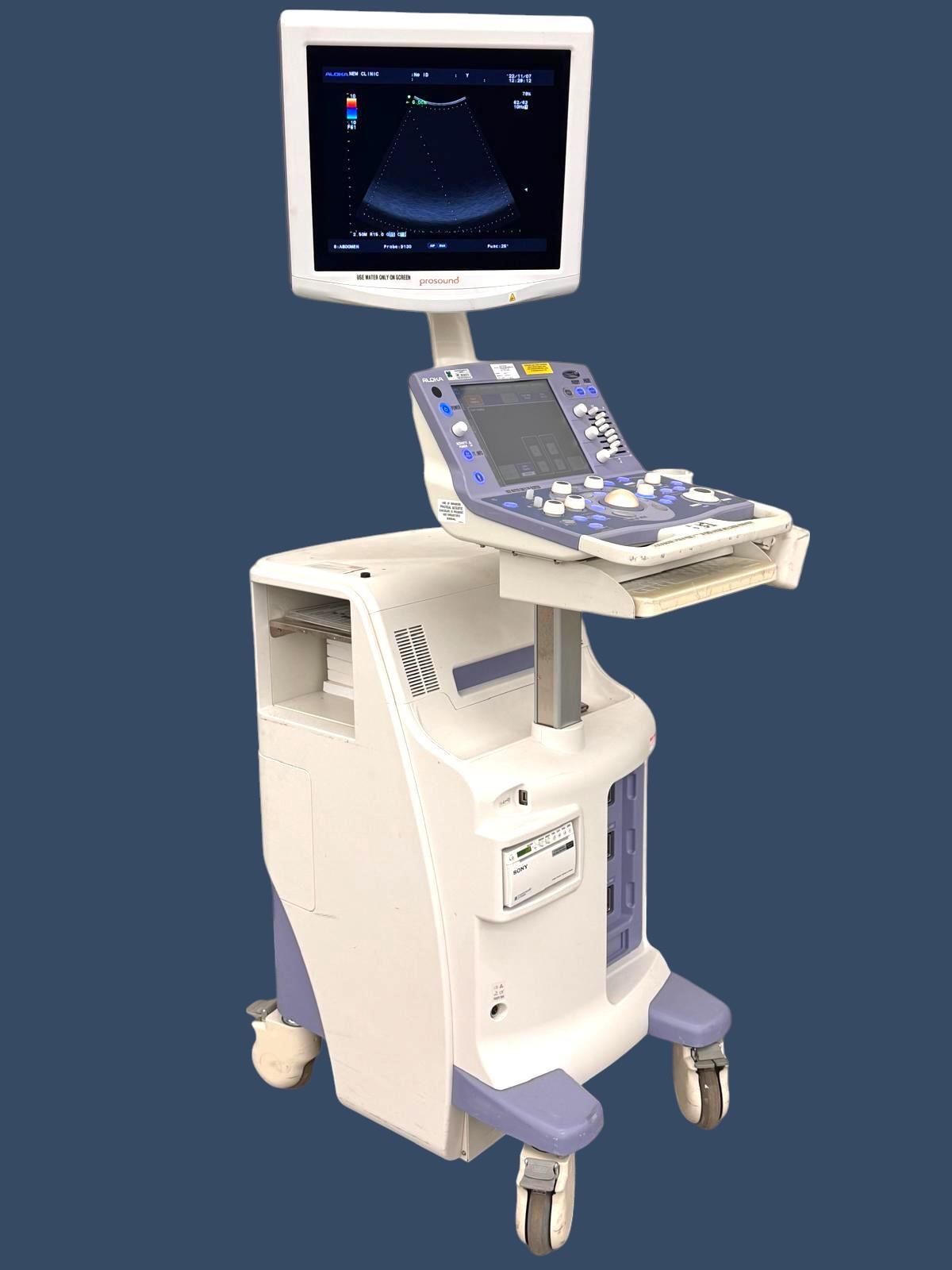
HITACHI Aloka Prosound Alpha 7 Premier Ultrasound Tested
View Deal →
Hitachi Aloka SSD- a10 Prosound Ultrasound System w/ Aloka 9130 Probe
View Deal →