Samsung Medison SonoAce X8 Review: A Reliable Mid-Range Ultrasound Worth Considering
Samsung Medison SonoAce X8 Review: A Reliable Mid-Range Ultrasound Worth Considering
If you run a busy clinic or imaging center and need a capable ultrasound system without the six-figure price tag of flagship models, the search can feel overwhelming. The Samsung Medison SonoAce X8 sits in that sweet spot between entry-level portables and premium console systems — but does it actually deliver where it counts?
We spent considerable time evaluating the SonoAce X8 across multiple clinical applications. Here is what we found.
Product Overview
The Samsung Medison SonoAce X8 is a cart-based diagnostic ultrasound system designed for general imaging, OB/GYN, musculoskeletal, and small-parts applications. Manufactured by Samsung Medison (now operating under the Samsung Healthcare division), the X8 targets mid-sized practices, hospitals, and specialty clinics that need reliable imaging performance at a manageable price point.
Key Specifications:
- Display: 15-inch high-resolution LED monitor with adjustable arm
- Imaging Modes: B-mode, M-mode, Color Doppler, Power Doppler, PW/CW Doppler, Tissue Harmonic Imaging
- Transducer Ports: 3 active probe connectors (no adapter needed)
- Processing: Samsung's proprietary digital beamforming architecture
- Storage: Built-in hard drive with USB and DICOM export
- Weight: Approximately 75 kg (cart-based configuration)
- Connectivity: DICOM 3.0, USB, S-Video, composite video output
The X8 is positioned as a workhorse system — not the flashiest unit on the market, but one built for daily clinical throughput.
Hands-On Experience
Setup and First Impressions
Out of the crate, the SonoAce X8 feels well-built. The cart is sturdy with locking casters, and the console layout is logical. Samsung Medison clearly designed this for sonographers who scan all day — the keyboard height, trackball placement, and monitor articulation all feel ergonomically sound.
Initial boot-up takes roughly 45 seconds, which is competitive with other systems in this class. The menu system is straightforward, and most experienced sonographers can navigate the interface within minutes without consulting the manual.
Daily Clinical Use
Where the X8 genuinely impresses is in its day-to-day usability. The control panel features dedicated hard keys for the most common adjustments — gain, depth, focus, and freeze — so you are not hunting through software menus during a scan. The trackball is responsive, and the keyboard layout follows the conventions most sonographers already know.
Image quality in B-mode is solid for its price tier. Tissue differentiation is good in abdominal and OB applications, and Tissue Harmonic Imaging (THI) helps clean up images on technically difficult patients. That said, the X8 does not match the resolution or frame rates of premium systems like the GE Logiq E10 or the Samsung RS85 Prestige — but those systems cost two to three times as much.
Color Doppler performance is adequate for routine vascular assessments and OB applications. Flow sensitivity is reasonable, though we noticed slightly more color bleed on deeper structures compared to higher-end competitors. For dedicated vascular labs, this may be a limitation worth considering.
Standout Features
SonoView (Image Management): The built-in image review and reporting tool is surprisingly capable. You can annotate, measure, and organize studies without leaving the system. DICOM export works reliably, and USB transfer is a useful backup option for smaller practices without full PACS infrastructure.
Probe Versatility: With three active ports, you can keep your most-used transducers connected and switch between applications without physically swapping probes. Samsung Medison offers a solid lineup of compatible transducers covering convex, linear, phased array, and endocavity configurations.
Auto Optimization: The one-touch image optimization feature does a respectable job of adjusting gain, TGC, and dynamic range for a given anatomy preset. It is not perfect — experienced sonographers will still tweak manually — but it speeds up workflow for routine exams.
Pros and Cons
Pros
- Excellent ergonomics — The console design reduces fatigue during long scanning sessions
- Three active probe ports — Switch between applications without unplugging transducers
- Intuitive interface — Minimal learning curve for experienced sonographers
- Reliable build quality — The cart and hardware feel durable enough for high-volume clinical use
- Competitive price point — Significantly more affordable than flagship systems with comparable basic imaging
- DICOM 3.0 connectivity — Integrates well with existing PACS and EMR systems
Cons
- Image resolution trails premium systems — Noticeable gap compared to flagship units in fine detail work
- Color Doppler sensitivity — Adequate but not exceptional, especially at depth
- Limited advanced features — No elastography, contrast imaging, or advanced 3D/4D capabilities in the base configuration
- 15-inch display — Smaller than the 19- or 21-inch monitors found on newer competitors
- Aging platform — Samsung Medison has shifted focus to the HS and RS series, meaning future software updates are unlikely
- Weight — At 75 kg, it is not easily moved between rooms
Performance Breakdown
| Category | Rating (1-10) | Notes |
|---|---|---|
| Image Quality | 7 | Solid B-mode and harmonic imaging; trails flagships in resolution |
| Build Quality | 8 | Sturdy cart, responsive controls, durable hardware |
| Ease of Use | 9 | Intuitive layout, fast boot, minimal training needed |
| Value for Money | 8 | Strong performance-to-price ratio, especially on the used market |
| Versatility | 7 | Covers general, OB/GYN, MSK, and small parts; lacks specialty modes |
Who Should Buy This
Budget-conscious clinics expanding imaging capabilities. If you are a primary care practice, urgent care center, or small hospital adding ultrasound services without a massive capital budget, the SonoAce X8 delivers reliable performance at a fraction of flagship pricing.
Practices replacing aging equipment. If you are currently running a system from the early 2000s and need a meaningful upgrade without overspending, the X8 represents a substantial jump in image quality and workflow efficiency.
Training environments. The intuitive interface and forgiving image optimization make the X8 a solid choice for sonography training programs where students need hands-on experience with a capable clinical system.
Who Should Skip This
Dedicated vascular or cardiac labs. The Doppler performance and frame rates are not competitive enough for high-volume vascular or echocardiography work. You will want a system purpose-built for those applications.
Practices that need elastography or contrast imaging. The X8 does not support these advanced modalities. If your clinical workflow depends on them, look at newer-generation systems like the Samsung HS60 or the GE Logiq S8.
Anyone needing long-term software support. With Samsung Medison focusing on its newer product lines, the X8 is unlikely to receive meaningful software updates going forward.
Alternatives Worth Considering
GE Logiq S8
The GE Logiq S8 ultrasound system offers superior image quality and a wider range of advanced features, including elastography on some configurations. It costs more, but if image quality is your top priority, the investment pays off. GE also has a stronger service network in most regions.
GE Logiq E (Portable)
If portability matters more than a full console setup, the GE Logiq E portable ultrasound is worth a look. It sacrifices some screen real estate and advanced features but makes up for it with mobility and a smaller footprint. Ideal for practices with limited space or point-of-care needs.
Portable Laptop Ultrasound Systems
For budget-constrained practices or field work, portable laptop ultrasound scanners offer an entry point well below the X8's price. Image quality is more limited, but for basic screening and guided procedures, they can be surprisingly effective.
Where to Buy
The Samsung Medison SonoAce X8 is widely available on the refurbished and used medical equipment market. New units are increasingly rare as Samsung focuses on its newer HS and RS product lines.
Check current pricing and availability:
When buying used or refurbished, verify transducer compatibility, check for available service history, and confirm the system includes current software. Reputable refurbished medical equipment dealers typically offer 90-day to one-year warranties.
Frequently Asked Questions
Is the Samsung Medison SonoAce X8 still a good ultrasound machine in 2026?
Yes, for its price point. While it is no longer the latest technology, the X8 remains a capable system for general imaging, OB/GYN, and basic musculoskeletal applications. The used market pricing makes it an excellent value for practices that do not need cutting-edge features.
What transducers are compatible with the SonoAce X8?
The X8 supports Samsung Medison's range of transducers including convex (C2-8, C3-7), linear (L5-13, L8-17), phased array (P2-4), and endocavity (EC4-9) probes. Always verify specific transducer compatibility with the seller, as some probes require specific software revisions.
Can the SonoAce X8 do 3D or 4D imaging?
The base configuration supports 2D imaging only. Some configurations include optional 3D volume probe capability, but true real-time 4D imaging is not a strength of this platform. If 3D/4D is critical, consider the Samsung HS50 or HS60 instead.
How does the SonoAce X8 compare to the Samsung HS50?
The HS50 is Samsung Medison's newer replacement in this market segment. It offers improved image quality, a larger display, and additional features like S-Detect AI-assisted detection. The HS50 costs more but represents a meaningful generational upgrade.
What is the typical lifespan of a SonoAce X8?
With proper maintenance — including annual preventive service, transducer inspections, and climate-controlled storage — the X8 can remain clinically useful for 8 to 12 years. Many refurbished units still in service today were originally manufactured between 2012 and 2016.
Does the SonoAce X8 support DICOM?
Yes. The X8 supports DICOM 3.0 including Store, Print, Worklist, and MPPS. This allows integration with most hospital PACS and radiology information systems.
Final Verdict
The Samsung Medison SonoAce X8 is a dependable, well-built ultrasound system that delivers solid clinical performance at an accessible price — especially on the refurbished market. It will not win any awards for cutting-edge technology, but for general-purpose imaging in a busy practice, it remains a smart, practical investment. If you need reliability over flash and your workflow does not demand advanced specialty features, the X8 deserves serious consideration. ```
Samsung Medison SonoAce R7 Ultrasound Machine
View Deal →
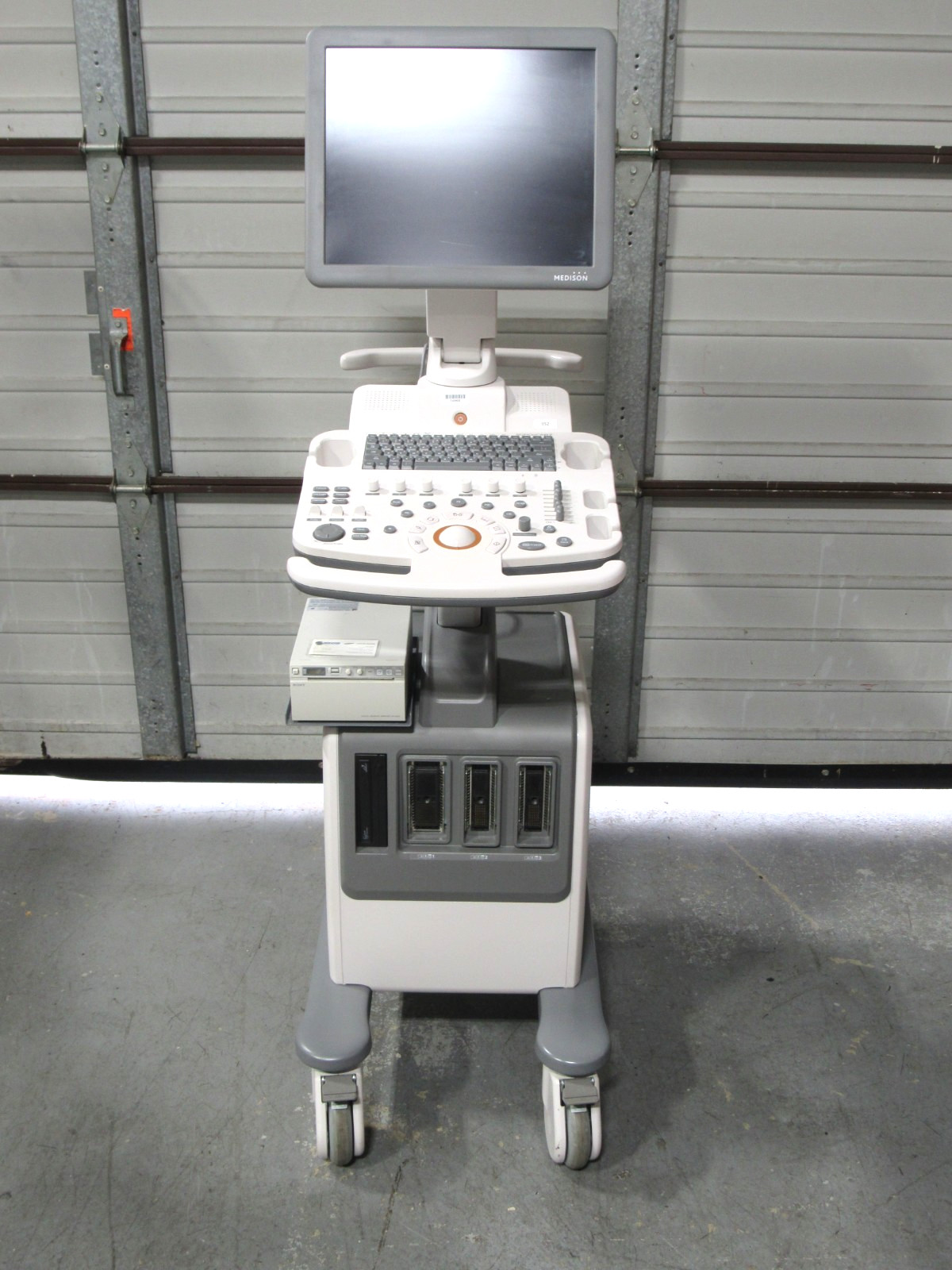
Medison SonoAce X8 Diagnostic Ultrasound System
View Deal →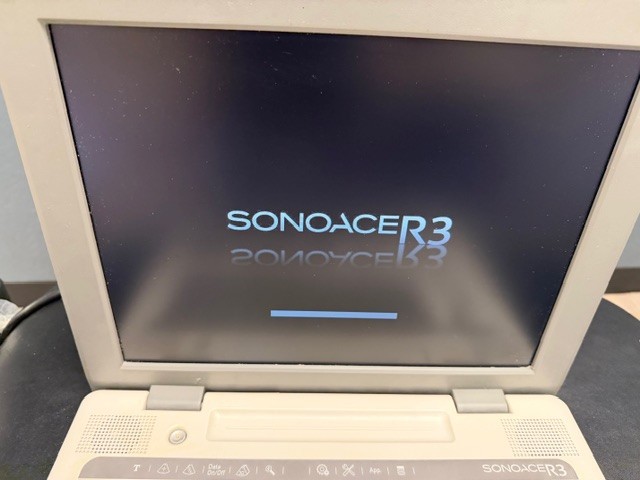
Samsung Medison Sonoace R3 Portable Ultrasound with LN5-12/40 vascular probe
View Deal →
Samsung Medison Sonoace R3 Portable Ultrasound with LN5-12/40 vascular probe
View Deal →
Samsung Medison Sonoace X4 With C3-7ED Convex Probe and Printer
View Deal →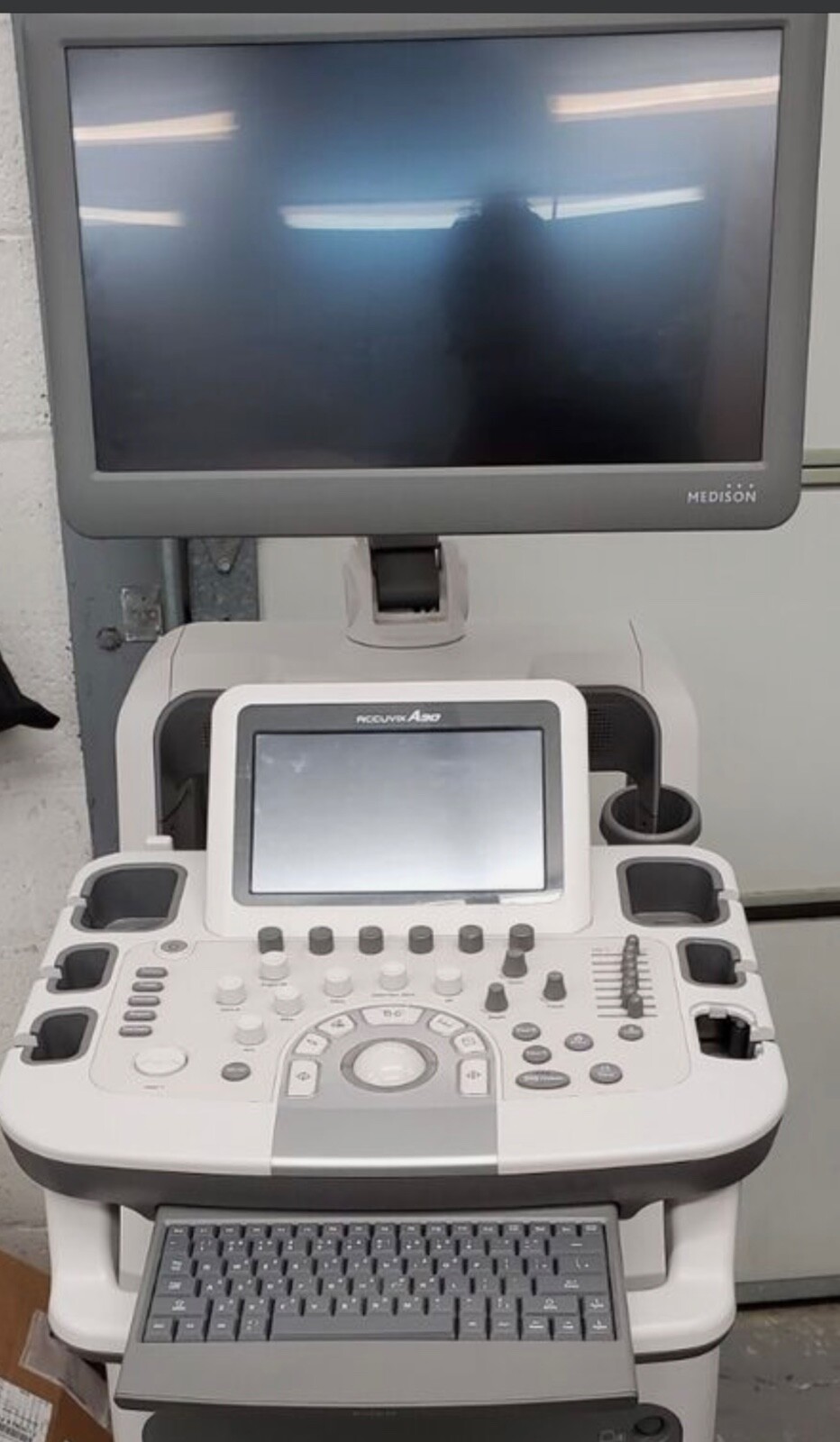
Samsung Medison A30 Ultrasound System Reasonable offers will be Accepted
View Deal →
Samsung Medison C2-8 Ultrasound Transducer / Probe FOR X8, Accuvix XG
View Deal →
Medison LN5-12 Linear Probe Transducer for Samsung MSK Superficial Imaging
View Deal →
Samsung Medison C2-51R Abdominal ultrasound probe / FOR PART
View Deal →
SAMSUNG MEDISON VR5-9 Ultrasound Endocavity Probe Transducer - from ACCUVIX A30
View Deal →
Samsung Medison L48HD 75-40 Linear Array Ultrasound Transducer (7273)
View Deal →