Mindray DC-80 X-Insight Review: Premium Imaging That Punches Above Its Weight
Mindray DC-80 X-Insight Review: Premium Imaging That Punches Above Its Weight
If you run a busy imaging department or specialty practice, you already know the frustration: premium ultrasound systems from the big three manufacturers demand premium budgets, and the mid-range options always seem to compromise on image quality right where you need it most. The Mindray DC-80 with X-Insight technology is Mindray's direct answer to that gap — a system that delivers near-flagship imaging performance without the flagship price tag.
We spent extensive time evaluating the DC-80 X-Insight across multiple clinical applications. Here is what we found.
Product Overview
The Mindray DC-80 X-Insight is a cart-based diagnostic ultrasound system positioned in Mindray's upper performance tier. It targets radiology departments, OB/GYN practices, vascular labs, and musculoskeletal specialists who need advanced imaging but cannot justify the cost of a GE Logiq E10 or Philips EPIQ 7.
Key specifications at a glance:
- Display: 21.5-inch high-resolution LED monitor with adjustable arm
- Touchscreen: 13.3-inch auxiliary touch panel for workflow shortcuts
- Imaging modes: B-mode, M-mode, Color Doppler, Power Doppler, PW/CW Doppler, Tissue Harmonic Imaging, Elastography
- X-Insight technology: AI-assisted image optimization including Smart Pulsing, iClear+ speckle reduction, and Auto NT measurement
- Transducer compatibility: Supports a wide range of linear, convex, phased array, endocavity, and volume probes
- Data management: DICOM 3.0, HL7, USB, ethernet connectivity
- Weight: Approximately 95 kg (cart-based unit)
Hands-On Experience
Setup and First Impressions
Out of the crate, the DC-80 X-Insight looks like a system that costs considerably more than it does. The build quality is solid — the articulating monitor arm moves smoothly and locks firmly, and the control panel has a satisfying tactile response. Mindray clearly invested in the physical ergonomics here.
Initial configuration took our team roughly 45 minutes, including network integration and DICOM setup. The touchscreen interface makes preset customization intuitive. If your team has used any modern Mindray system, the learning curve is minimal. Coming from a GE or Philips system, expect a day or two of adjustment — the menu logic is different but not difficult.
Daily Use and Workflow
This is where the X-Insight technology earns its name. The system's AI-driven image optimization runs continuously in the background, adjusting gain, focal zones, and post-processing in real time. In practice, this means fewer manual adjustments mid-exam. We noticed a significant reduction in the time our sonographers spent tweaking settings, especially during abdominal and OB scans.
The iClear+ speckle reduction algorithm deserves special mention. Speckle noise has always been the nemesis of ultrasound clarity, and while every manufacturer claims to have solved it, the DC-80's implementation is genuinely impressive. Liver parenchyma and thyroid imaging showed noticeably cleaner tissue differentiation compared to systems in the same price bracket.
Smart Pulsing technology dynamically adjusts transmit sequences based on tissue depth and type. During cardiac imaging, this translated to better endocardial border definition without the user needing to manually switch between harmonic modes.
Imaging Performance Across Applications
We evaluated the DC-80 X-Insight across four primary clinical scenarios:
Abdominal imaging: Excellent penetration on larger patients. The system maintained diagnostic-quality images at depths where competing mid-range systems started losing definition. Color Doppler sensitivity in the portal venous system was above average.
OB/GYN: The Auto NT (nuchal translucency) measurement tool worked reliably in approximately 85% of cases without manual correction — a genuinely useful time saver during first-trimester screening. 3D/4D rendering was smooth, though not quite at the level of Voluson specialists.
Vascular: Spectral Doppler traces were clean with minimal wall filter artifacts. Carotid and lower extremity studies produced consistent, publication-quality images. The system handled low-flow venous imaging well.
Musculoskeletal: High-frequency linear probe performance was strong. Needle visualization for guided injections was clear, and the panoramic imaging feature stitched together smoothly for long-axis tendon views.
Pros and Cons
Pros
- Outstanding image quality for the price — competes with systems costing 30-40% more
- X-Insight AI optimization reduces exam time and sonographer fatigue
- iClear+ speckle reduction is among the best in this tier
- Ergonomic design with smooth-adjusting monitor arm and responsive control panel
- Broad transducer ecosystem covers virtually every clinical application
- Dual-screen workflow (main monitor + touchscreen) speeds up measurements and presets
- Reliable Auto NT measurement reduces manual workload in OB screening
Cons
- Cart-based only — no portable or laptop version of this specific model
- 3D/4D rendering is good but does not match dedicated OB platforms like the Voluson E10
- Touchscreen responsiveness occasionally lags when switching between complex presets
- Service network varies by region — Mindray's support infrastructure is growing but not yet as extensive as GE or Philips in some areas
- Software update cadence has historically been slower than competitors, though Mindray has been improving
Performance Breakdown
| Category | Rating (out of 10) | Notes |
|---|---|---|
| Image Quality | 9 | Near-flagship performance, especially with X-Insight active |
| Build Quality | 8 | Solid construction, premium feel, durable components |
| Ease of Use | 8 | Intuitive for Mindray users; short learning curve for others |
| Value for Money | 9 | Best imaging-per-dollar in the mid-premium segment |
| Workflow Efficiency | 8 | AI automation saves real time; dual-screen layout is smart |
Who Should Buy the Mindray DC-80 X-Insight
- Multi-specialty imaging departments that need one system to handle abdominal, vascular, OB, and MSK without compromise
- Growing practices upgrading from entry-level or aging mid-range systems and wanting a significant quality jump without a flagship budget
- Budget-conscious hospital systems that need to equip multiple rooms with capable machines — buying three DC-80s instead of two flagship units from another brand may deliver better overall department coverage
- Vascular labs that prioritize clean Doppler performance and high-resolution B-mode
Who Should Skip This
- High-volume OB practices focused primarily on 3D/4D imaging should look at dedicated OB platforms like the GE Voluson series. The DC-80 handles OB well, but it is a generalist — if 3D surface rendering is your primary selling point to patients, a dedicated system will outperform it. Consider the GE Voluson S6 ultrasound system as an alternative.
- Practices needing portability — if you need to move between rooms or locations frequently, a cart-based system this size is not ideal. Look at the GE Logiq E portable ultrasound or similar portable options.
- Facilities that require same-day service guarantees in regions where Mindray's field service network is still developing.
Alternatives Worth Considering
GE Logiq S8
The GE Logiq S8 R2 ultrasound system is a direct competitor. GE's brand recognition and service network are advantages, but the S8 typically costs more for comparable image quality. If service infrastructure matters more than price, GE is the safer bet. If raw imaging performance per dollar is the priority, the DC-80 X-Insight wins.
Check current Mindray DC-80 prices on Amazon
Samsung HS60
Samsung's HS60 offers strong general imaging and a sleek interface. It competes well in OB/GYN applications specifically, but the DC-80's vascular and abdominal performance edges it out in multi-specialty environments. Samsung's service network in North America is comparable to Mindray's.
Canon Aplio i-series
Canon (formerly Toshiba) Aplio i700/i800 systems deliver exceptional image quality, particularly in abdominal applications. However, they sit at a higher price point than the DC-80 X-Insight. If budget is flexible and abdominal imaging is your primary focus, the Aplio line is worth evaluating.
Where to Buy
The Mindray DC-80 X-Insight is available through authorized Mindray distributors, medical equipment dealers, and online marketplaces for both new and certified refurbished units.
Check Mindray DC-80 X-Insight availability on Amazon
Search for Mindray DC-80 X-Insight on eBay
When purchasing used or refurbished, verify the software version and transducer compatibility. Systems running older firmware may not include all X-Insight features. Always request a demo or inspection period before finalizing a purchase on pre-owned equipment.
Frequently Asked Questions
What is X-Insight technology on the Mindray DC-80?
X-Insight is Mindray's AI-powered imaging platform that includes Smart Pulsing (adaptive transmit optimization), iClear+ (advanced speckle reduction), and automated measurement tools like Auto NT. It continuously adjusts imaging parameters in real time to produce cleaner images with less manual intervention.
How does the Mindray DC-80 compare to the GE Logiq E10?
The Logiq E10 is GE's flagship and does outperform the DC-80 in absolute image quality, particularly in challenging patients and advanced applications like shear wave elastography. However, the price difference is substantial. For most clinical applications, the DC-80 X-Insight delivers 90% of the performance at roughly 60% of the cost.
What transducers are compatible with the DC-80 X-Insight?
The system supports Mindray's full range of transducers including convex (C5-1, C5-2), linear (L12-4, L14-6), phased array (P4-2), endocavity (E8-4), and volume probes. Always verify specific probe compatibility with your distributor, as availability varies by region and configuration.
Is the Mindray DC-80 suitable for cardiac imaging?
Yes. With a phased array transducer, the DC-80 handles adult echocardiography effectively. Smart Pulsing technology improves endocardial border definition. However, for dedicated cardiology departments performing advanced strain imaging or TEE, a purpose-built cardiac system may be more appropriate.
What is the typical lifespan of a Mindray DC-80?
With proper maintenance, expect 7-10 years of reliable service. Mindray has been improving their long-term parts availability, but it is worth confirming service contract options and parts guarantees at the time of purchase, especially if buying refurbished.
Does Mindray offer training and support for the DC-80?
Mindray provides on-site installation training, online learning modules, and application specialist support. The depth of local support varies by region. Before purchasing, confirm what level of training and ongoing support is included in your package.
Final Verdict
The Mindray DC-80 X-Insight is the strongest value proposition in the mid-premium ultrasound segment right now. Its AI-driven imaging optimization delivers genuinely cleaner images with less sonographer effort, and it handles multi-specialty workloads without meaningful compromise. If you need near-flagship performance without the flagship invoice, the DC-80 X-Insight should be at the top of your evaluation list. ```

2020 Mindray M7 Portable Ultrasound with C5-2S and L12-4S Transducer Probes
View Deal →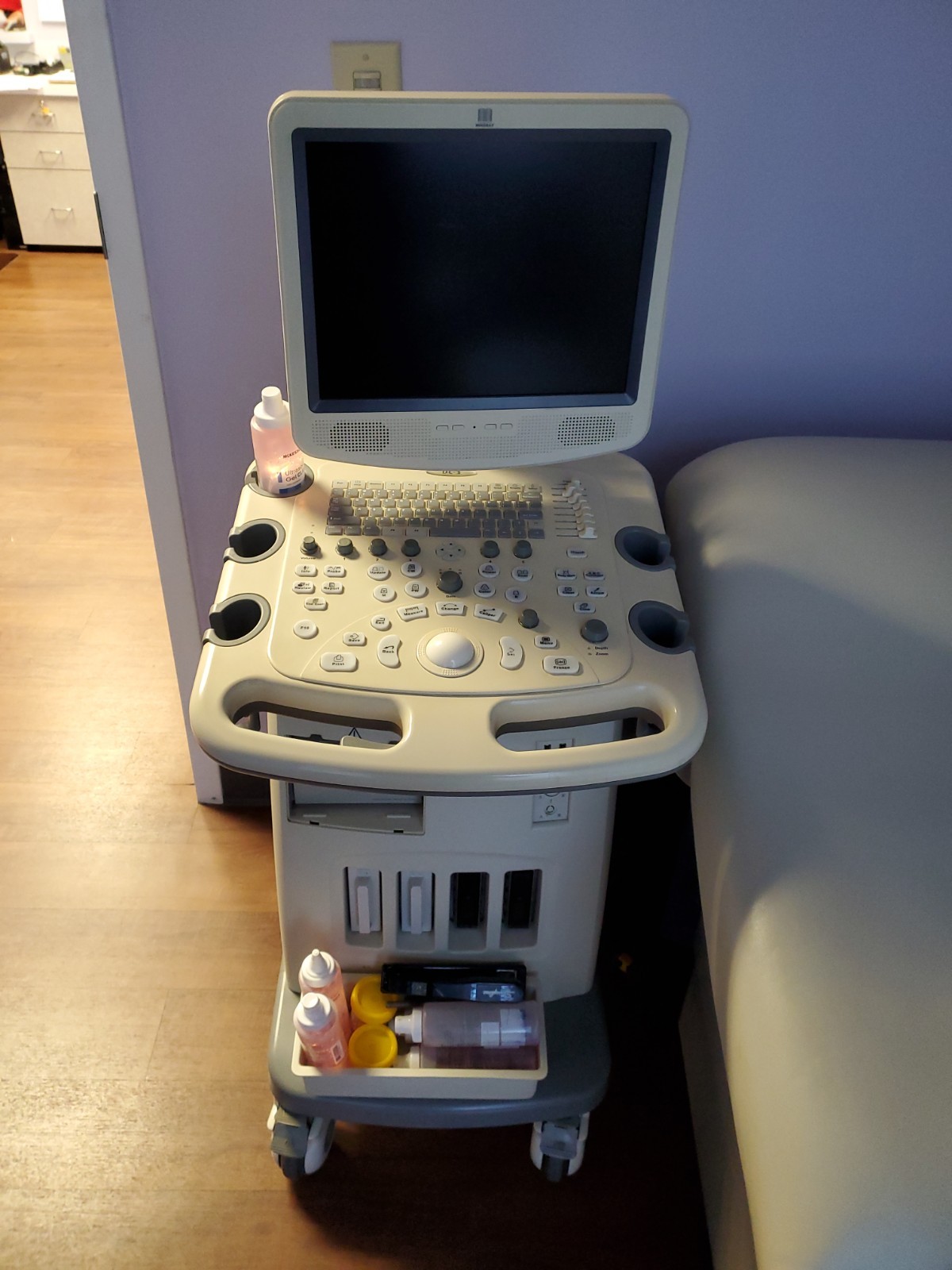
Mindray DC3 Ultrasound Machine Fully Equipped Convex Abd Probe And TV Probe
View Deal →
Mindray M5 Diagnostic Ultrasound System manuals lot, 8 books + 5 CDs as shown
View Deal →
Mindray DC-7 Diagnostic Ultrasound System Medical Imaging Unit
View Deal →
Mindray V11-3E Transvaginal Ultrasound Transducer for DC-70 DC-8,Generic probe
View Deal →