Medison SonoAce X8 Review: A Versatile Mid-Range Ultrasound Worth Considering
Exploring Features and Performance: A Comprehensive Review of the Medison SonoAce X8
If you're running a busy clinic or private practice and need a capable ultrasound system that won't drain your entire equipment budget, the Medison SonoAce X8 deserves a serious look. Positioned as a mid-range workhorse from Samsung Medison, this system has quietly earned a loyal following among sonographers who value reliable imaging without the premium price tag of flagship models.
We've spent considerable time researching the SonoAce X8's capabilities, talking to users in the field, and comparing it against competing systems. Here's our detailed breakdown of everything you need to know before making a purchasing decision.
Product Overview
The Medison SonoAce X8 is a console-based diagnostic ultrasound system manufactured by Samsung Medison (formerly Medison Co., Ltd., now a subsidiary of Samsung Electronics). It's designed for general-purpose imaging across multiple clinical applications including OB/GYN, abdominal, vascular, small parts, musculoskeletal, and cardiac imaging.
Key Specifications:
- Platform: Console-based, cart-mounted system
- Display: 15-inch high-resolution LCD monitor with adjustable arm
- Imaging Modes: B-mode, M-mode, Color Doppler, Power Doppler, Pulsed Wave Doppler, Continuous Wave Doppler
- Transducer Ports: 3 active probe connectors (no swapping mid-exam)
- Advanced Features: SonoView (image management), CrossXBeam (compound imaging), HDVI (High Definition Volume Imaging)
- Storage: Built-in hard drive with USB and DICOM export
- Weight: Approximately 85 kg (cart-mounted)
The X8 sits in Samsung Medison's mid-tier lineup, above the SonoAce R7 and below the higher-end Accuvix series. It was designed to bring advanced imaging features to practices that couldn't justify the cost of premium platforms.
Hands-On Experience
Setup and Initial Impressions
Getting the SonoAce X8 operational is straightforward. The console boots up in approximately 45 seconds — not the fastest in its class, but acceptable for daily clinical use. The user interface runs on a Windows-based platform with Medison's proprietary imaging software overlay.
The control panel layout follows a logical workflow. Frequently used controls like gain, depth, and TGC sliders are positioned within easy reach, and the trackball feels responsive without excessive play. The keyboard layout takes a session or two to memorize if you're coming from a GE or Philips system, but the learning curve isn't steep.
Daily Use and Workflow
Where the SonoAce X8 really earns its keep is in routine scanning. The system handles bread-and-butter abdominal and OB exams with confidence. Image optimization is semi-automated — pressing the "Auto" button gets you about 80% of the way there, with manual fine-tuning handling the rest.
Three active probe ports is a genuine workflow advantage. In a mixed-use clinic, you can keep a convex, linear, and endocavity probe connected simultaneously. No unplugging and swapping mid-patient, no waiting for probe recognition. It sounds minor until you're 30 patients into a full day.
The SonoView image management system stores exams locally and supports DICOM connectivity for PACS integration. Export options include USB drive, network transfer, and direct thermal printing. The reporting tools are functional if basic — don't expect the sophistication of a dedicated reporting suite, but for generating standard OB measurements and calculation packages, it covers the essentials.
Image Quality Deep Dive
Image quality on the SonoAce X8 is genuinely impressive for its price bracket. The CrossXBeam compound imaging technology reduces speckle noise and enhances border definition in B-mode. In practical terms, this means clearer organ boundaries and better tissue differentiation, especially in the near field.
Color Doppler performance is solid for vascular assessments. Flow sensitivity is adequate for detecting low-velocity venous flow, though it doesn't match the sensitivity of premium systems like the GE Logiq S8 ultrasound system when you're chasing subtle flow in deep vessels.
The HDVI volumetric imaging is a nice addition for OB applications, though the rendering quality and processing speed fall short of what you'd get from dedicated 3D/4D platforms. Think of it as a useful supplementary tool rather than a primary volume imaging solution.
Pros and Cons
Pros
- Excellent price-to-performance ratio — delivers 80% of premium system image quality at roughly 40-50% of the cost
- Three active probe ports — real workflow improvement for busy multi-specialty practices
- CrossXBeam compound imaging — noticeably reduces speckle and improves tissue contrast
- Reliable build quality — Samsung Medison systems have a strong reputation for longevity
- Broad transducer compatibility — extensive probe lineup covers virtually every clinical application
- Intuitive control panel — minimal learning curve for experienced sonographers
Cons
- Boot time is middling — 45 seconds feels slow compared to newer systems in the 15-20 second range
- 3D/4D capabilities are limited — HDVI works but can't compete with dedicated volumetric platforms
- Software interface feels dated — the Windows-based UI shows its age compared to modern touchscreen systems
- Bulky footprint — at 85 kg on a cart, it's not moving between rooms easily
- Reporting tools are basic — practices with advanced reporting needs will want third-party software
- Service availability varies — finding Samsung Medison-certified technicians can be challenging in some regions
Performance Breakdown
Build Quality — 8/10
The SonoAce X8 feels solid and well-constructed. The cart is stable, controls have positive tactile feedback, and the monitor arm holds its position reliably. Samsung Medison systems generally hold up well through years of daily clinical use, and the X8 is no exception. The probe connectors are robust, and we've seen minimal reports of hardware failures in normal operating conditions.
Image Quality — 7.5/10
For a mid-range system, the imaging is genuinely good. B-mode tissue differentiation is sharp, CrossXBeam makes a real difference in image clarity, and Doppler sensitivity is sufficient for standard vascular work. It loses points against premium competitors in deep tissue penetration and advanced harmonic imaging, but for the vast majority of routine clinical applications, the image quality won't limit your diagnostic confidence.
Value for Money — 9/10
This is where the SonoAce X8 really shines. On the pre-owned market, these systems represent outstanding value. You get a capable, multi-application ultrasound platform with advanced imaging features at a fraction of the cost of comparable GE or Philips systems. For practices watching their budget without wanting to compromise on diagnostic capability, the value proposition is hard to beat.
Ease of Use — 7/10
The learning curve is moderate. Sonographers with experience on any major platform will adapt within a few days. The interface is logical but not modern — there's no touchscreen, and some menu navigation requires more button presses than it should. The auto-optimization feature is helpful for getting to a usable image quickly, but power users will spend time in manual controls.
Versatility — 8/10
With support for convex, linear, phased array, endocavity, and specialty transducers across three active ports, the SonoAce X8 handles a wide range of clinical applications. Abdominal, OB/GYN, vascular, small parts, musculoskeletal, and basic cardiac imaging are all well-supported. The only area where it falls short is advanced cardiac and interventional applications that demand premium platform capabilities.
Who Should Buy This
Budget-conscious private practices looking for a reliable workhorse that covers general imaging, OB, and vascular without a six-figure price tag. The SonoAce X8 is ideal if you need a solid daily driver, not a showpiece.
Multi-specialty clinics that perform a range of exam types will appreciate the three-port design and broad transducer compatibility. One system can handle abdominal, OB, vascular, and MSK without compromise.
Practices buying pre-owned equipment will find the SonoAce X8 offers exceptional value on the secondary market. These systems age well, and refurbished units in good condition still deliver clinically relevant image quality.
Who Should Skip This
High-volume OB practices focused on 3D/4D imaging should look at dedicated volumetric platforms like the GE Voluson S6 ultrasound system. The X8's HDVI is supplementary, not a primary volume imaging solution.
Practices needing portability would be better served by a compact or laptop-style system like the GE Logiq E portable ultrasound. At 85 kg, the X8 is a room-dedicated machine.
Advanced cardiac imaging labs need the processing power and specialized cardiac packages available on premium platforms. The X8's cardiac capabilities are basic at best.
Alternatives Worth Considering
GE Logiq S8
The Logiq S8 is a step up in image quality, particularly for vascular and deep abdominal imaging. It offers a more modern interface and stronger Doppler performance. However, it commands a significant price premium, especially on the pre-owned market. Choose the Logiq S8 if image quality is your top priority and budget allows.
Check out our GE Logiq S8 review
Mindray DC-70
Mindray's DC-70 competes directly with the SonoAce X8 on price and offers a more modern user interface with touchscreen controls. Image quality is comparable, and Mindray's service network has expanded significantly. It's worth considering if you prefer a newer-feeling platform at a similar price point.
Samsung Medison Accuvix A30
If you want to stay within the Samsung Medison ecosystem but need more advanced capabilities, the Accuvix A30 offers superior image processing, better 3D/4D, and a refined user experience. It's the natural upgrade path from the X8 and shares transducer compatibility.
Where to Buy
The Medison SonoAce X8 is widely available on the pre-owned medical equipment market. Prices typically range from $8,000 to $18,000 depending on condition, software version, and included transducers.
Search for Medison SonoAce X8 on Amazon
Search for Medison SonoAce X8 on eBay
When purchasing pre-owned, verify the following before committing:
- Software version — later revisions include important bug fixes and imaging improvements
- Transducer condition — check for crystal dropouts, cable fraying, and connector wear
- Service history — systems with documented maintenance records are worth the premium
- Probe compatibility — confirm that the transducers included are the ones you need for your clinical applications
Browse SonoAce X8 compatible probes on eBay
Frequently Asked Questions
Is the Medison SonoAce X8 still clinically relevant?
Yes. While it's not the newest platform on the market, the SonoAce X8's imaging capabilities remain clinically adequate for routine diagnostic applications. Many practices continue to use these systems daily for abdominal, OB, and vascular imaging without diagnostic limitations.
What transducers are compatible with the SonoAce X8?
The X8 supports a wide range of Samsung Medison transducers including convex (C2-6, C3-7), linear (L5-13, LA3-16), phased array (P2-4), endocavity (EC4-9), and volume probes (3D5-8). Availability of specific probes varies on the secondary market.
How does the SonoAce X8 compare to the SonoAce R7?
The X8 is a step above the R7 in several key areas: better image processing, three active probe ports (vs. two on the R7), CrossXBeam compound imaging, and HDVI volumetric capability. If budget allows, the X8 offers meaningful clinical advantages over the R7.
Can the SonoAce X8 connect to PACS?
Yes. The system supports DICOM 3.0 connectivity for sending images and structured reports to PACS. It also supports DICOM worklist for pulling patient demographics, which streamlines workflow in connected environments.
What is the typical lifespan of a SonoAce X8?
With proper maintenance, these systems commonly deliver 8-12 years of reliable clinical service. The most common failure points are transducer wear (crystal dropout, cable fatigue) rather than console-level hardware failures.
Is Samsung Medison service still available for the X8?
Samsung Medison continues to support the platform, though parts availability is becoming more limited as the system ages. Third-party biomedical service companies are a practical alternative for ongoing maintenance and repair.
Final Verdict
The Medison SonoAce X8 is a smart choice for practices that need dependable, multi-application ultrasound imaging without the price tag of premium systems. It won't win awards for cutting-edge technology, but it delivers where it counts — reliable image quality, practical workflow features, and outstanding value on the pre-owned market. If your practice runs on routine diagnostic imaging and you're buying with your head rather than chasing the newest spec sheet, the SonoAce X8 deserves a spot on your shortlist. ```

Medison SonoAce X8 Main Computer Diagnostic Ultrasound System (F648)
View Deal →
Medison SonoAce X8 Diagnostic Ultrasound System
View Deal →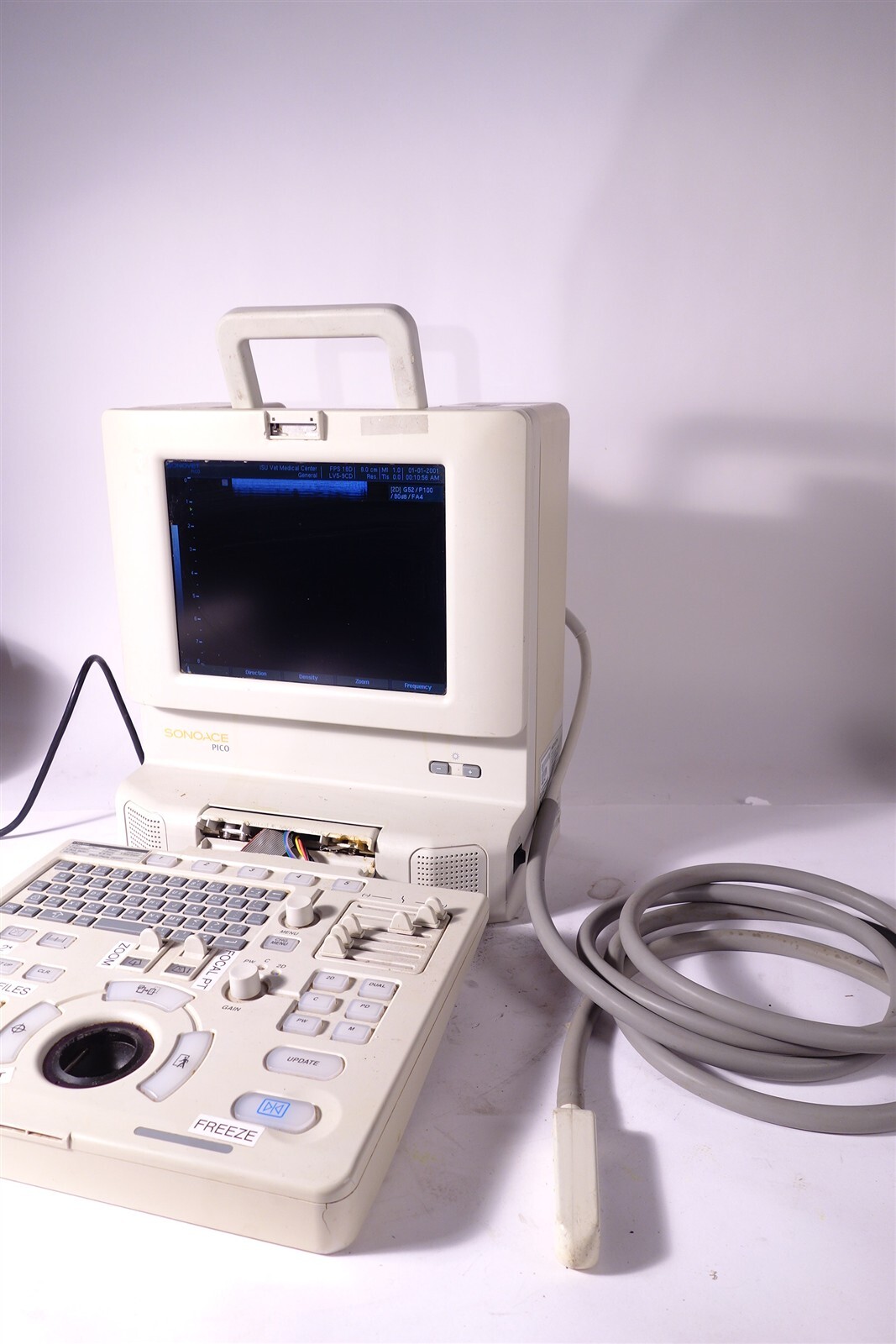
Medison Sonoace Pico Portable Ultrasound with LV5-9/60CD Probe / Transducer
View Deal →
Medison SonoAce 600 Portable Ultrasound Machine
View Deal →
MEDISON SonoAce R7 Ultrasound Machine, FOR PARTS/ REPAIR
View Deal →
XQ Medison ultrasound machine with 3D probe.Good condition. Touch screen
View Deal →
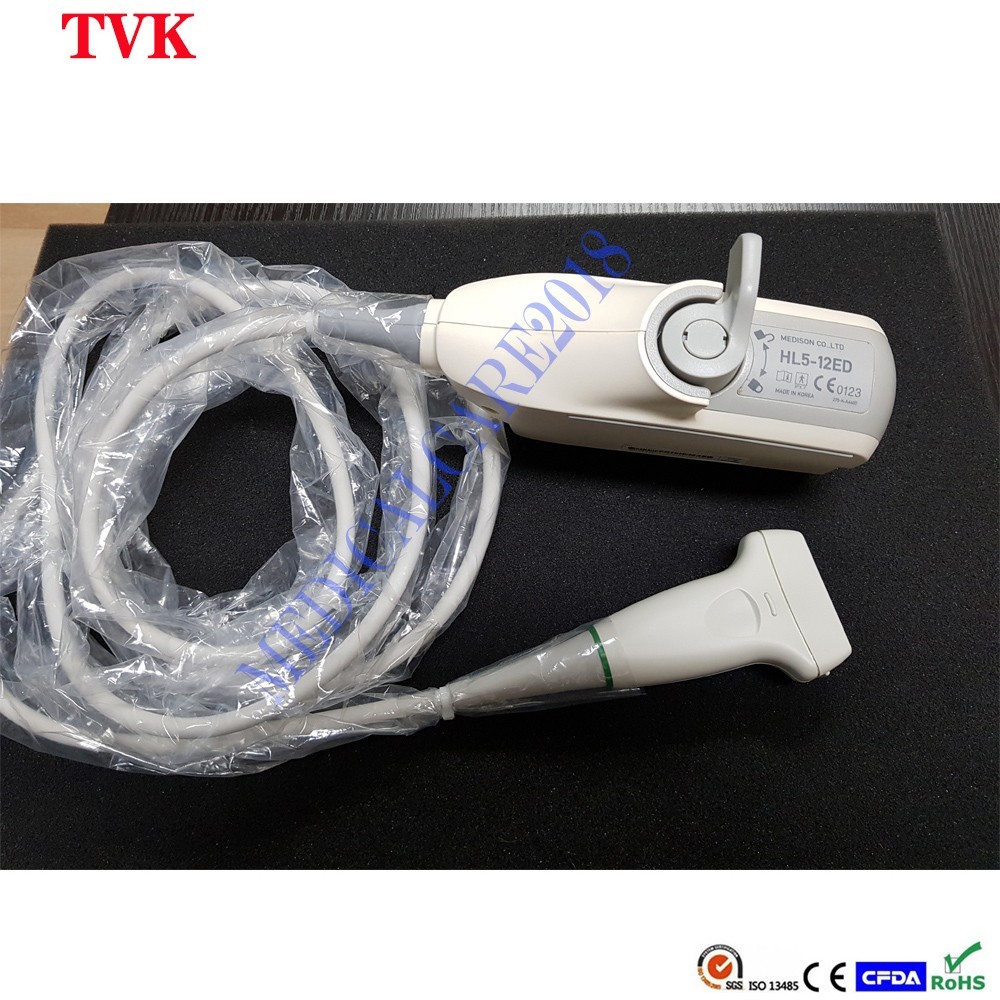
Medison HL5-12ED Linear Ultrasound Transducer for Sonoace X6/X8,Generic Probe
View Deal →