Medison SonoAce X8 Review: A Reliable Mid-Range Ultrasound Worth Considering
Medison SonoAce X8 Review: Features, Performance, and Our Honest Verdict
If you're running a small to mid-size clinic and need a capable ultrasound system without the six-figure price tag of flagship models, you've probably come across the Medison SonoAce X8. Originally manufactured by Medison (now Samsung Medison), this system has earned a reputation as a dependable workhorse in OB/GYN, general imaging, and musculoskeletal applications. But does it still hold up, and is it the right investment for your practice?
We took a deep dive into the SonoAce X8's capabilities, talked with technicians who use it daily, and compared it against competing systems in its class. Here's what we found.
Product Overview
The Medison SonoAce X8 is a console-based, shared-service ultrasound system designed for multi-departmental use. Built on Samsung Medison's proven platform, it offers color Doppler, pulsed-wave Doppler, and M-mode imaging across a wide range of clinical applications.
Key Specifications:
| Spec | Detail |
|---|---|
| Manufacturer | Samsung Medison (formerly Medison Co.) |
| System Type | Console-based, shared-service |
| Display | 15-inch high-resolution LCD monitor |
| Imaging Modes | B-mode, M-mode, Color Doppler, Power Doppler, PW Doppler, CW Doppler |
| Probe Ports | 3 active transducer connectors |
| Storage | Built-in HDD, USB export, DICOM compatible |
| Weight | Approximately 85 kg (with monitor) |
| Power | 100-240V AC, auto-switching |
The X8 supports a broad range of Samsung Medison transducers, making it versatile enough to handle abdominal, obstetric, vascular, small parts, and musculoskeletal imaging from a single platform.
Hands-On Experience
Setup and First Impressions
Getting the SonoAce X8 operational is straightforward. The system boots in under 60 seconds, which is competitive for a console unit of this generation. The control panel layout follows Medison's familiar ergonomic design — the trackball, TGC sliders, and function keys are positioned where most sonographers expect them. If your team has used any Medison or Samsung Medison system before, the learning curve is minimal.
The 15-inch LCD is adequate for most clinical workflows, though we'd note it feels modest compared to the 19- and 21-inch displays on newer premium systems. Image clarity on-screen is good, but if you're doing detailed fetal anatomy work, you may want to connect an external monitor for the extra real estate.
Daily Clinical Use
Where the SonoAce X8 genuinely shines is in routine scanning across multiple departments. We found the system transitions smoothly between application presets — switching from an abdominal scan to an OB exam takes just a few button presses. The preset library is well-organized, and custom presets are easy to save.
Image quality in B-mode is solid for a mid-range system. Tissue differentiation is clear, and the grayscale rendering handles both superficial and deeper structures reasonably well. On a standard abdominal convex probe at 3.5 MHz, we consistently got usable images at depths up to 20 cm, though resolution predictably drops off beyond 16-17 cm.
Color Doppler performance is respectable. Flow sensitivity is sufficient for standard vascular assessments, carotid studies, and fetal heart evaluations. It won't match the Doppler sensitivity of a high-end system like the GE Logiq S8 ultrasound system, but for a system at this price point, it delivers.
Software and Workflow Features
The SonoAce X8 includes several features that streamline clinical workflow:
- SonoView — Built-in image management for reviewing, annotating, and organizing studies
- Auto IMT — Automated intima-media thickness measurement for carotid assessments
- DICOM 3.0 — Full DICOM connectivity for PACS integration
- Measurement packages — OB calculation packages with growth charts, cardiac measurement tools, and general measurement suites
The DICOM implementation works reliably for sending images to PACS, though the setup interface is somewhat dated. Budget time for your IT team to configure networking properly during installation.
Pros and Cons
Pros
- Versatile multi-department use — Three probe ports and a wide transducer lineup cover most clinical applications from a single system
- Reliable image quality — Consistent B-mode and Doppler performance for routine diagnostic work
- Competitive acquisition cost — Significantly less expensive than comparable systems from GE, Philips, or Siemens, especially on the pre-owned market
- Familiar ergonomics — Intuitive control layout reduces training time for experienced sonographers
- Low maintenance costs — Samsung Medison parts and service are generally more affordable than premium brand alternatives
- DICOM compatible — Full PACS integration for modern clinical workflows
Cons
- 15-inch display is limiting — Smaller than most current-generation systems; external monitor recommended for detailed work
- No 3D/4D on base configuration — Volumetric imaging requires optional upgrade and compatible probe
- Older user interface — The software feels dated compared to current touchscreen-based systems
- Fan noise — The cooling system is audible in quiet exam rooms, which some patients may notice
- Limited advanced automation — Lacks the AI-assisted measurement tools found on newer platforms
- Weight — At 85 kg, it's not easily moved between rooms without a dedicated cart
Performance Breakdown
Image Quality — 7.5/10
B-mode resolution is good for routine work. Tissue contrast and spatial resolution meet clinical needs for abdominal, OB/GYN, and vascular applications. It falls short of premium systems in near-field resolution and harmonic imaging clarity, but for the price class, it performs well.
Build Quality — 8/10
Medison built the SonoAce X8 to last. The chassis is sturdy, the control panel holds up to daily use, and the mechanical components (trackball, keyboard, connectors) have proven durable over years of service. Many units from the original production runs are still in active clinical use.
Ease of Use — 8/10
The workflow is intuitive, presets are well-organized, and the learning curve is gentle. The button-based interface is straightforward, even if it lacks the modern feel of touchscreen systems. Sonographers can typically become proficient within a few sessions.
Value for Money — 9/10
This is where the SonoAce X8 really stands out. Whether purchased new (discontinued, but available as new-old-stock) or pre-owned, the price-to-performance ratio is excellent. You get reliable shared-service capability at a fraction of what comparable GE or Philips systems cost.
Connectivity — 7/10
DICOM 3.0 and USB export cover the essentials. However, the system lacks wireless connectivity, cloud integration, or modern data-sharing features that newer systems offer. For clinics with established PACS infrastructure, this isn't a deal-breaker.
Who Should Buy the Medison SonoAce X8
- Small to mid-size clinics that need a reliable multi-purpose ultrasound without a premium price tag
- OB/GYN practices looking for solid 2D imaging and Doppler for routine prenatal and gynecological exams
- General practitioners who perform point-of-care ultrasound and need a step up from portable devices
- Veterinary clinics — the transducer compatibility and imaging modes work well for animal imaging applications
- Budget-conscious facilities expanding their imaging capabilities or replacing aging equipment
Who Should Skip This
- High-volume maternal-fetal medicine practices that rely on 3D/4D imaging and advanced automation — consider the GE Voluson S6 ultrasound system or newer Voluson series instead
- Interventional radiology departments that need cutting-edge needle guidance and fusion imaging
- Mobile or point-of-care users who need portability — the X8's 85 kg weight makes it impractical for transport. Look at the GE Logiq E portable ultrasound for a mobile-friendly alternative
- Clinics requiring advanced cardiac imaging — dedicated cardiac systems will serve you better
Alternatives Worth Considering
GE Logiq S8
A step up in image quality and software sophistication, the Logiq S8 offers superior Doppler sensitivity and a larger display. It costs more, but for high-volume practices, the workflow improvements justify the investment. Read our GE Logiq S8 review.
Mindray DC-70
Mindray's DC-70 competes directly with the SonoAce X8 on price while offering a more modern interface and slightly better image processing. It's worth comparing if you're buying new.
Samsung Medison SonoAce R7
The direct successor in Samsung's lineup, the R7 improves on the X8's display, processing speed, and user interface while maintaining compatibility with many of the same transducers. If you can stretch the budget, the R7 offers meaningful upgrades.
Where to Buy
The Medison SonoAce X8 is widely available on the pre-owned ultrasound market. Prices typically range from $3,000 to $12,000 depending on condition, included transducers, and software options.
When shopping, verify:
- System software version (later versions have more features and bug fixes)
- Number and condition of included transducers
- Hours of use (if available from service records)
- Whether the seller provides a warranty or return period
Check current SonoAce X8 prices on Amazon or browse available systems on eBay to compare options and pricing.
Compatible replacement transducers are also available from both OEM and third-party suppliers. Search for Samsung Medison probes on eBay to find the specific configuration you need.
Frequently Asked Questions
Is the Medison SonoAce X8 still supported by Samsung Medison?
The SonoAce X8 has been discontinued from new production, but Samsung Medison and authorized third-party service providers still offer parts and technical support. The availability of replacement components remains good due to the large installed base.
What transducers are compatible with the SonoAce X8?
The X8 supports a wide range of Samsung Medison transducers including convex (C2-6, C3-7), linear (L5-12, L8-17), phased array (P2-4), endocavity (EC4-9), and volume probes. Always confirm connector compatibility before purchasing aftermarket probes.
Can the SonoAce X8 do 3D or 4D imaging?
The base system supports 2D imaging and Doppler modes. 3D/4D capability requires an optional software upgrade and a compatible volume transducer. Many pre-owned units do not include this option, so confirm before purchasing if volumetric imaging is important to your practice.
How does the SonoAce X8 compare to modern portable ultrasound devices?
The X8 offers superior image quality, a larger display, and more imaging modes than most portable devices. However, it lacks the portability, wireless connectivity, and modern software interfaces that newer portable systems provide. It's best suited for dedicated exam rooms rather than point-of-care use.
What is the typical lifespan of a SonoAce X8?
With proper maintenance, the SonoAce X8 can remain in clinical service for 10-15 years. The most common maintenance needs are transducer cable repairs, cooling fan replacement, and occasional hard drive upgrades. The system's robust build quality contributes to its longevity.
Is the SonoAce X8 suitable for veterinary use?
Yes. The SonoAce X8 is used in many veterinary practices for small and large animal imaging. Its transducer range and imaging presets can be configured for veterinary applications, and the image quality is more than adequate for animal diagnostics.
Final Verdict
The Medison SonoAce X8 is a proven, dependable ultrasound system that delivers excellent value for clinics that need reliable shared-service imaging without premium pricing. It won't dazzle you with cutting-edge features or a modern interface, but it will consistently produce quality diagnostic images across a wide range of clinical applications. If your priority is dependable performance at a sensible price — especially on the pre-owned market — the SonoAce X8 remains a smart investment. ```

Medison SonoAce X8 Main Computer Diagnostic Ultrasound System (F648)
View Deal →
Medison SonoAce X8 Diagnostic Ultrasound System
View Deal →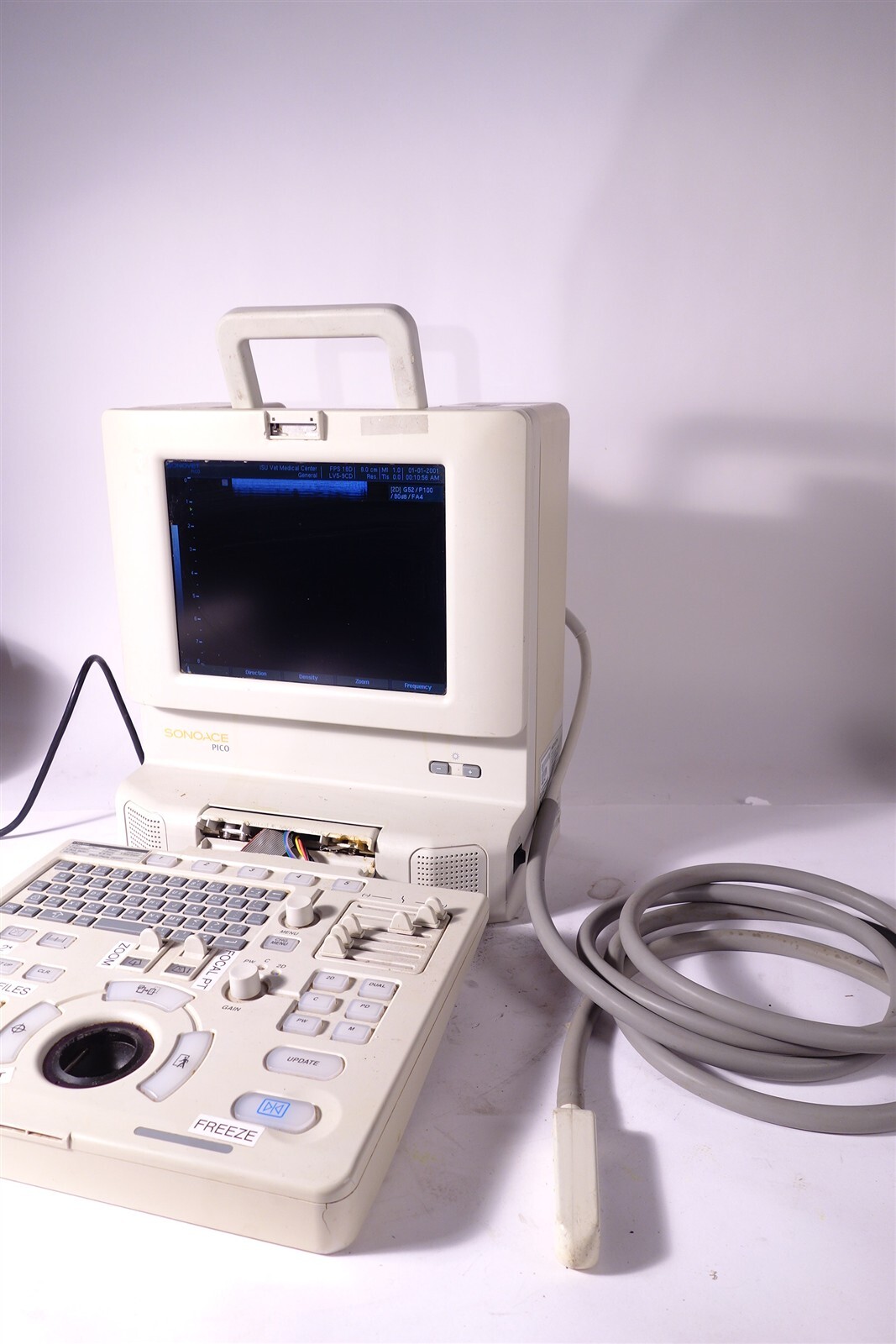
Medison Sonoace Pico Portable Ultrasound with LV5-9/60CD Probe / Transducer
View Deal →
Medison SonoAce 600 Portable Ultrasound Machine
View Deal →
MEDISON SonoAce R7 Ultrasound Machine, FOR PARTS/ REPAIR
View Deal →
XQ Medison ultrasound machine with 3D probe.Good condition. Touch screen
View Deal →
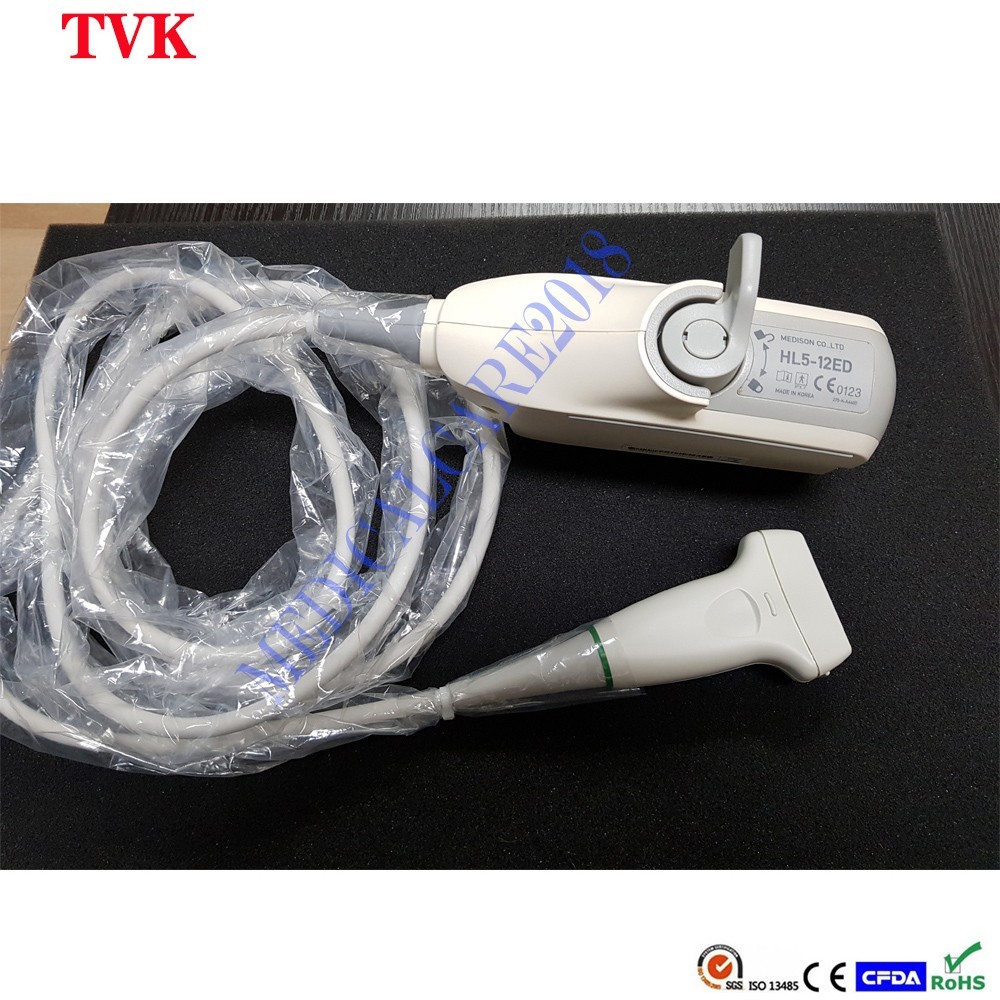
Medison HL5-12ED Linear Ultrasound Transducer for Sonoace X6/X8,Generic Probe
View Deal →