AI Ultrasound Machines 2026: The Complete Buyer's Guide
Artificial intelligence has fundamentally changed diagnostic ultrasound. In 2026, AI-powered ultrasound machines don't just capture images — they analyze anatom
This article may contain affiliate links. If you make a purchase through these links, we may earn a small commission at no extra cost to you.
AI Ultrasound Machines 2026: The Complete Buyer's Guide
Artificial intelligence has fundamentally changed diagnostic ultrasound. In 2026, AI-powered ultrasound machines don't just capture images — they analyze anatomy in real time, auto-detect pathologies, guide probe placement, and generate preliminary reports in seconds. Whether you're upgrading a hospital imaging department, outfitting a clinic, or adding point-of-care capability, choosing the right AI ultrasound system is one of the most consequential equipment decisions you'll make this year.
This guide breaks down everything you need to know: what AI features actually matter, which machines lead the market, realistic pricing, and how to avoid overpaying for capabilities you won't use.
What AI Actually Does in Modern Ultrasound Systems
Not all "AI-powered" ultrasound is created equal. Some manufacturers slap an AI label on basic image optimization, while others deliver genuinely transformative diagnostic assistance. Here's what to look for in 2026:
Automated Measurements & Quantification — The most mature AI feature. Systems like the GE Voluson and Philips EPIQ automatically measure fetal biometry, cardiac ejection fraction, and vessel diameters with accuracy rivaling experienced sonographers. This alone can cut exam times by 20–40%.
Real-Time Pathology Detection — Advanced systems flag suspicious findings during scanning. AI algorithms trained on millions of images can highlight potential masses, calcifications, or structural abnormalities that even skilled operators might miss during a fast-paced exam.
Probe Guidance & Image Quality Optimization — Newer handheld and portable units use AI to guide less-experienced operators to correct probe positions and automatically adjust gain, depth, and focus. This is a game-changer for point-of-care settings where dedicated sonographers aren't available.
Automated Reporting — High-end systems generate structured preliminary reports using AI analysis, pulling measurements, findings, and standard observations into templated documents ready for physician review.
Workflow Intelligence — AI manages exam protocols, suggests follow-up views based on initial findings, and learns operator preferences over time to streamline repetitive tasks.
Top AI Ultrasound Machines to Consider in 2026
The market has matured considerably. Here are the leading systems across different use cases and budgets:
| Machine | Best For | Key AI Features | Approx. Price Range |
|---|---|---|---|
| GE Voluson E10 (BT24) | OB/GYN, Fetal Medicine | SonoLyst auto-plane detection, AI biometry, HDlive rendering | $80,000 – $150,000 |
| Philips EPIQ Elite | Cardiology, Radiology | TrueVue AI, auto EF calculation, anatomical intelligence | $100,000 – $200,000 |
| Canon Aplio i-series | General Imaging, MSK | iBeam AI forming, SMI micro-flow detection, auto-optimize | $70,000 – $130,000 |
| Samsung HERA W10 | Women's Health | LuVo AI biometry, BiometryAssist, S-Detect lesion classification | $60,000 – $120,000 |
| Butterfly iQ3 | Point-of-Care, Emergency | AI guidance overlays, auto-capture, cloud-based analysis | $2,500 – $4,000 |
| GE Vscan Air CL | Primary Care, Triage | AI pocket-sized scanning, auto-calculations, telemedicine ready | $4,000 – $6,000 |
| Clarius HD3 AI | Mobile/Field Use | AI-enhanced imaging, auto-gain, cloud processing | $5,000 – $9,000 |
For departments needing a full-featured cart-based system, the GE Voluson E10 and Philips EPIQ Elite remain the gold standard — but expect six-figure investments. If you're exploring options across price ranges, you can browse current ultrasound machine listings on eBay to compare what's available new, refurbished, and certified pre-owned.
For point-of-care and portable needs, the Butterfly iQ3 has become the default recommendation. Its whole-body scanning capability from a single handheld probe, combined with genuinely useful AI guidance, makes it hard to beat under $5,000.
How to Evaluate AI Features Without Getting Oversold
Vendors love demoing AI in controlled settings with ideal patients. Here's how to cut through the marketing:
Request real-world accuracy data. Ask for published sensitivity and specificity numbers, not just internal benchmarks. FDA-cleared AI features have gone through clinical validation — ask to see the studies. If a vendor can't produce peer-reviewed data, treat the feature as experimental.
Test with your patient population. AI models trained primarily on one demographic may underperform on another. Insist on a clinical trial period with your actual patient mix before committing. Most major vendors offer 30–60 day evaluations for cart-based systems.
Assess the total cost of AI. Some manufacturers bundle AI features into the base price. Others charge annual subscription fees for AI modules — sometimes $5,000–$15,000 per year per feature set. A system that looks cheaper upfront can cost significantly more over a five-year ownership period when you factor in AI licensing.
Check integration with your existing systems. AI-generated measurements and reports need to flow into your PACS, EMR, and reporting systems. Confirm DICOM SR compatibility and HL7/FHIR support before purchase. Retrofitting integration after the fact is expensive and frustrating.
Evaluate update cadence. AI models improve with software updates. Ask how frequently the manufacturer releases algorithm updates, whether updates are included in your service contract, and whether the system supports over-the-air updates or requires on-site service visits.
New vs. Refurbished: Where AI Complicates the Decision
Traditionally, buying refurbished ultrasound equipment was straightforward — the hardware was the hardware, and a well-maintained used system performed identically to new. AI changes this calculation.
Software licensing is the key issue. Many AI features are tied to software licenses that may not transfer to a second owner. Before buying any refurbished AI ultrasound system, verify in writing that all AI software licenses will transfer and remain active. Some manufacturers void AI subscriptions upon resale.
Hardware requirements for AI. Newer AI algorithms require specific GPU hardware and processing power. A refurbished system from 2022 may not have the compute capability to run 2026 AI software, even if the imaging hardware is excellent. Always confirm upgrade eligibility.
That said, refurbished remains an excellent option for budget-conscious buyers. A certified pre-owned cart system from a reputable dealer typically costs 40–60% less than new. You can find a wide selection of ultrasound machines on Amazon including portable AI-capable devices and accessories, or check specialized ultrasound equipment sellers on eBay for competitive pricing on refurbished cart-based systems.
Making the Right Purchase Decision
Before pulling the trigger on any AI ultrasound system, work through this checklist:
Define your primary use case first. A cardiology practice needs different AI than an OB/GYN clinic. Don't pay for abdominal AI modules if 90% of your scans are echocardiograms. Most vendors offer modular AI packages — buy only what you'll use.
Budget for the full lifecycle. Include the purchase price, annual service contracts (typically 8–12% of purchase price per year), AI subscription fees, transducer replacements, and training costs. A $100,000 system easily costs $180,000–$220,000 over five years.
Negotiate aggressively. The AI ultrasound market is competitive. Vendors have margin flexibility, especially at quarter-end. Ask for bundled AI licenses, extended warranties, free training, and loaner coverage. It's common to negotiate 15–25% off list price on cart-based systems.
Plan for training. AI doesn't eliminate the need for skilled operators — it augments them. Budget two to four weeks for your team to become proficient with AI-assisted workflows. Most manufacturers include initial training, but ongoing education as AI features update is often overlooked.
Frequently Asked Questions
Can AI ultrasound replace a trained sonographer? No. AI in 2026 is a powerful assistive tool, not a replacement for clinical expertise. AI excels at automating measurements, flagging potential findings, and improving consistency, but a skilled sonographer is still essential for complex cases, clinical correlation, and patient interaction. Regulatory bodies universally require qualified human oversight of AI-assisted diagnostics.
How much do AI software subscriptions cost annually? Annual AI subscription fees vary widely. Entry-level AI packages on portable devices are often included in the purchase price or cost $500–$1,500 per year. Advanced AI modules on cart-based systems — such as cardiac AI, obstetric AI, or lesion detection — can run $5,000–$15,000 per year per module. Always clarify recurring costs before purchasing.
Are AI features FDA-cleared? Most AI features on major-brand ultrasound systems have received FDA 510(k) clearance. However, not all AI capabilities marketed by vendors have regulatory approval. Ask specifically which features are FDA-cleared versus which are labeled as "clinical decision support" tools that fall outside device regulation. This distinction matters for liability and reimbursement.
Is it worth upgrading an existing ultrasound system with AI add-ons? It depends on your system's age and hardware. Some manufacturers offer AI software upgrades for systems manufactured within the last three to four years, typically costing $10,000–$30,000 depending on the feature set. For systems older than five years, the hardware limitations usually make a new purchase more cost-effective than retrofitting. Contact your vendor's upgrade team for a specific assessment.
Shop This Category
6 products eBayNew
Prof. Home Use 3MHz Ultrasound Therapy Machine For Physiotherapy Ultrasound Unit
 eBayNew
Ultra Pro 3MHz Ultrasound Physical Therapy Machine
 eBayNew
New Ultrasound Therapy Machine With 4 Channel TN Combination Unit Machine
 eBayUsed
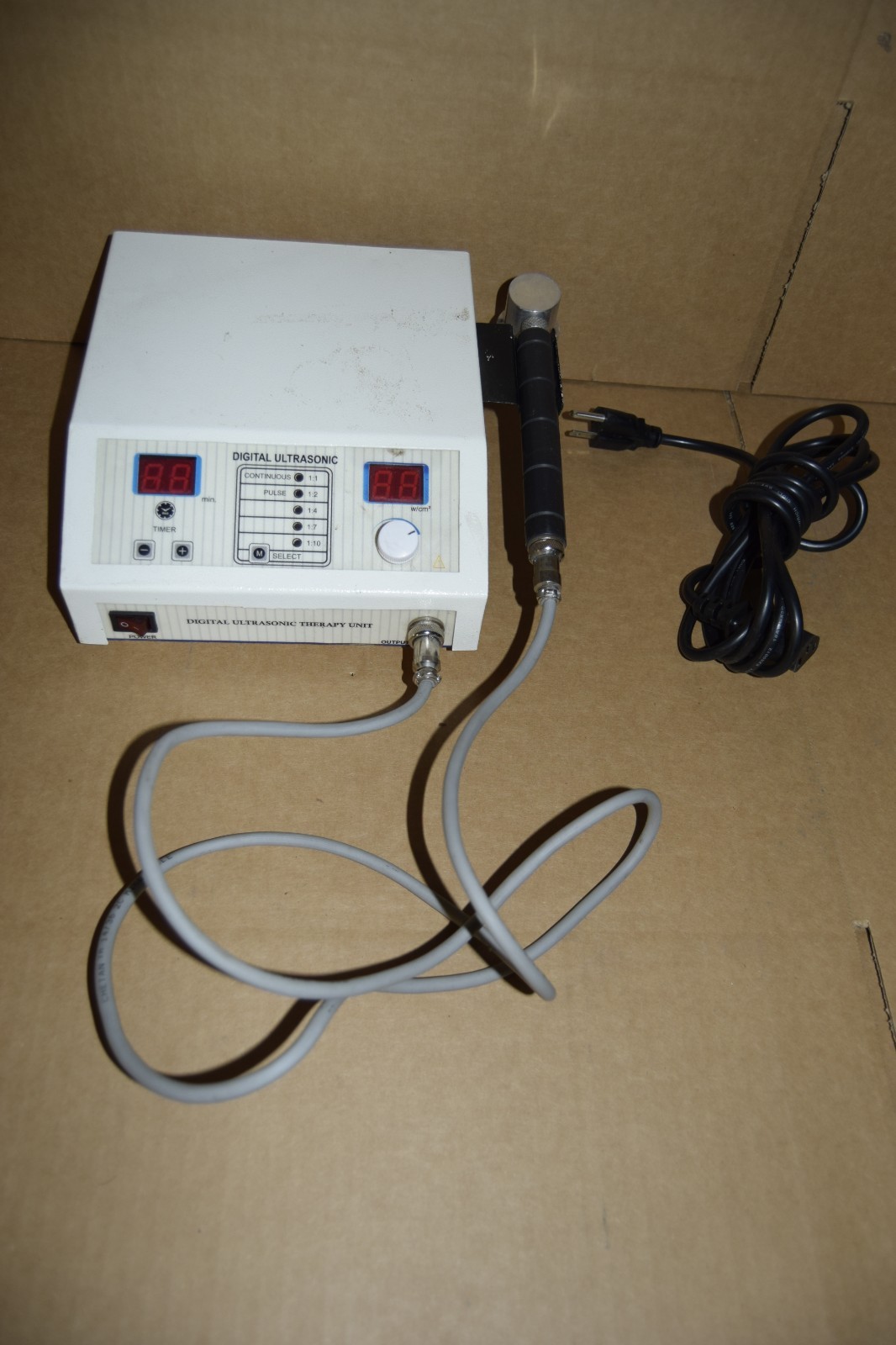
Digital Ultrasound Therapy Machine
 eBayNew
1mhz 3mhz physical therapy ultrasound machine
 eBayNew