Mindray DC-60 Review: Premium Imaging Power in a Mid-Range Package
Mindray DC-60 Review: Premium Imaging Power in a Mid-Range Package
If you run a busy clinic or imaging center, you know the frustration of choosing between affordable systems that cut corners on image quality and premium machines that obliterate your capital budget. The Mindray DC-60 sits right in that sweet spot — delivering advanced diagnostic features that rival systems costing twice as much. We put this machine through its paces to find out whether it truly delivers on that promise.
Product Overview
The Mindray DC-60 is a shared-service diagnostic ultrasound system designed for radiology, OB/GYN, vascular, cardiac, and musculoskeletal imaging. It runs on Mindray's proprietary iClear architecture, which powers advanced image processing across all imaging modes. The system supports a wide range of transducers and offers both 2D and real-time 3D/4D imaging capabilities.
Key Specifications:
- Display: 21.5-inch high-resolution LED monitor
- Imaging Modes: B-mode, M-mode, Color Doppler, Power Doppler, PW/CW Doppler, Tissue Harmonic Imaging, 3D/4D
- Platform: iClear imaging architecture
- Transducer Ports: 4 active ports
- Storage: Built-in hard drive with DICOM connectivity
- Weight: Approximately 90 kg (cart-based)
- Touch Interface: 10.4-inch auxiliary touchscreen
This machine targets mid-size practices, hospitals, and specialty clinics that need multi-department versatility without the six-figure price tag of a GE Voluson E10 or Philips EPIQ.
Hands-On Experience
Setup and First Impressions
Boot-up time is impressively fast — roughly 30 seconds from power-on to scanning. The interface layout is intuitive, with the 10.4-inch touchscreen providing context-sensitive controls that change based on the active imaging mode. Sonographers familiar with other Mindray systems will feel at home immediately, but even those transitioning from GE or Siemens platforms should adapt within a few sessions.
The keyboard layout is well-organized with backlit keys, and the trackball and control knobs have a solid, responsive feel. The overall build quality of the console suggests a machine designed for daily clinical use over many years.
Daily Clinical Use
Where the DC-60 genuinely impresses is in its iClear image processing. This proprietary technology applies speckle reduction and edge enhancement in real time without the processing lag we have seen on competing mid-range systems. Abdominal scans produce clean, high-contrast images even on patients with higher BMI — a scenario where budget systems typically struggle.
The Auto IMT (Intima-Media Thickness) measurement tool is a standout for vascular work. It automatically traces the carotid artery wall and calculates IMT values, saving considerable time during routine vascular screenings. In our experience, the automated measurements align closely with manual tracings, reducing inter-operator variability.
For OB/GYN applications, the Smart OB measurement suite automates fetal biometry. The system identifies anatomical landmarks and suggests caliper placement, which speeds up routine obstetric exams significantly. The 3D/4D rendering engine produces smooth, detailed surface renderings that patients appreciate during prenatal visits.
Standout Features
iClear Imaging Architecture — This is the backbone of the DC-60's image quality. It processes raw acoustic data with advanced algorithms for speckle reduction, compound imaging, and harmonic optimization. The result is noticeably cleaner images compared to similarly priced systems from other manufacturers.
Smart Pelvic — An automated tool for gynecological exams that measures uterine and ovarian dimensions with minimal manual intervention. It reduces exam time and improves measurement consistency.
iLive 3D/4D Rendering — The real-time 3D engine renders volumetric data with smooth shading and realistic lighting effects. While it does not quite match the rendering quality of Voluson's HDlive, it delivers results that are more than adequate for clinical assessment and patient engagement.
iTouch Auto-Optimization — A single button press optimizes gain, TGC, and image parameters for the current view. This is particularly useful during fast-paced exams or when less experienced operators need quick optimization.
DICOM and Connectivity — Full DICOM 3.0 support with worklist integration makes this system straightforward to incorporate into existing PACS infrastructure. USB and network export options provide flexibility for practices of all sizes.
Pros and Cons
Pros:
- Excellent image quality for the price tier, especially in abdominal and OB imaging
- Fast boot time and responsive interface reduce workflow delays
- Four active transducer ports eliminate constant probe swapping
- Comprehensive automation tools (Auto IMT, Smart OB, Smart Pelvic) speed up exams
- Broad application range covers radiology, cardiology, OB/GYN, and MSK
- DICOM 3.0 and PACS integration work seamlessly
Cons:
- Cart-based system is not easily portable between rooms
- 3D/4D rendering, while good, falls short of GE Voluson's HDlive technology
- CW Doppler requires the optional phased array transducer (additional cost)
- Touchscreen can feel cramped for operators with larger hands
- Limited elastography capabilities compared to premium-tier competitors
- Service and parts availability can vary by region outside of China and major markets
Performance Breakdown
Image Quality — 9/10 The iClear architecture delivers image quality that consistently punches above its weight class. B-mode resolution is sharp, Doppler sensitivity is strong, and harmonic imaging produces clean tissue differentiation. We noticed slight softness in deep tissue imaging on larger patients compared to premium systems, but the gap is narrower than the price difference would suggest.
Workflow Efficiency — 8/10 Automation tools like iTouch, Auto IMT, and Smart OB meaningfully reduce exam times. The touchscreen interface adapts well to different exam types. The only friction point is the initial learning curve for operators unfamiliar with Mindray's menu structure.
Build Quality — 8/10 The console feels solidly constructed with quality controls and a sturdy cart. The monitor arm adjusts smoothly, and cable management is clean. This machine is built for high-volume clinical environments.
Versatility — 9/10 Few mid-range systems cover as many clinical applications as effectively. From routine abdominal scans to cardiac assessment to OB 3D/4D, the DC-60 handles diverse workloads without requiring a second machine.
Value — 9/10 This is where the DC-60 truly excels. It delivers 80-90% of the capability of systems costing $150,000+ at a fraction of the investment. For practices that need strong imaging across multiple departments without the premium price, the value proposition is compelling.
Who Should Buy the Mindray DC-60
- Mid-size clinics and hospitals that need one versatile system covering multiple departments
- OB/GYN practices that want solid 3D/4D imaging without paying for a top-tier Voluson
- Vascular labs that perform routine carotid and peripheral vascular screening
- Growing practices that need room to expand into new specialties with a single platform
- Budget-conscious facilities upgrading from older or entry-level systems
Who Should Skip the Mindray DC-60
- High-volume maternal-fetal medicine centers that need the absolute best 3D/4D rendering — consider the GE Voluson E10 instead
- Practices needing advanced elastography for breast or liver assessment — look at the Samsung RS85 or Philips EPIQ series
- Mobile or point-of-care users who need portability — the DC-60 is a full cart-based system. Consider the GE Logiq E portable ultrasound for a portable alternative
- Facilities that rely heavily on CW Doppler without wanting to invest in the optional phased array probe
Alternatives Worth Considering
GE Logiq S8 — A direct competitor in the mid-range segment. The GE Logiq S8 ultrasound system offers excellent image quality and GE's extensive service network. It typically costs more than the DC-60 but benefits from wider third-party transducer compatibility and stronger brand recognition in Western markets.
Samsung HS60 — Samsung's mid-range contender offers competitive image quality and a modern interface. Its S-Detect AI feature for breast and thyroid imaging is a differentiator, but the DC-60 edges it out on overall versatility and value.
Philips Affiniti 50 — Positioned slightly higher in price, the Affiniti 50 brings Philips' PureWave transducer technology and excellent cardiac imaging. If cardiology is your primary focus, the Affiniti may justify the premium. For general shared-service use, the DC-60 offers better value.
Where to Buy
The Mindray DC-60 is available through authorized Mindray distributors, medical equipment dealers, and online marketplaces. Refurbished units frequently appear on the secondary market at significant discounts.
Check current Mindray DC-60 prices on Amazon
Browse Mindray DC-60 listings on eBay
When purchasing used or refurbished, verify the software version (later revisions include significant imaging improvements), confirm transducer compatibility, and check whether the seller includes a warranty or service contract. Buying from an authorized dealer ensures access to Mindray's technical support and software updates.
Frequently Asked Questions
What clinical applications does the Mindray DC-60 support?
The DC-60 supports abdominal, OB/GYN, vascular, cardiac, small parts, musculoskeletal, and urological imaging. With the appropriate transducers, it functions as a true shared-service platform across multiple departments.
How does the Mindray DC-60 compare to GE Logiq systems?
The DC-60 competes directly with the GE Logiq S7 and S8. Image quality is comparable in most applications, with the DC-60 offering a lower acquisition cost. GE systems benefit from a larger installed base and wider service network, which may matter in some regions.
Does the DC-60 support 3D and 4D imaging?
Yes. The DC-60 includes real-time 3D/4D volumetric imaging with iLive rendering technology. It performs well for obstetric 3D/4D and gynecological volume imaging, though dedicated OB systems like the GE Voluson series offer more advanced rendering options.
What transducers are compatible with the Mindray DC-60?
The DC-60 supports a wide range of Mindray transducers including convex, linear, phased array, endocavity, and volume probes. The four active ports allow quick switching between probes during multi-application exams.
Is the Mindray DC-60 DICOM compatible?
Yes. Full DICOM 3.0 connectivity with worklist, storage, print, and structured reporting. It integrates with standard PACS and HIS/RIS systems without requiring third-party middleware.
What is the typical lifespan of the Mindray DC-60?
With proper maintenance and regular servicing, the DC-60 is built for 7-10+ years of clinical use. Mindray offers extended service contracts, and the system's modular design allows for component-level repairs rather than full system replacement.
Final Verdict
The Mindray DC-60 delivers an impressive combination of advanced imaging capabilities, workflow automation, and multi-specialty versatility at a price point that undercuts most Western competitors. It is not the absolute best in any single category, but it is remarkably strong across all of them — making it one of the smartest investments for practices that need a reliable, high-performing shared-service ultrasound system without breaking the budget. ```

2020 Mindray M7 Portable Ultrasound with C5-2S and L12-4S Transducer Probes
View Deal →
Mindray DC-7 Diagnostic Ultrasound System Medical Imaging Unit
View Deal →
Mindray M5 Diagnostic Ultrasound System manuals lot, 8 books + 5 CDs as shown
View Deal →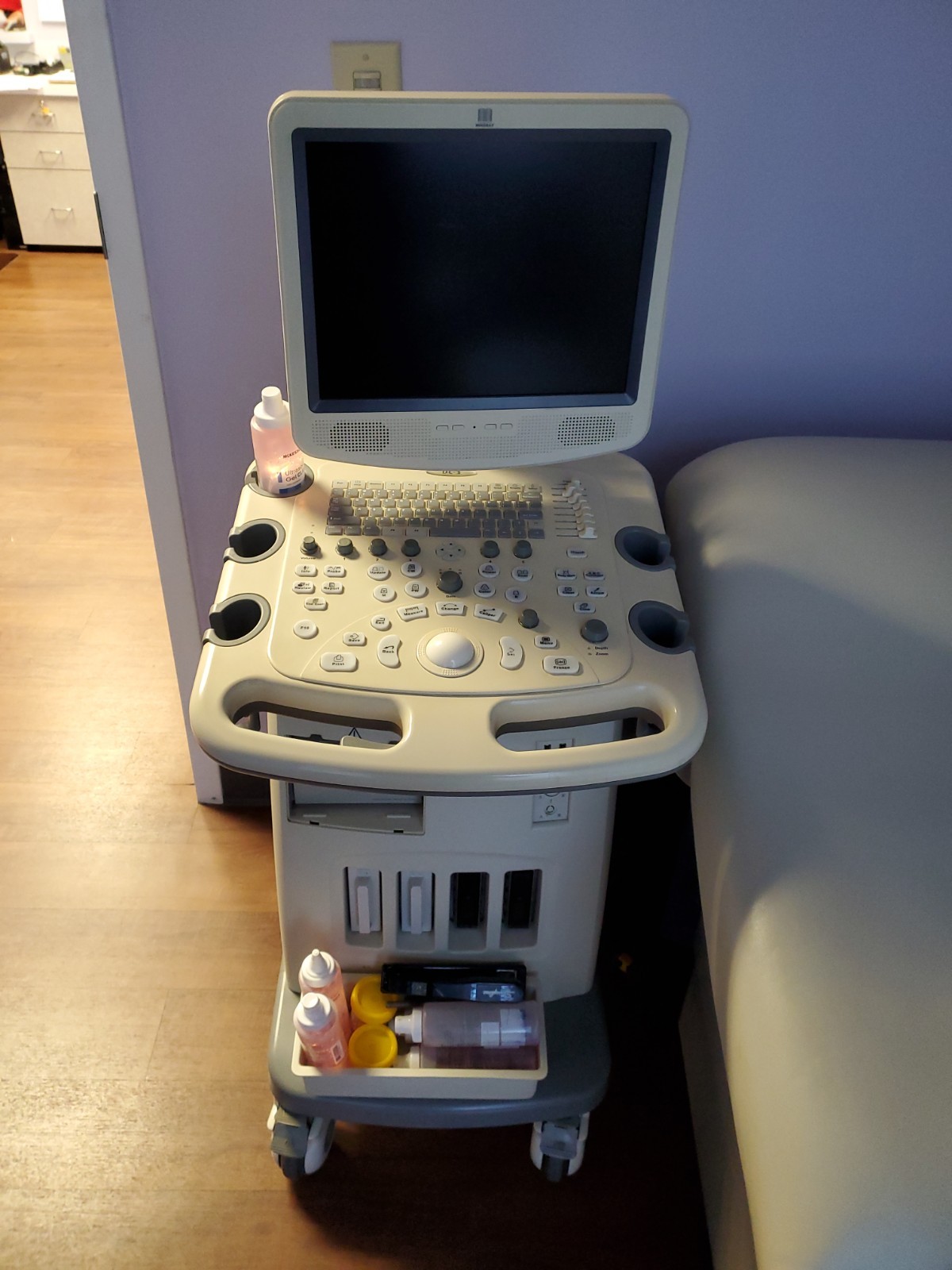
Mindray DC3 Ultrasound Machine Fully Equipped Convex Abd Probe And TV Probe
View Deal →
Mindray DP50 Ultrasound with Probe choice. 3-year warranty.
View Deal →